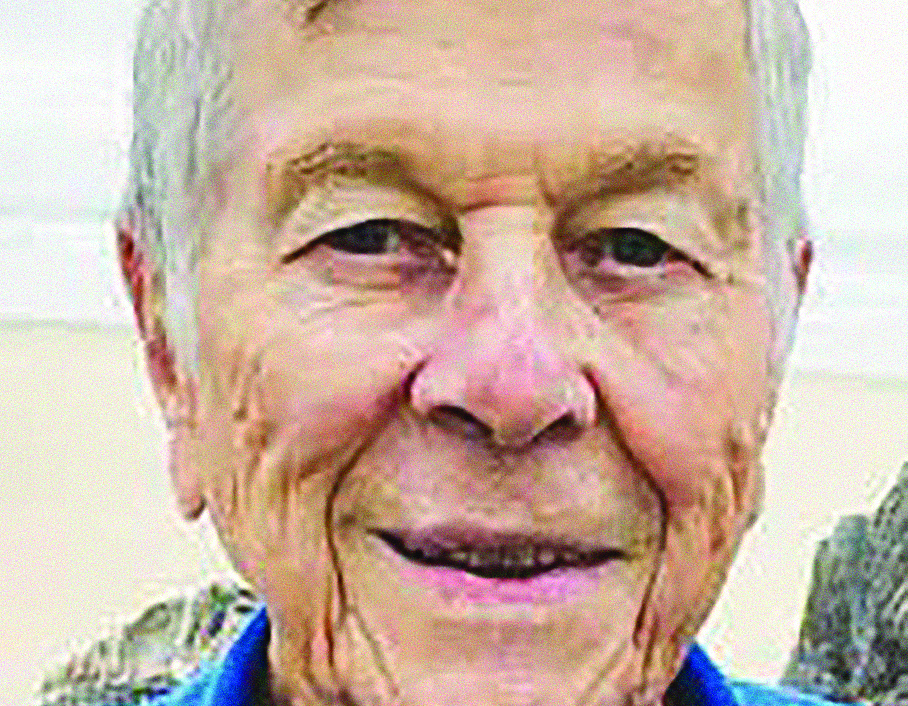
Master of the Ancient Art of Japanese Carpentry
Leonard Brackett ’70
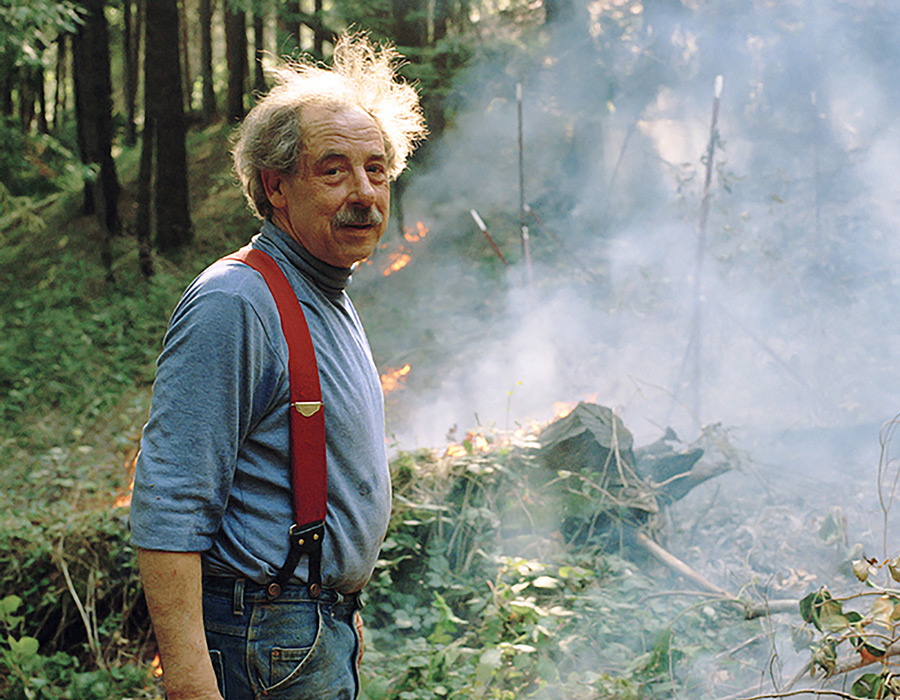
April 17, 2023, in Nevada City, California, of cancer.
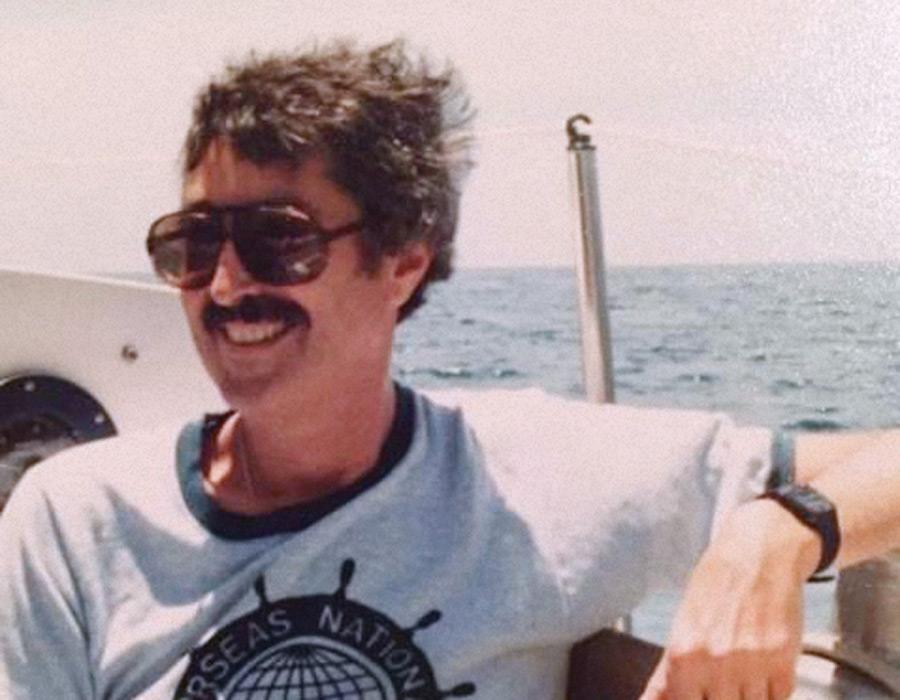
Known by loved ones as Len, Lenny, and Pop, Leonard Brackett embraced life as one long, joyous adventure. Whether charming his roommates into turning their off-campus house into a zendo, honoring the ancient art of Japanese carpentry, or becoming a revered master falconer, Len’s curiosity, optimism, and awe for the planet’s beauty inspired his every undertaking. Diagnosed with lung cancer at the age of 76, he faced illness not as a patient but as a pilgrim.
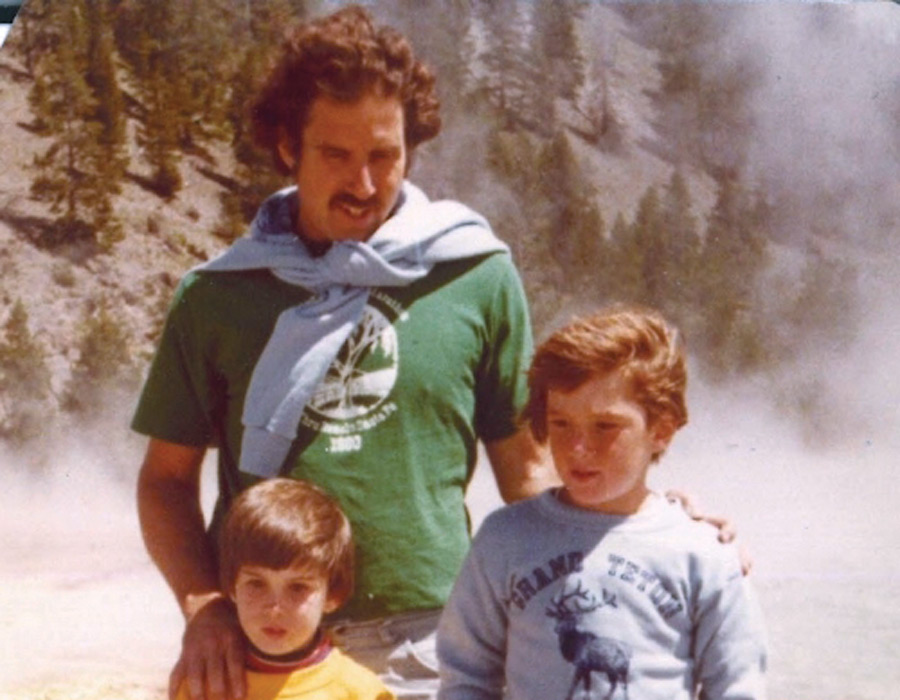
Born January 23, 1947, Len was the youngest of four children. He proudly described his childhood as both perfect and perfectly feral. Raised on Lake Minnetonka in Minnesota, Len, a born athlete, grew up ice boating and playing hockey in the winter, sailing and water skiing in the summer, and making boyish mischief not to be recounted here. Len also spent time woodworking and tinkering—hobbies he would practice in different forms for the rest of his life.
When he attended Reed in the late ’60s, majoring in American literature and Japanese studies, Len quickly found a community. After living in the Sisson dorm his freshman year, he and David Simon ’70, Bob Wollheim ’70, Frank Poliat ’70, Laura Shill Schrager ’70, and Sam Schrager ’70 moved into an off-campus house called the Cosmos. Introduced to Zen by his sister’s husband, Roshi Richard Baker, with tatami and pillows Len and his roommates transformed the living room of the Victorian house into a domestic zendo where Portlanders could come to meditate. For his senior year, Len moved with Sam to an off-grid cabin in the Columbia Gorge and wrote his thesis, a movie script of Gary Snyder ’51’s poem “Mountains and Rivers Without End,” by kerosene lamplight.
After graduating in 1970, Len traveled to Japan. Serendipitously, he met an abbot at a temple in Kyoto, who, upon learning about Len’s interest in carpentry, connected him to a group of skilled local craftsmen. For five years, Len apprenticed alongside his teachers, working grueling 80-hour weeks to learn the craft of Japanese temple carpentry.
In Kyoto, Len met and married Toshiko Mishima. A son, Sylvan Mishima Brackett ’98 (see Eating a Moment, page 14), was born in 1975, shortly before the family returned to the Northern California Sierras. Deep in the Inimim Forest on the San Juan Ridge, working only with hand tools, Len built the traditional Japanese house that became the flagship for his design-build company, East Wind (Higashi Kaze) Inc. The Bracketts lived in their off-the-grid home with generator-powered electricity and well water. A daughter, Aya Mishima Brackett, was born in 1979. After their marriage ended, Toshiko and Len shared birthdays, holidays, and vacations with their growing family.
Len’s life’s work was adapting Japanese architecture to Western expectations. Although fame meant little to Len, who was self-deprecating by nature, East Wind became the preeminent builder of Japanese houses in the U.S. Despite the beauty of his work, Len resisted being called artistic or creative—he was a craftsman. His buildings in California, Washington, Colorado, Hawaii, Massachusetts, and Germany, he said, would last centuries, a testament to the tradition he loved.
Len encouraged his children to pursue their own dreams, as he had done. Sylvan became a chef, and Aya became a photographer. Len and Aya collaborated when he coauthored a book, Building the Japanese House Today, and Aya captured the photos for it. When his son opened a restaurant in San Francisco, Len created its authentic Japanese interior and lovingly advised Sylvan on balancing a business with family life.
Grandpa Len adored his four grandchildren, sharing with them his boyhood love of firecrackers and motorbikes.
In 2012, Len married Anna Villegas. Anna says Len was “congenitally happy,” fearless, and endlessly upbeat. For Len, nothing was impossible, whether it was trapping the bear who had broken into the kitchen, removing an interior wall in the midst of a January snowstorm, or coaxing a skeptical goshawk mother into accepting an adopted chick.
In later years, Len bequeathed East Wind to his finest apprentice. When he wasn’t woodworking, Len was busy felling cedars, tending his cherry trees, and reading arcane histories. In the last decade of his life, he curated a unique relationship with a goshawk named Phoebe, who lived freely in the forest but always returned to her benefactor. About his land, his goshawk, his buildings, and his family, Len was forever enthusiastic.
He is survived by his partner of 25 years, Anna, and his children, Sylvan and Aya.
Sylvan and Aya say whether their father was mechanicking, woodworking, or befriending birds, he lived his life on his own maverick terms. Even facing a daunting illness, Len considered himself blessedly lucky. “If this is the end, I don’t have any regrets,” Len told lifelong friend David Simon shortly before he died. “I got to do exactly what I wanted to do.”
Appeared in Reed magazine: Fall 2024
comments powered by DisqusThe Lives they Led


Henry Franzoni III ’78
Visionary Drummer, Advocate for Tribal Fisheries, and Recognized Authority on Bigfoot







Robert Greenberg ’56
Beloved Husband, Devoted Father, Treasured Grandfather, and Venerated Professor