
A Writer Who Owned Every Word
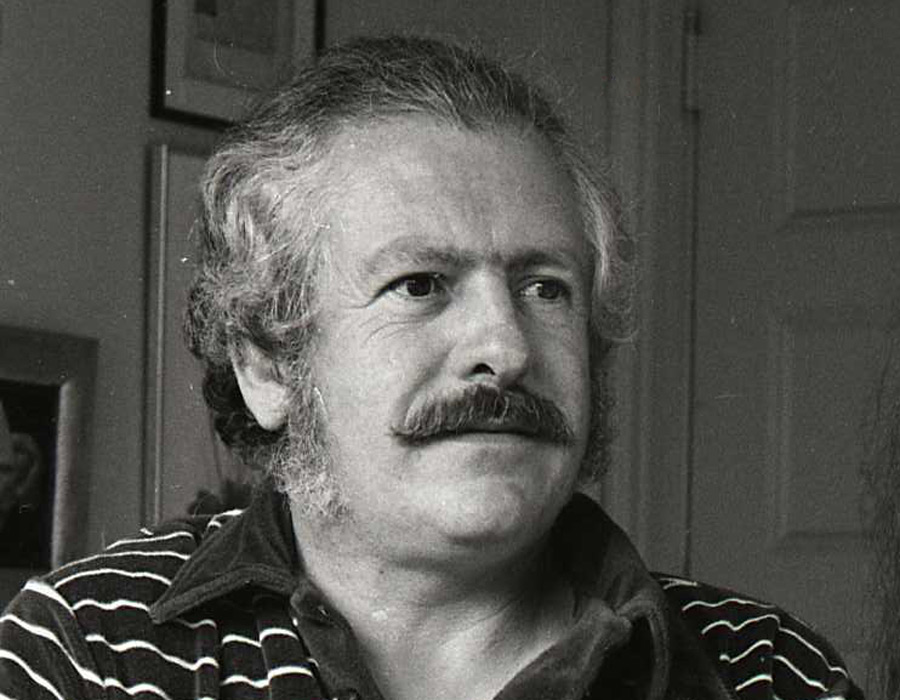
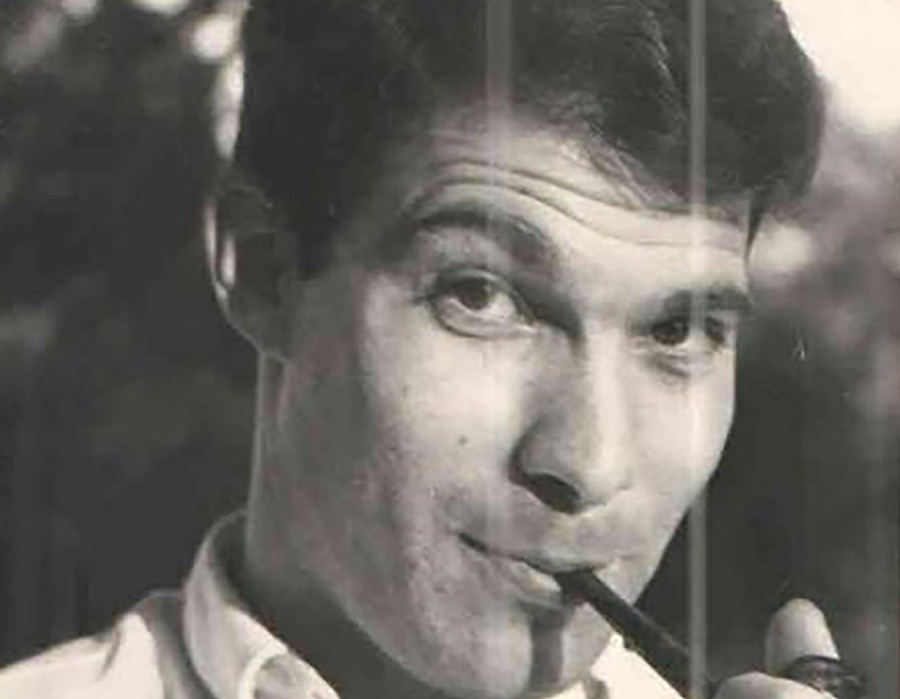
Eric Overmyer ’73

March 16, 2026, in Mount Vernon, New York, from complications of Parkinson’s disease.
Eric Ellis Overmyer was a writer and producer who contributed to some of the most acclaimed television shows of his generation—including Bosch, Homicide: Life on the Street, and The Wire, for which he was a recipient of the Writers Guild of America Award for Outstanding Dramatic Series.
“A great writer owns every word they write,” Tom Fontana, who hired Eric to write for the medical drama St. Elsewhere, wrote in a tribute. “They’ve earned those words through years of laughing, suffering, wondering, living. Eric Overmyer was a great writer…[who] possessed abundant amounts of kindness, grace, intelligence, and a unique sort of grooviness.”
Eric was born on September 25, 1951, in Boulder, Colorado, to Ellis and Marjorie Overmyer. He entered Reed with the class of 1973, but graduated somewhat later than most of his cohort—having dropped out, flunked out, applied elsewhere, and taken leaves of absence.
Despite his struggles, Eric was always lured back by the opportunities Reed offered, including an active, production-oriented theatre department. He starred in Marlowe’s Edward II one summer in the amphitheatre; portrayed Clov in Beckett’s Endgame under the direction of Professor Roger Porter [English and humanities 1961–2015]; started a drama club with Lee Blessing ’71; and wrote what would become his first published play, Native Speech. (He also met his first wife, Melissa Cooper ’75.)
Completed in 1976, Eric’s thesis was titled “Walking in Another Man’s Dream: A Production of Robert Montgomery’s Subject to Fits: A Response to Dostoyevsky’s The Idiot.” It included his analysis of both texts, plus an account of his work as the director of a two-night Reed production. “I want the play to be a lightning succession of images, like a surrealist poem, like brain fever in a tropical landscape,” Eric wrote at the time. “I’m trying to set up a framework loose enough for the actors to improvise within it, but definite enough to get said and done what has to be—something like jazz. Or basketball.”
Postgraduation, Eric became a key member of Portland Conservatory Theatre, founded by his thesis adviser, Professor Larry Oliver [theatre 1972–77]. He was also active at other local theatres, winning a Best Actor Willie Award (more recently known as a Drammy) for playing the upstart musician Crow in Sam Shepard’s Tooth of Crime at Storefront.
In the 1980s, Eric found theatrical homes on both coasts. Native Speech premiered in Los Angeles at the Mark Taper Forum, and Baltimore Center Stage debuted what would become Eric’s most-performed play: On the Verge, or the Geography of Yearning, which follows three intrepid women explorers in Terra Incognita.
Following a move to Los Angeles in the early 1990s, Eric transitioned from writing for the theatre to writing for television. He started as a story editor on St. Elsewhere, and eventually forged a long partnership with showrunner David Simon (commencing with their work together on Homicide). Simon ultimately partnered with Eric on the HBO series Treme, a love letter to the working class in post-Katrina New Orleans (where Eric had a home). He also worked as co–executive director for a season of Boardwalk Empire and developed the Amazon series Bosch, based on novels by Michael Connelly.
Over the years, Eric returned to Reed more than once to share his experiences of writing for both stage and screen. In 1994, he even joined rehearsals for Reed Theatre’s production of On the Verge—and was subsequently invited to speak at the 1995 commencement. In his speech, “The Great Nuance Crisis,” Eric delivered a plea for the kind of rational discourse he had learned at Reed: “In a world where people kill one another over perceived ethnic differences that amount to a finger’s worth of DNA, such a world surely needs a little less overheated rhetoric and a little more rational discourse.”
Eric appreciated how Reed introduced him to the work of poets and playwrights who had guided his spiritual and aesthetic growth. “Coming to Reed,” he said, “was the single most important event in my life. All the good things that have happened to me since, I can trace back to my time at Reed.” Eric is survived by his wife, Ellen McElduff, and two daughters, Lily and Kate. —Professor Kathleen Worley [theatre]
Appeared in Reed magazine: Fall 2026
comments powered by DisqusThe Lives they Led









Henry Franzoni III ’78
Visionary Drummer, Advocate for Tribal Fisheries, and Recognized Authority on Bigfoot


















Robert Greenberg ’56
Beloved Husband, Devoted Father, Treasured Grandfather, and Venerated Professor