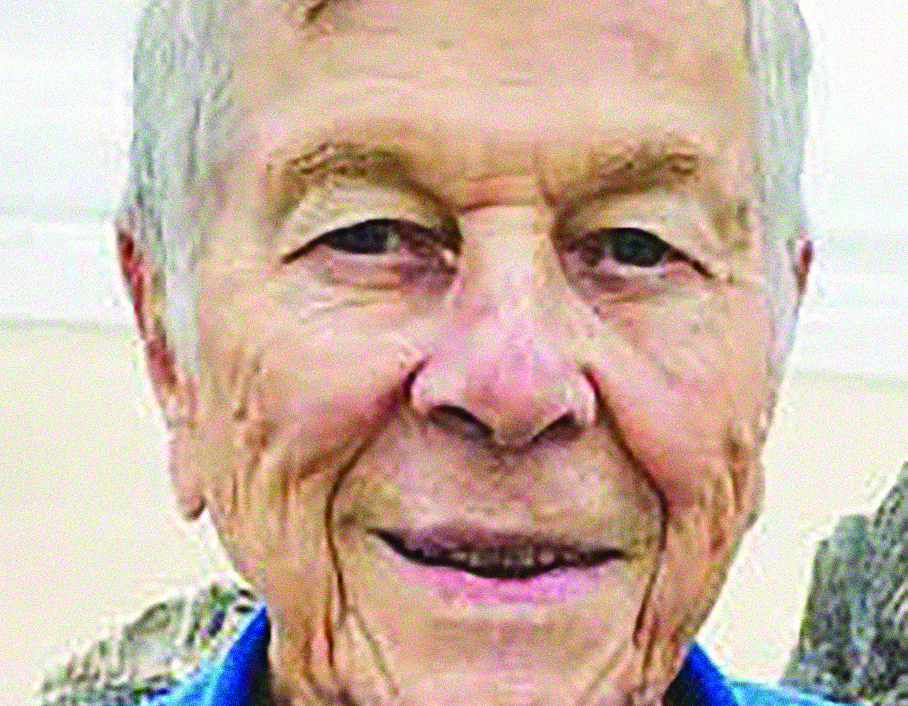
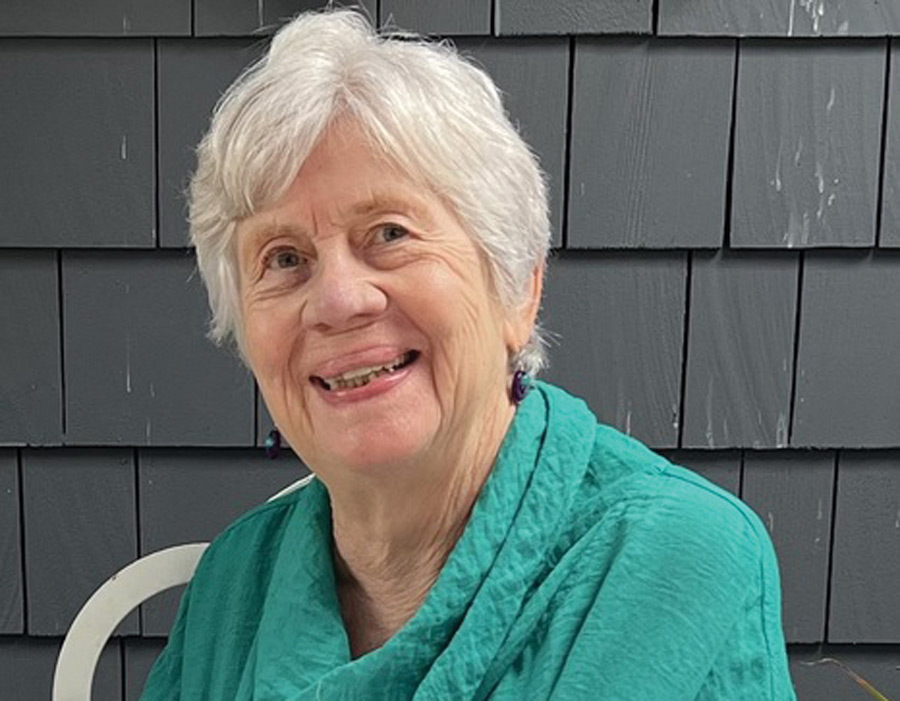
Lifelong Learner, Teacher, and Community Builder
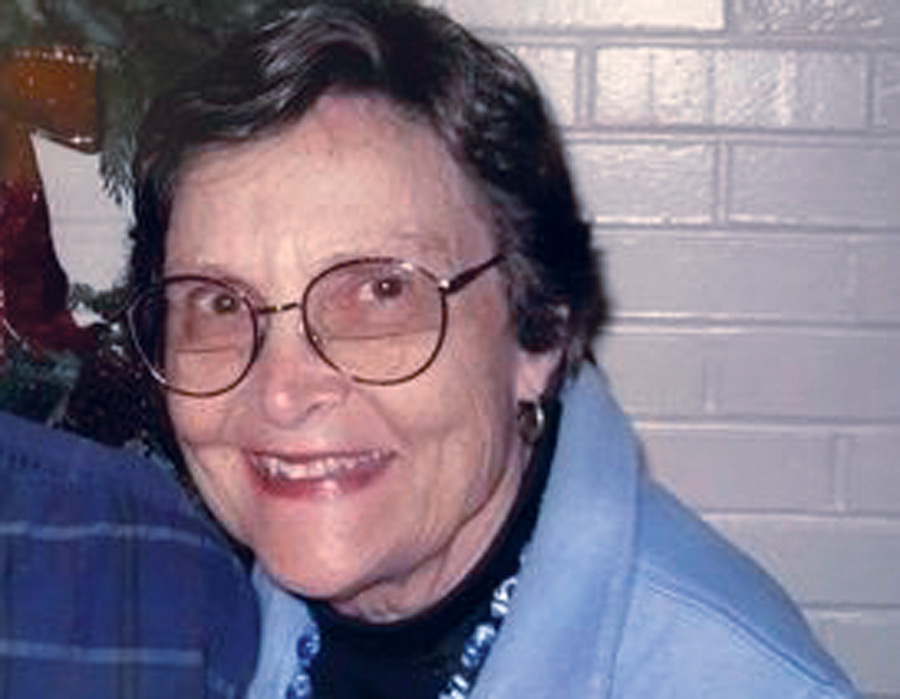
Dorothy Freedman ’49
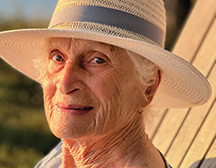
November 9, 2025, in Santa Monica, California.
Dorothy was a lifelong learner, teacher, and community builder who blended intellectual curiosity, creativity, and compassion across nearly a century of life.
Her father, David Robinson, was a prominent local attorney and civil rights advocate and her mother, Edna Natalie Shainwald Robinson ’18, was an early graduate of Reed College and author of a trenchant analysis of Portland's municipal affairs.
Dorothy grew up in a historic prairie school home bordered by her father's prize-winning roses and camellias. She was athletic and outgoing and loved dancing, cheerleading, and skiing. She was also compassionate, and as a teenage candy striper she cared for hospital patients, including wounded WWII soldiers.
She followed her mother and her older sister, Janice Robinson Stevens ’44, to Reed, as would her younger brother, David Robinson Jr. ’50. She completed her thesis, “Consideration of the Problem of Time in Virginia Woolf,” with the guidance of her advisor, Professor Frank W. Jones [literature and humanities]. She loved Reed for its intellectual rigor and witty, creative students and faculty.
After graduating from Reed, Dorothy moved to Paris, where she worked as a translator, notably translating Albert Cossery's novel Les Fainéants dans la Vallée Fertile into English.
On returning to the United States, Dorothy found employment on Ellis Island assisting refugees with the challenges of immigration. Dorothy was deeply committed to the welfare of her charges. In one tragic case, a young woman was denied entry to the United States because she had been reduced to elective mutism by her sufferings during WWII. Dorothy worked with her father and Senator Wayne Morse to free her from detention.
Dorothy then attended the Radcliffe Publishing Course and joined a New York publishing house. While in New York, a play she had written at Reed, The Peach Tree, was accepted for a live television performance, but did not run because Dorothy refused to violate her artistic integrity by making the changes demanded.
Many of Dorothy’s weekends were spent visiting her sister and her brother-in-law, Carl Stevens ’44, in New Haven, Connecticut. One weekend, her sister introduced her to a young Yale Medical School psychiatrist, Lawrence (Larry) Z. Freedman. They married and Dorothy joined Larry in his repurposed millhouse in Milford, Connecticut, where they welcomed their sons, Bart, Matthew, and Joshua.
In 1958, the young family relocated to Cambridge, England, where Larry worked as a research associate at Cambridge University and Dorothy continued to write. They then moved to California, where Larry served as a Fellow in the Center for Advanced Study in the Behavioral Sciences at Stanford, and their daughter, Johanna, was born. Dorothy created imagination-inspiring knight's armor and discovered a gift for promoting learning through play, which would lead her to her vocation.
The family then settled in the Hyde Park neighborhood of Chicago, Illinois, when Larry accepted a position as the Foundations Fund Research Professor of Psychiatry at the University of Chicago. In Hyde Park, the family welcomed the arrival of their youngest son, Thomas, and Dorothy transformed neighbors into friends, and friends to a mutually supportive community that was a constant for the rest of her life.
Dorothy was intrigued by her children's different learning styles and decided to become a teacher. She attended the University of Chicago and in 1975 graduated with a master of the science in teaching. Her master’s thesis was entitled “Some Children’s Thoughts About Time and a Study of the Errors They Make Learning to Tell Time,” harkening back to themes from her thesis at Reed.
Dorothy taught at University of Chicago Laboratory School for decades and created wonderful educational experiences for her students, including annual expeditions to Botany Pond and the Institute for the Study of Ancient Cultures on the University of Chicago campus. Even the youngest children delighted in collecting tiny zooplankton from the pond for simple science projects and discovering the wonders of West Asia and North Africa in the Institute's collections.
Professor Max S. Bell of the University of Chicago Department of Education asked Dorothy to join the University of Chicago School Mathematics Project. Dorothy agreed and was an essential part of the team that developed the widely used University of Chicago’s Everyday Mathematics curriculum, an innovative program of applied and conceptual mathematics for pre-kindergarten through sixth grade students. Dorothy also co-authored Math for the Very Young, a popular guide for parents.
Dorothy was a vital part of her community, a leader on her co-op board, a passionate birder, a world traveler, a dedicated gardener, and a devoted choir member. Active into her 90s, she enjoyed her later years with her children and grandchildren. When Joshua would marvel that she was almost 100 years old, she would respond with a twinkle, “That’s ridiculous!”
Her memory lives on in the books she wrote, the friendships she nurtured, the gardens she tended, the children she taught, and the family she raised.
Dorothy was predeceased by her former husband, Lawrence Freedman, and her son, Matthew. She is survived by her children, Bart, Joshua, Johanna, and Tom.
Appeared in Reed magazine: Fall 2026
comments powered by DisqusThe Lives they Led
Henry Franzoni III ’78
Visionary Drummer, Advocate for Tribal Fisheries, and Recognized Authority on Bigfoot
Robert Greenberg ’56
Beloved Husband, Devoted Father, Treasured Grandfather, and Venerated Professor