

Liberal Studies 529
Disinformation & Propaganda: A Cognitive Science Approach to the Art of Persuasion
Why do people appear to believe things that are so clearly false? The course will explore the cognitive science behind cognitive biases and heuristics that make us vulnerable to misinformation and disinformation. We will examine select historic propaganda campaigns, but will focus on more recent and present disinformation and persuasion campaigns. We will also work to address and compensate for the constraints of human cognition that have been exploited by disinformation campaigns. In addition to covering the psychology of propaganda and cognitive biases, the course will incorporate readings from political science, philosophy, linguistics, marketing, and computer science to compare how each discipline provides the tools for identifying and overcoming misinformation and polarization that has been increasing with the rise of social media. The goal of the course is for students to recognize their biases, practice techniques for identifying misinformation and disinformation, and develop a model of ethical decision-making for sharing information.
0.5 units
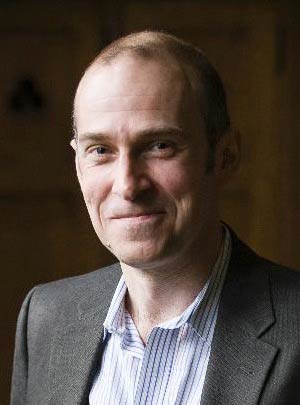
Vasiliy Safin, Visiting Assistant Professor of Psychology
7 weeks, one meeting per week: Tuesdays 6:00–9:00 p.m., June 23–August 11
Political Science 583
Heidegger and Arendt at the Movies
Edmund Husserl called earth “the originary ark.” Martin Heidegger wrote that earth must not be associated with “the merely astronomical idea of a planet.” After the launch of Sputnik, Hannah Arendt called earth “the quintessence of the human condition,” a “free gift from nowhere” that we now wish to exchange for something we have made ourselves. All three were worried about the fate of the world once we left earth and ventured into space. This course takes up these anxieties from the perspective of our own world by placing them in conversation with science, art, and film. What “world picture” comes into focus through the lens of Earth System Science, contemporary climate modeling, and astrobiology? Primary texts are “The Age of the World Picture,” “The Origins of the Work of Art” and “The Question Concerning Technology,” the final chapter of The Human Condition, along with excerpts from Husserl’s Crisis of European Sciences and Alexandre Koyré’s From the Closed World to the Infinite Universe. Our contemporary archive includes images of the earth from space, the concepts of the Anthropocene and technosphere, the history of climate modeling and the future of geoengineering, the films Koyaanisqatsi and Gravity, and Yinka Shonibare’s Refugee Astronaut. No scientific or technical knowledge is required – only curiosity and a sense of wonder.
0.5 units
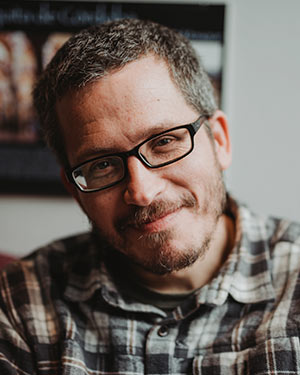
Lexi Neame, Visiting Assistant Professor of Political Science
7 weeks, one meeting per week: Wednesdays, 5:40–8:40 p.m., June 10–July 22
* Registration for Summer 2026 courses will open on April 20, 2026.