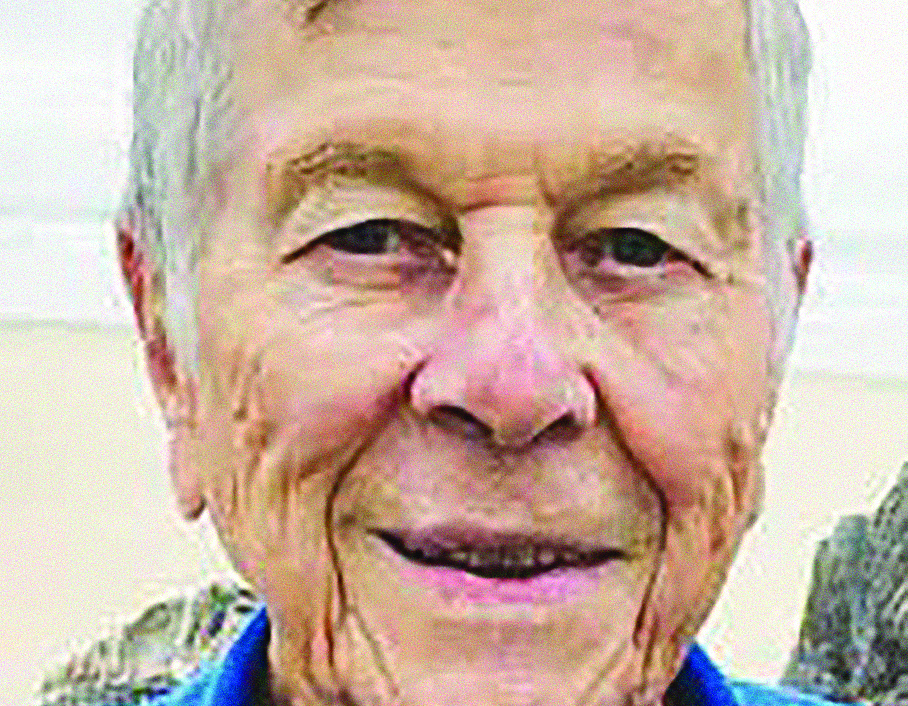
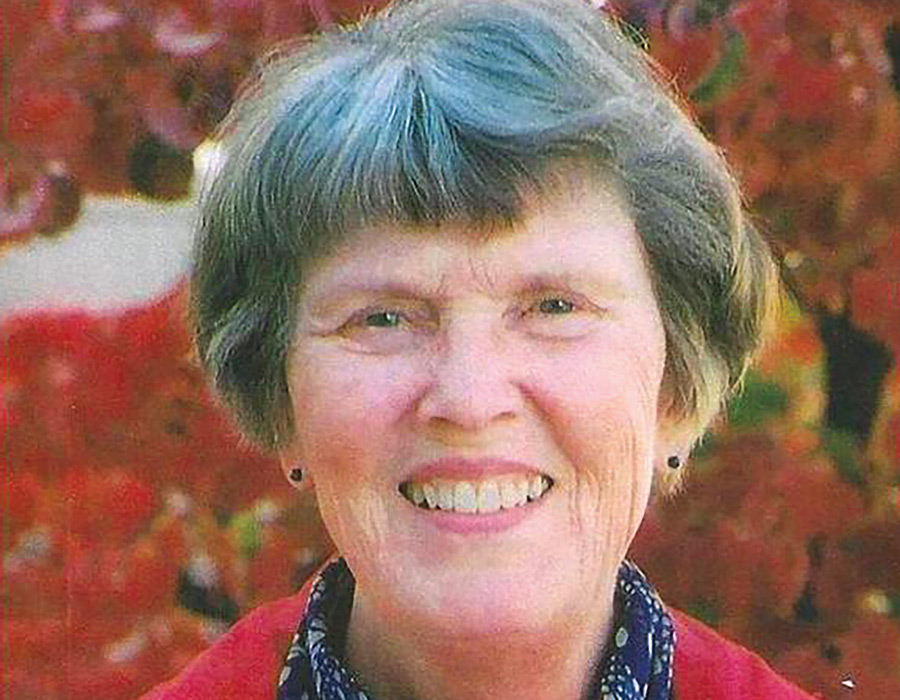
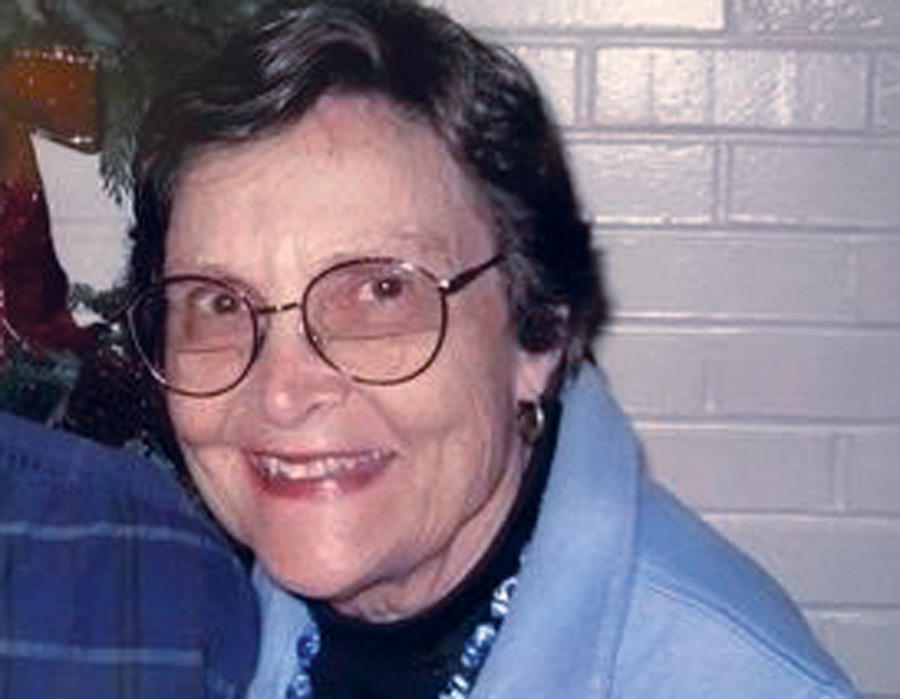
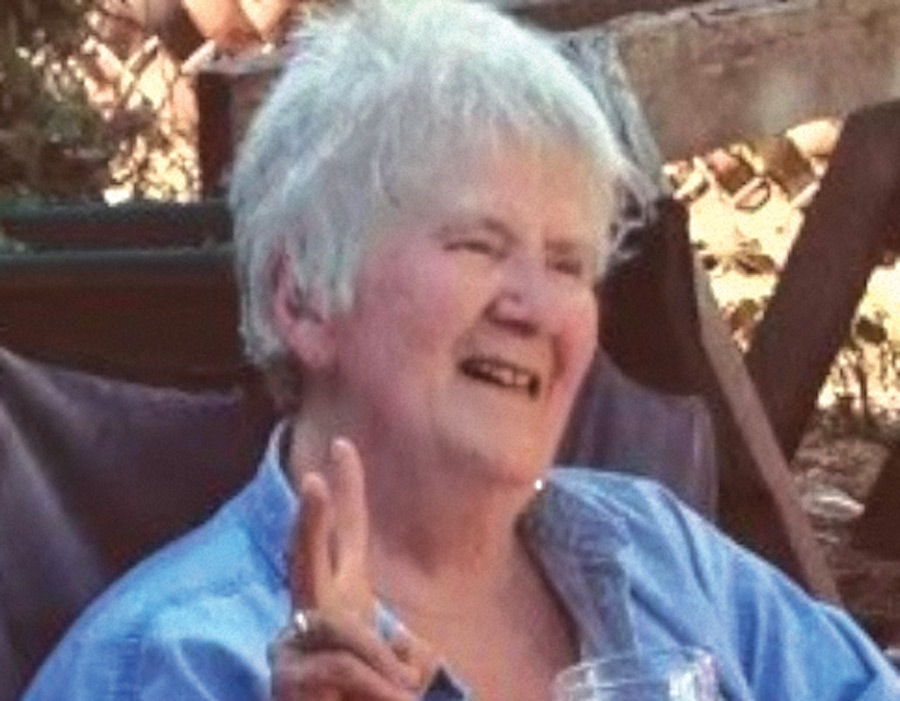
Morgan Martha (Clapp) Sanders ’55
April 2021, in Milford, Pennsylvania.
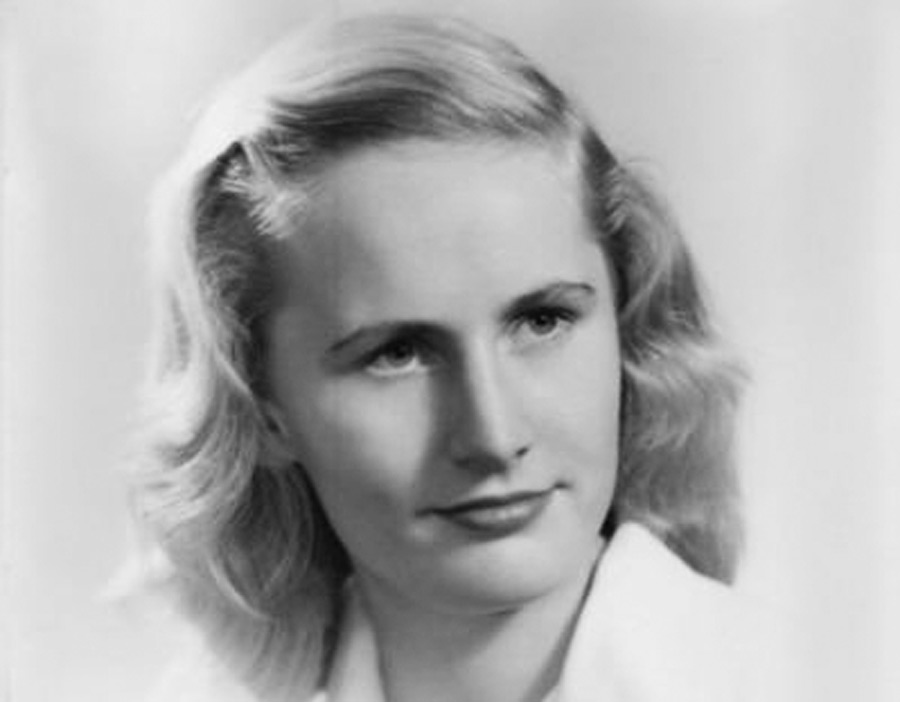
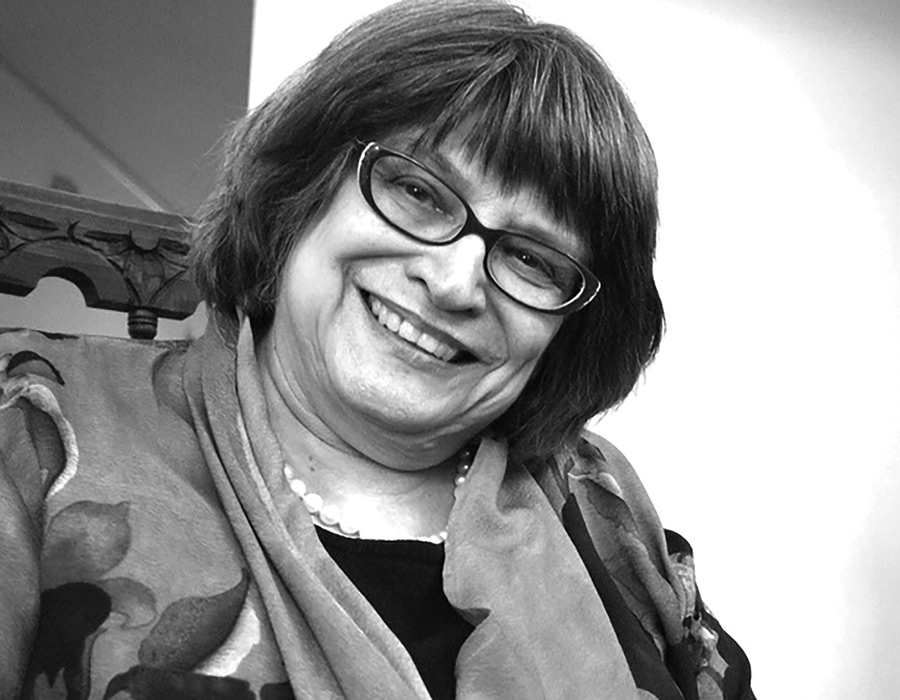
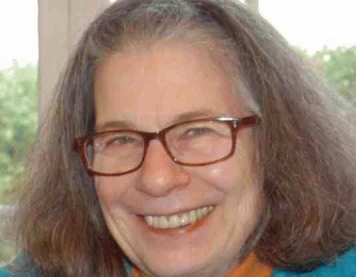
When she came to Reed from Salt Lake City, Martha Clapp (as she was then known) majored in literature and wrote her thesis, “Symbol and Value in E.M. Forster’s Novels,” advised by Prof. Donald MacRae [English/literature 1944–73]. Upon graduating, she went to New York City to make her mark. She taught art at Columbia Grammar School, worked as a writer and freelance artist, and wrote poetry.
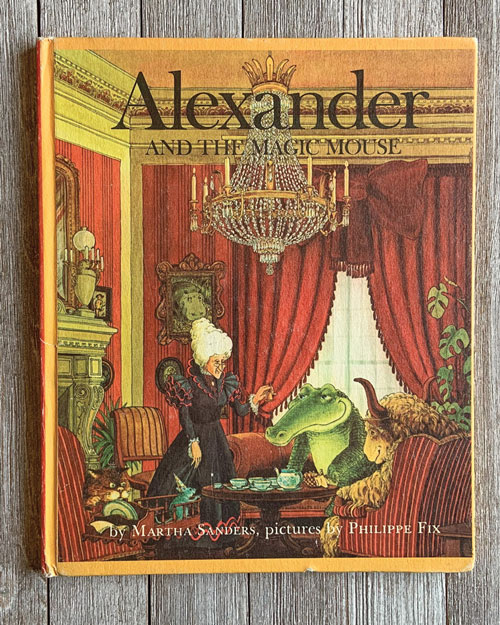
One of her greatest accomplishments as an author was Alexander and the Magic Mouse, written as Martha Sanders. Featuring art by French illustrator Philippe Fix, the book was published in 1969 as a Weekly Reader Children’s Book Club Edition and featured Alexander, a smiling alligator from China; the old lady he lived with; and the new friends they made—including a brindle cat, a magical mouse, and a yak—when the town below them was threatened by 30 days of rain.
As Morgan Sanders, she created a weekly comic strip for a New York City community newspaper in the ’70s that featured the feline antics of Branwell E. Snit. It was inspired by a real cat whose creative sleeping, gourmet sensibilities, and passion for music were Morgan’s inspiration. The panels were later gathered into a single book, The Branwell Snitbook: The Complete Branwell Snit Cat Comix (2016).
She also wrote poetry. One of her poems was included in an anthology of works by contemporary female poets, and she published a collection of poems and drawings titled Looking for Lola: Poems & Drawings by Morgan Sanders.
Morgan was a founding member of SOHO20, the second all-women cooperative art gallery in New York City. For her initial exhibition at SOHO20 in early 1974, Morgan showed three-dimensional wall constructions that combined painting and found objects. Art critic Peter Frank praised the “progressions of dissimilar elements” as suggesting “a stream-of-consciousness narrative, with rapid, exhilarating changes of venue.” The next year, Morgan exhibited four sets of photographs and three large paintings that depicted the aging interiors of turn-of-the-20th-century architecture on the Upper West Side of Manhattan.
By the late ’70s, she turned increasingly to photography and began creating photographic series such as Harlem Walls, which showed at the New York Public Library, and Trucks, which exhibited at the Camera Club of New York and at the Viking Union Gallery in Bellingham, Washington, shortly after she moved there in 1982. The following year, she showed a photographic series shot with a telephoto lens, Flowers and Stones, which was meant to be seen from a distance of 20 to 25 feet. In the words of one reviewer, the flowers “become the dipping and sweeping figures of dancers in flowing gauze gowns.”
She is survived by her brother, Dr. Robert Clapp ’62.
Appeared in Reed magazine: September 2022
comments powered by DisqusThe Lives they Led
Henry Franzoni III ’78
Visionary Drummer, Advocate for Tribal Fisheries, and Recognized Authority on Bigfoot




Robert Greenberg ’56
Beloved Husband, Devoted Father, Treasured Grandfather, and Venerated Professor