2024 Senior Theses
Harper Lethin
Enfolding Liveliness: Invoking Bacteriophage Therapy for More-Than-Human Kinships
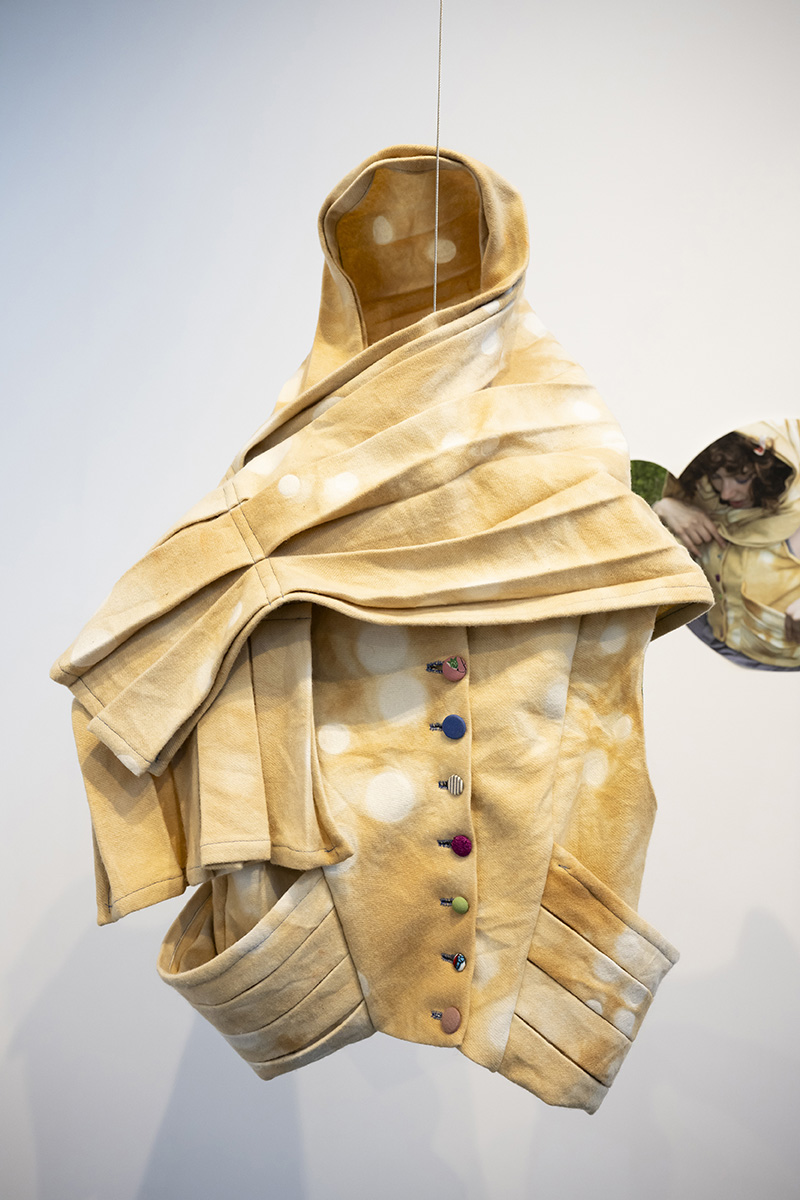
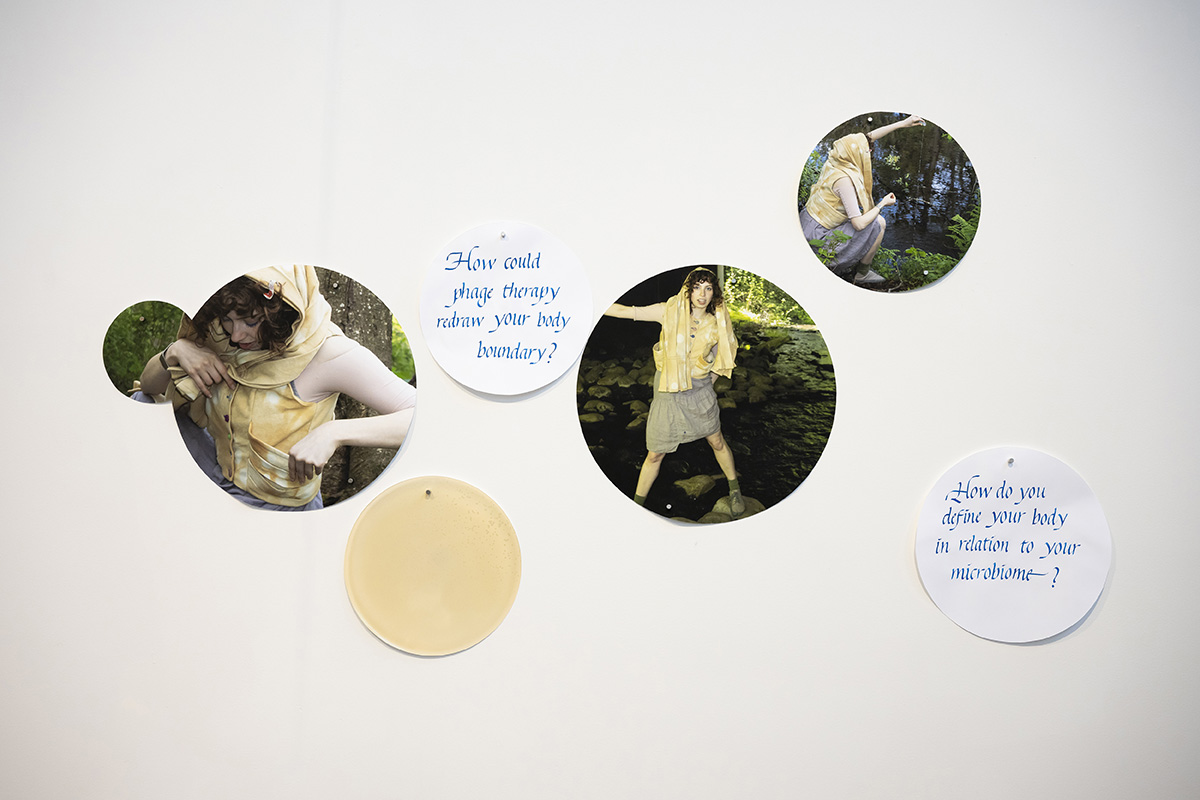
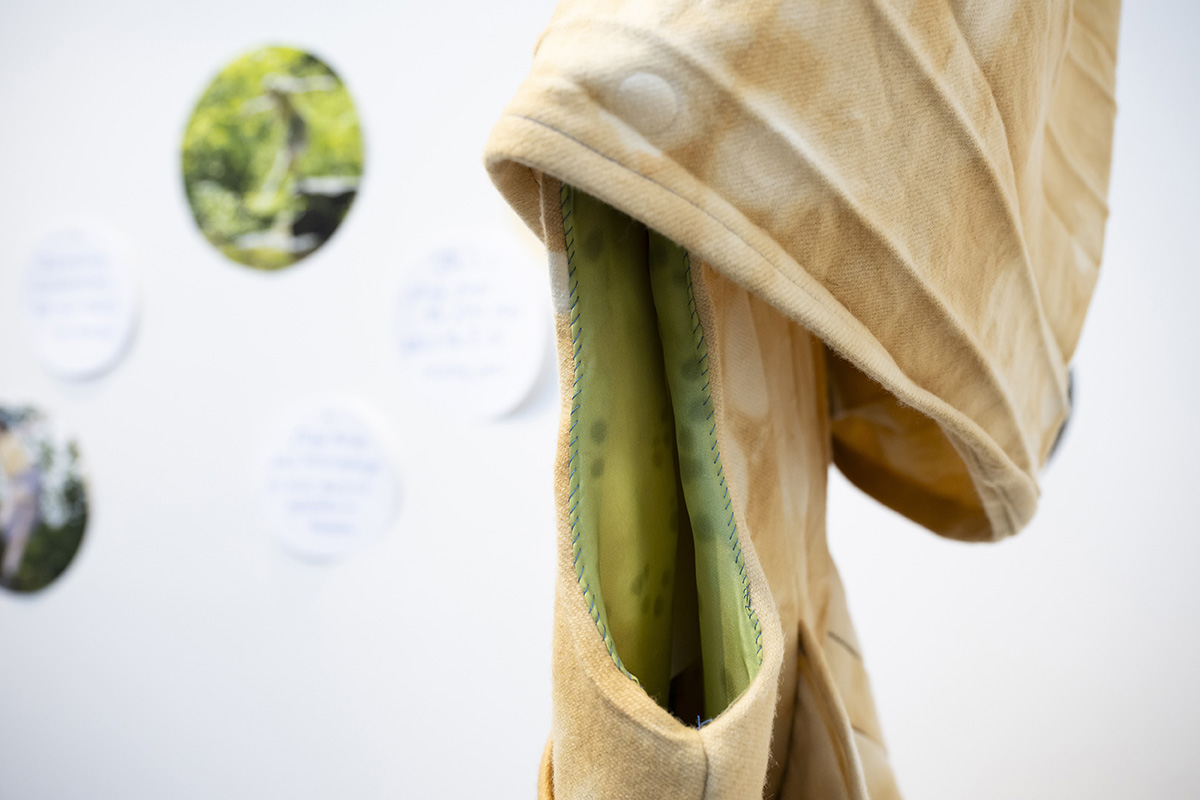
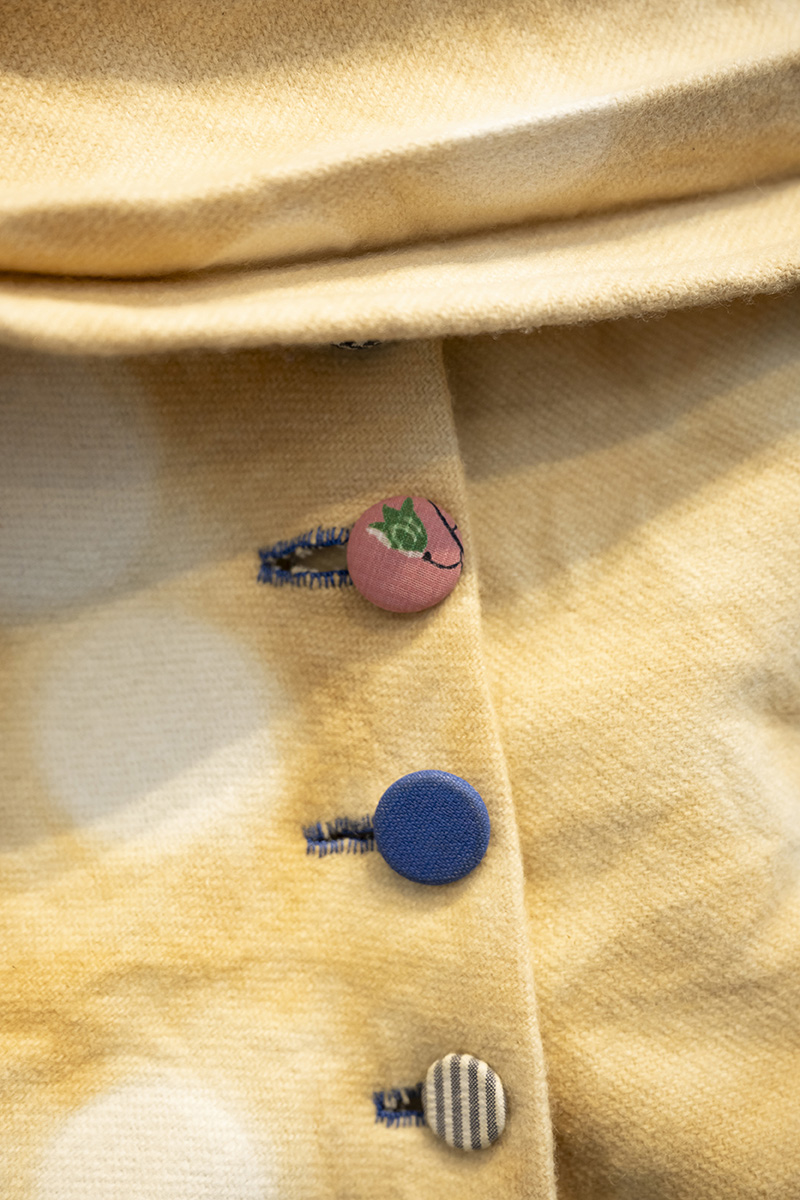
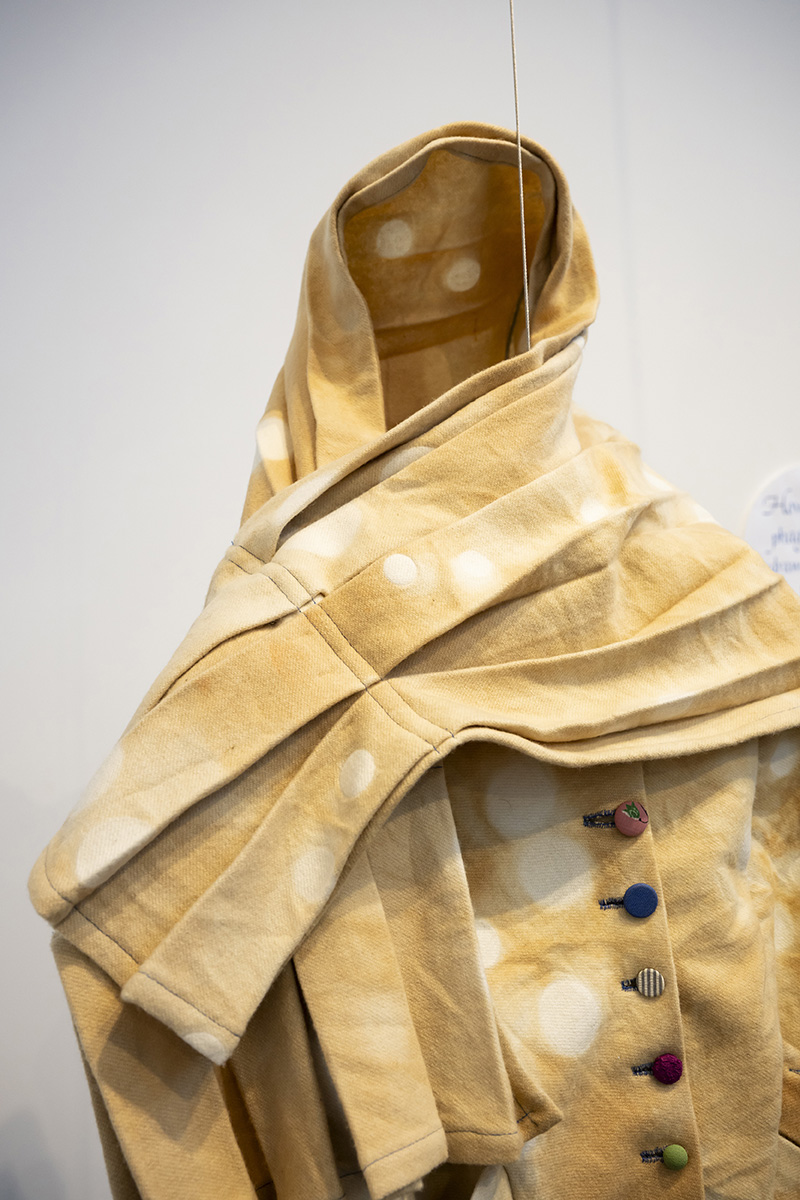
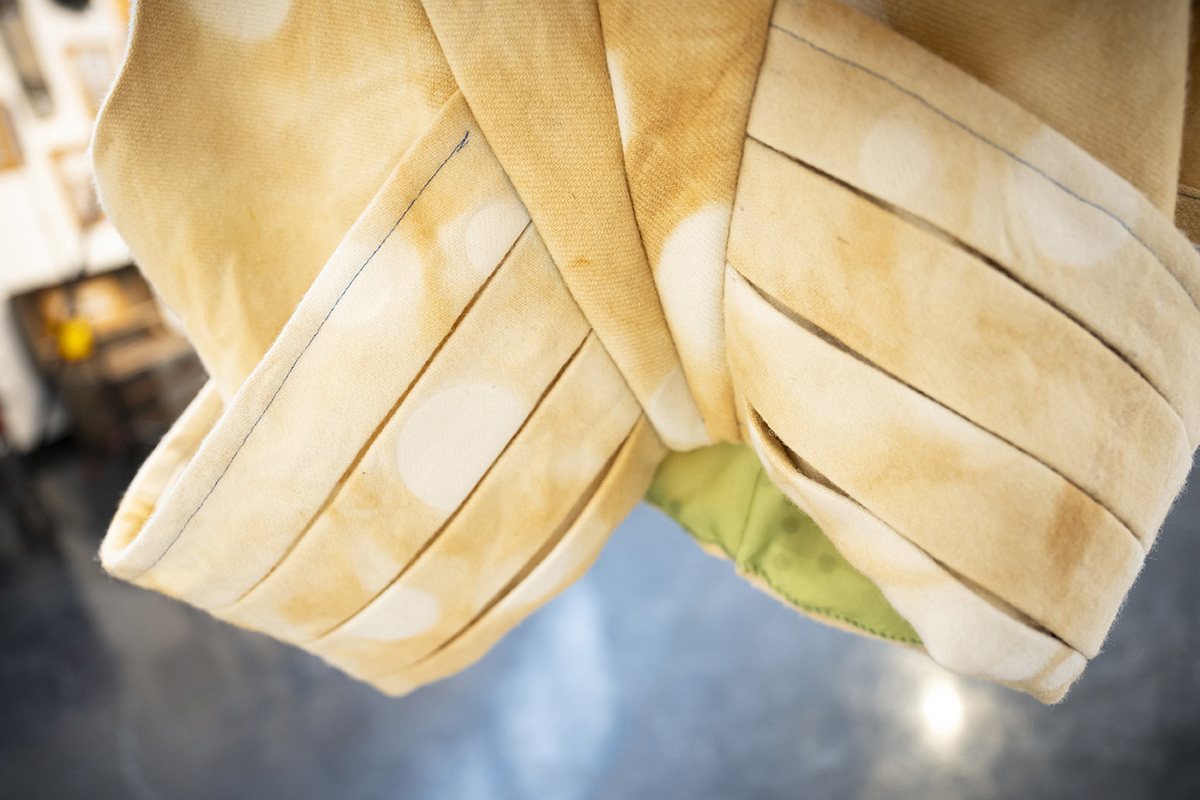
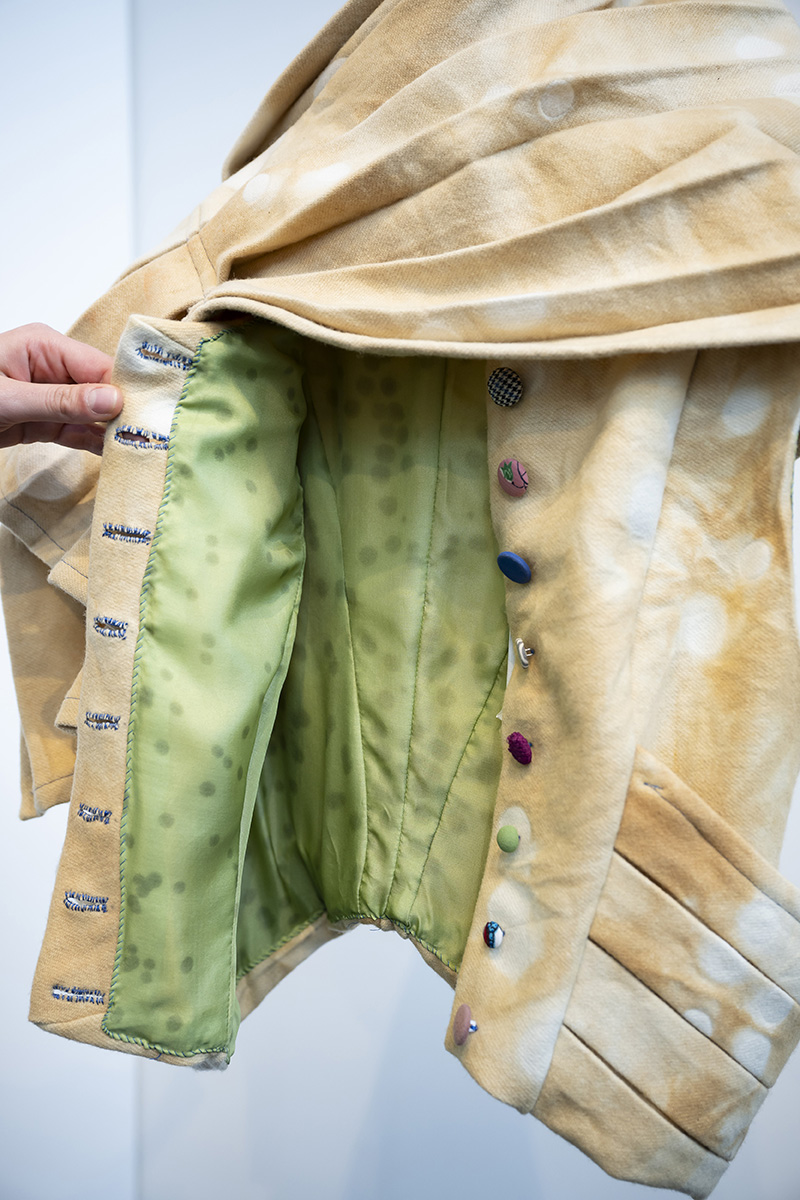
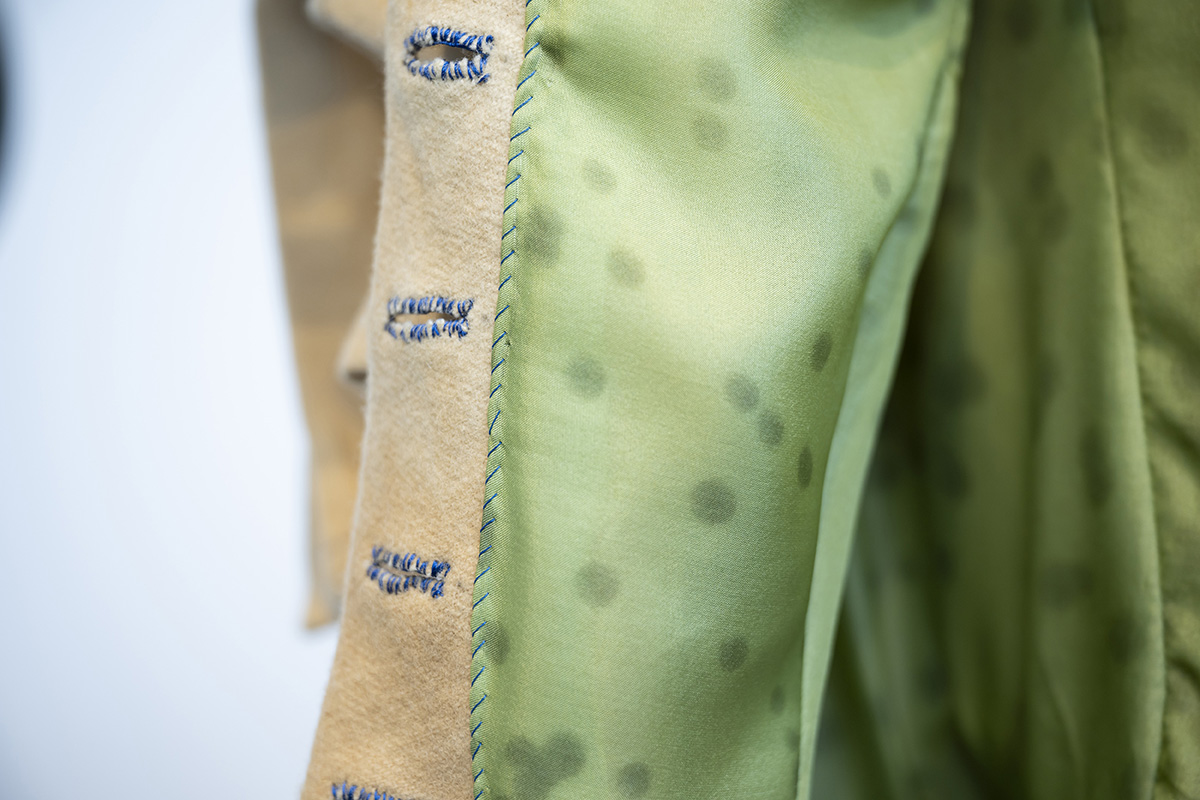
This interdisciplinary thesis uses art and microbiology to investigate how bacteriophage (phage) therapy can inspire radical kinships between humans and microorganisms. Phages are viruses that only kill bacterial cells, and phage therapy is the practice of treating human infections of bacteria by applying phages. Phage therapy presents scalability challenges to the pharmaceutical industry and draws into question the way we define our body boundaries in opposition to microbial invasion. The troubling of these biopolitical and constructivist norms offers a tender place to grow a culture of microbial kinships. My experiment used transposon insertion sequencing to try and identify the receptor molecule on the surface of E. coli that the novel PDX phage binds to, although due to limited time, this goal was not achieved. The characterization of such phage-host interactions is crucial for understanding how bacteria gain resistance to phages, one of the primary challenges of implementing phage therapy. The specificity of phages to their host bacteria means they can’t be applied ubiquitously like antibiotics; the practice requires deep attentiveness to phages, which can grow into kinship. I created a garment which aimed to embody that kinship by incorporating phage plaque iconography into an exaggerated, cyborg body outline. My use of lichen—tight associations of fungus and cyanobacteria or algae—to dye the fabric functioned as a readymade symbiosis transcending representation. The lab work and the art were both methods of experimentation in relating to the lively phage so that through creative collaborations with microorganisms, we might persist through precarious times.
Hugh Clymore
A Corner Daydream
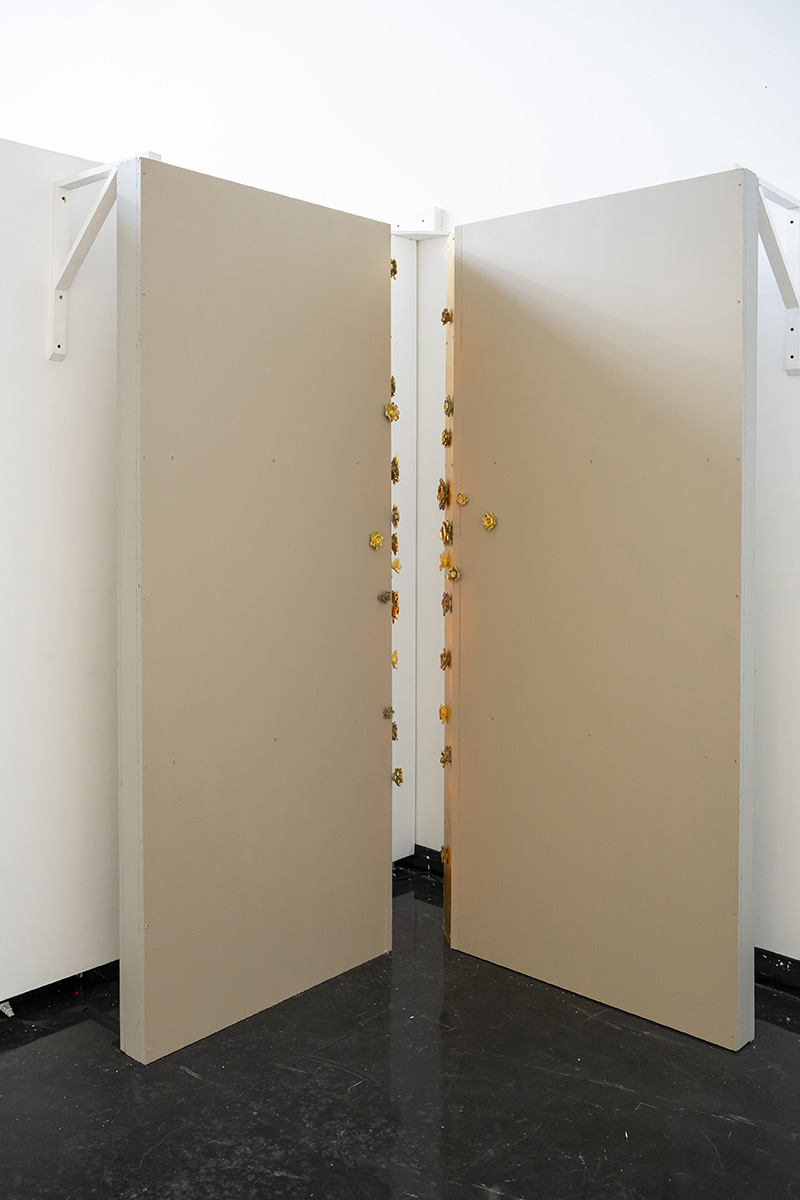
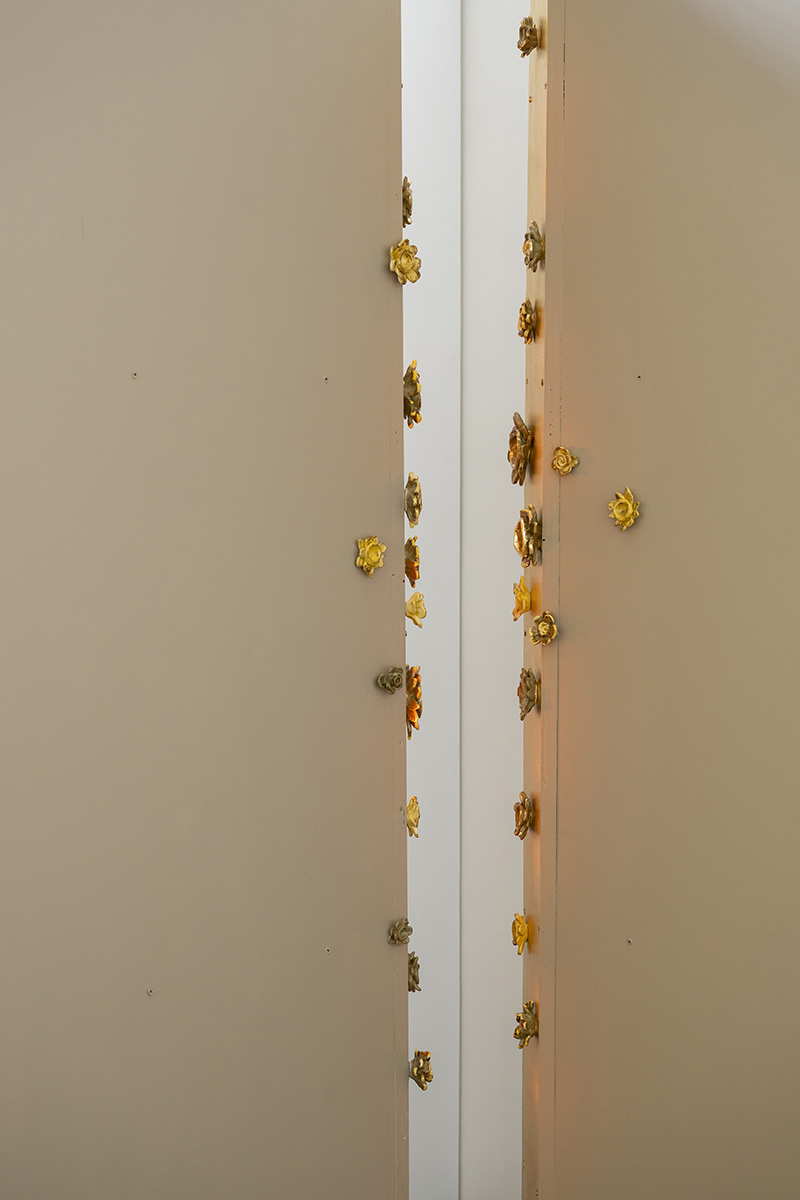
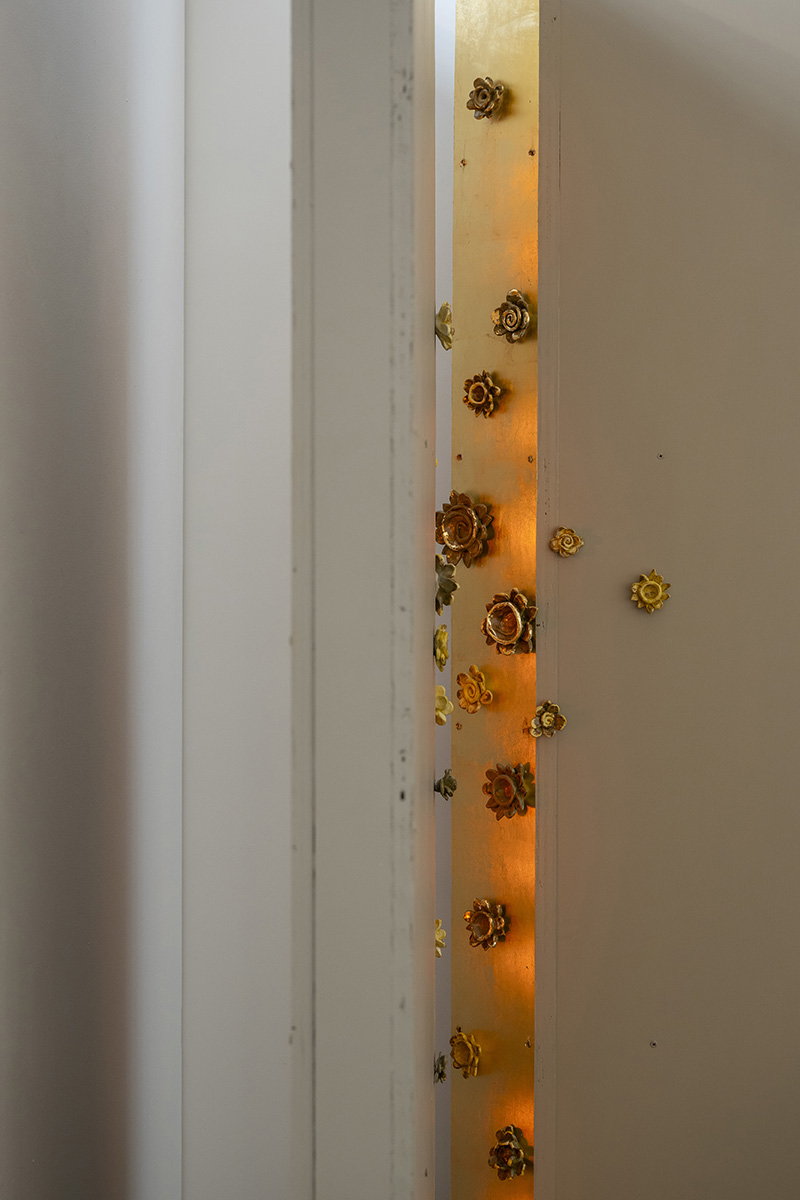
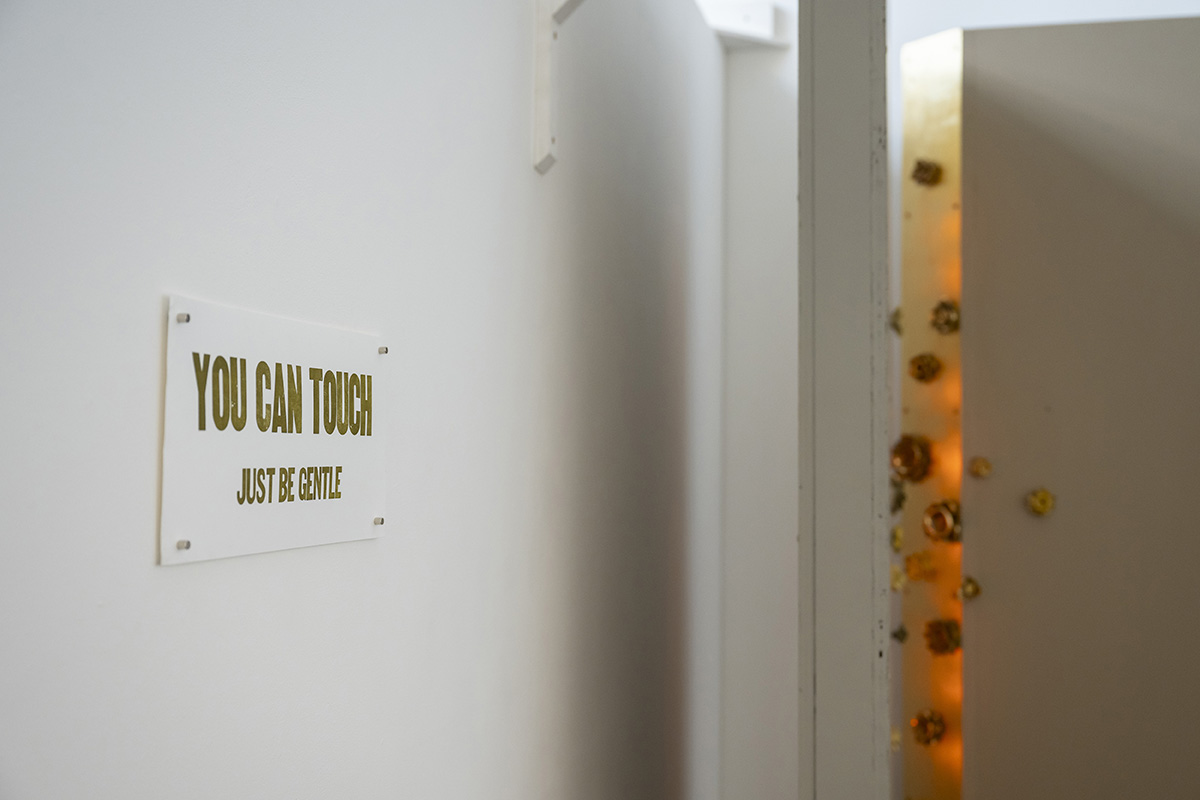
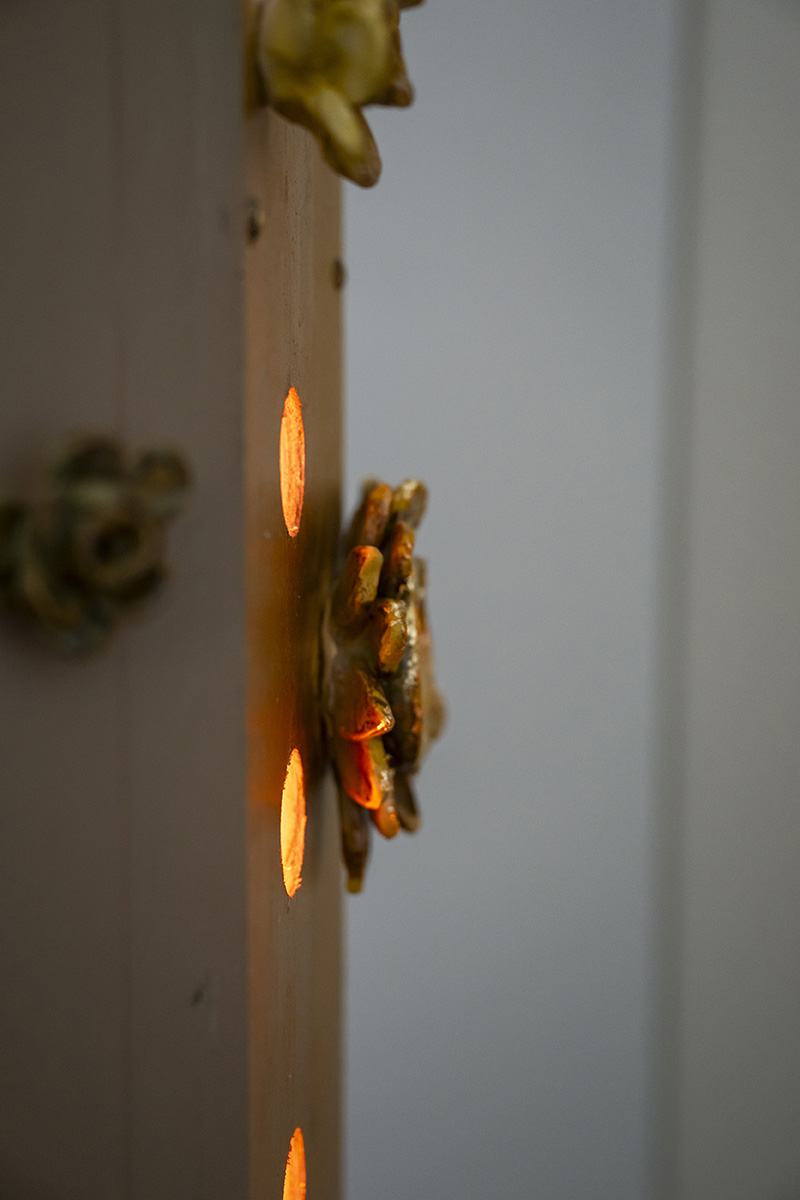
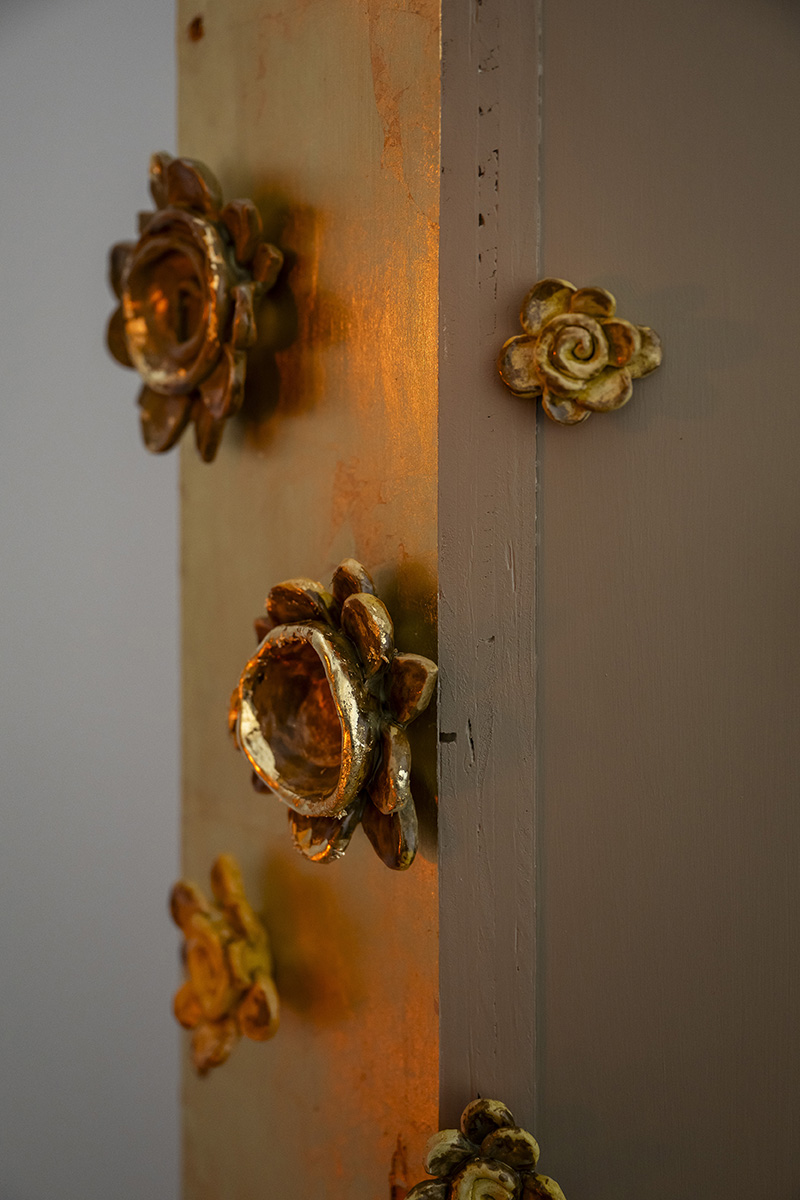
This thesis explores the topic of comfort, focusing specifically on the dynamics of spaces, both physical and metaphysical, that provide comfort. The essay begins by exploring homes and wild spaces. What makes a home comfortable and uncomfortable? How do natural environments hold bodies and interact with humanity? Next, delving into metaphysical space, what life lies in voids? How can embodied feelings and intangibility be tied together? The artwork tied to this essay takes the form of a sculptural corner, built for the human artist's body, measured by height and wingspan. The corner holds the body and carries it away into a golden dream space. The process of creation was a collaborative effort between human(s) and material, each contributing to the final product.
Kathryn Zix
Library of Alternative Timekeeping
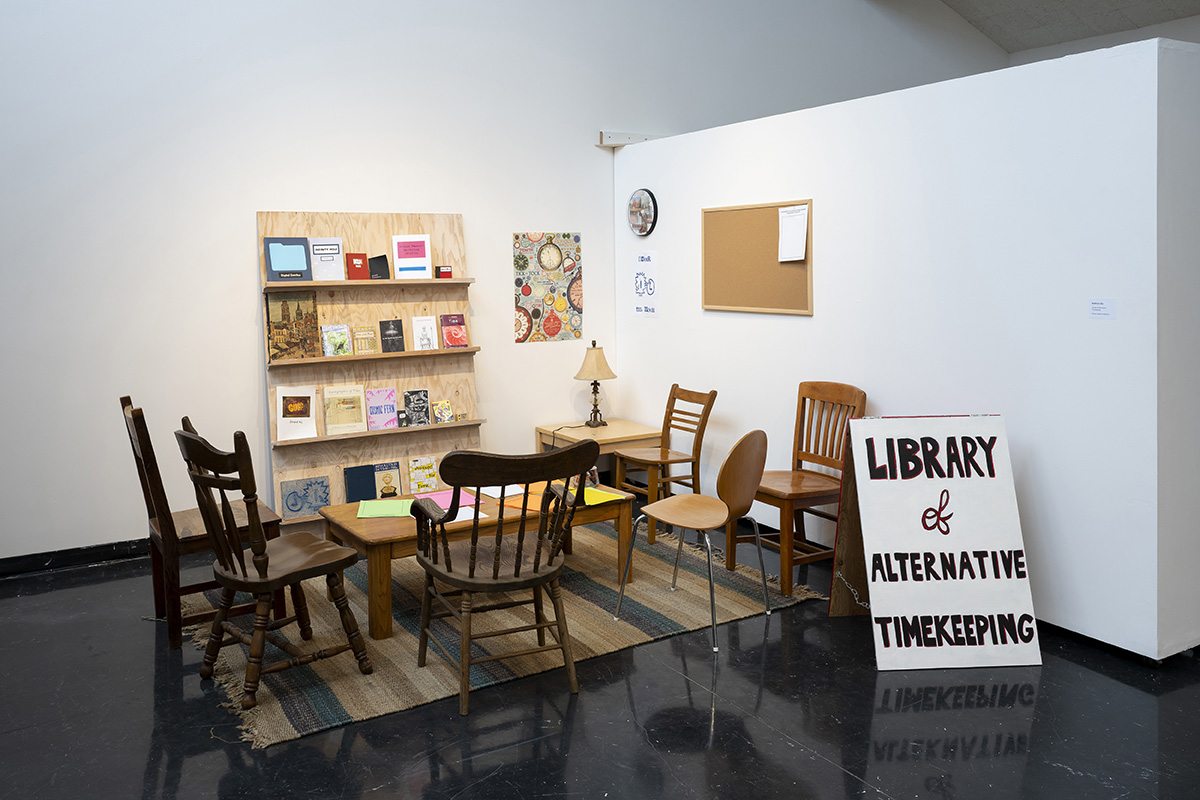
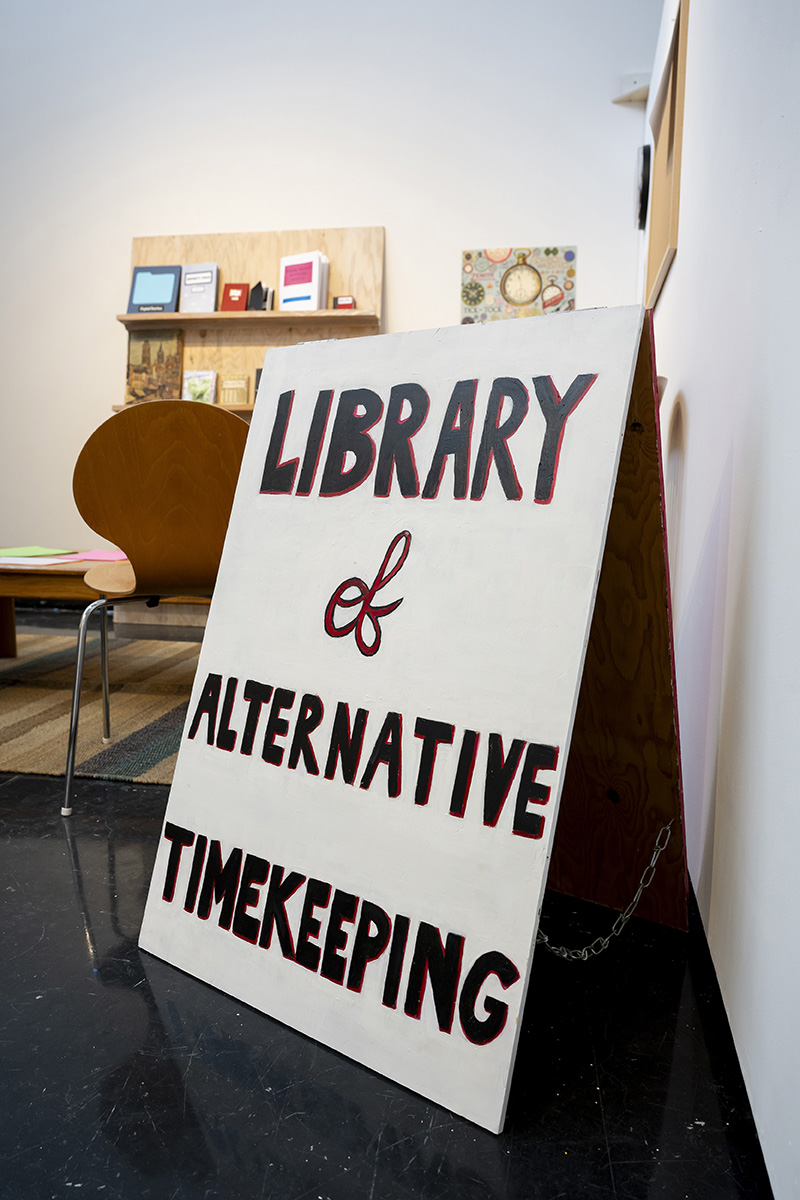
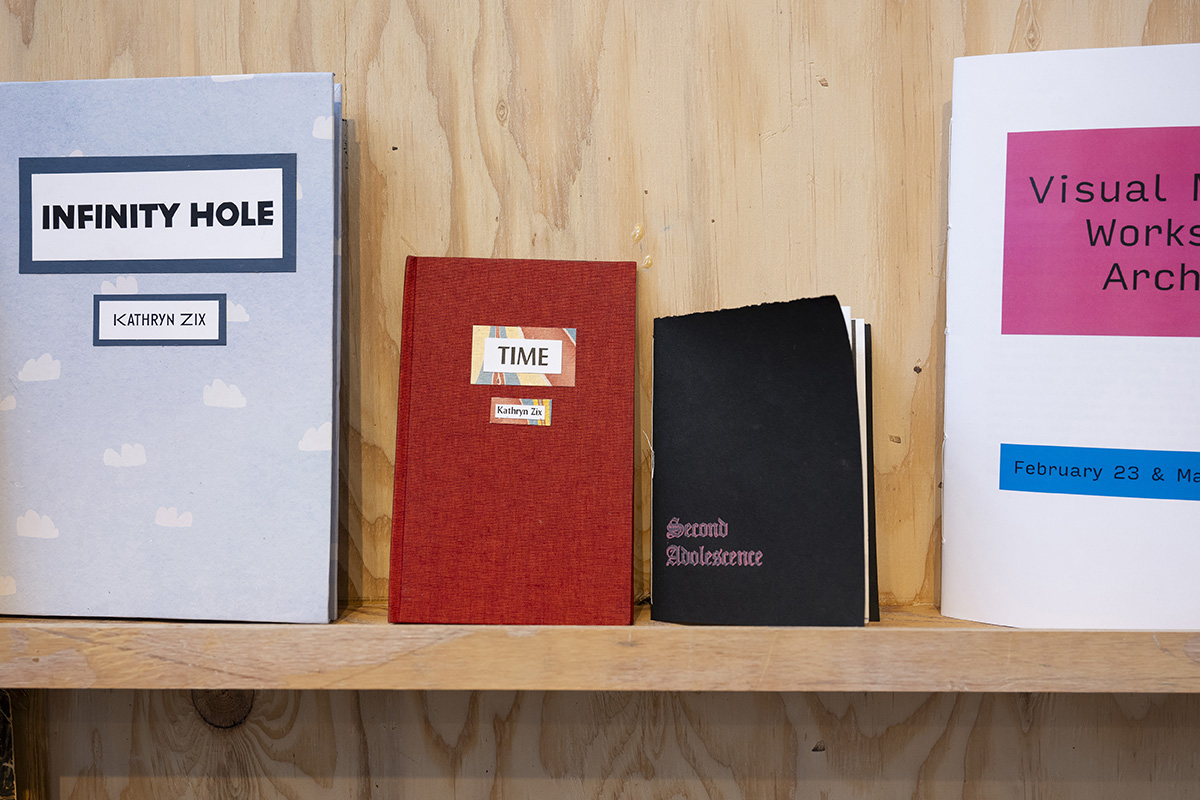
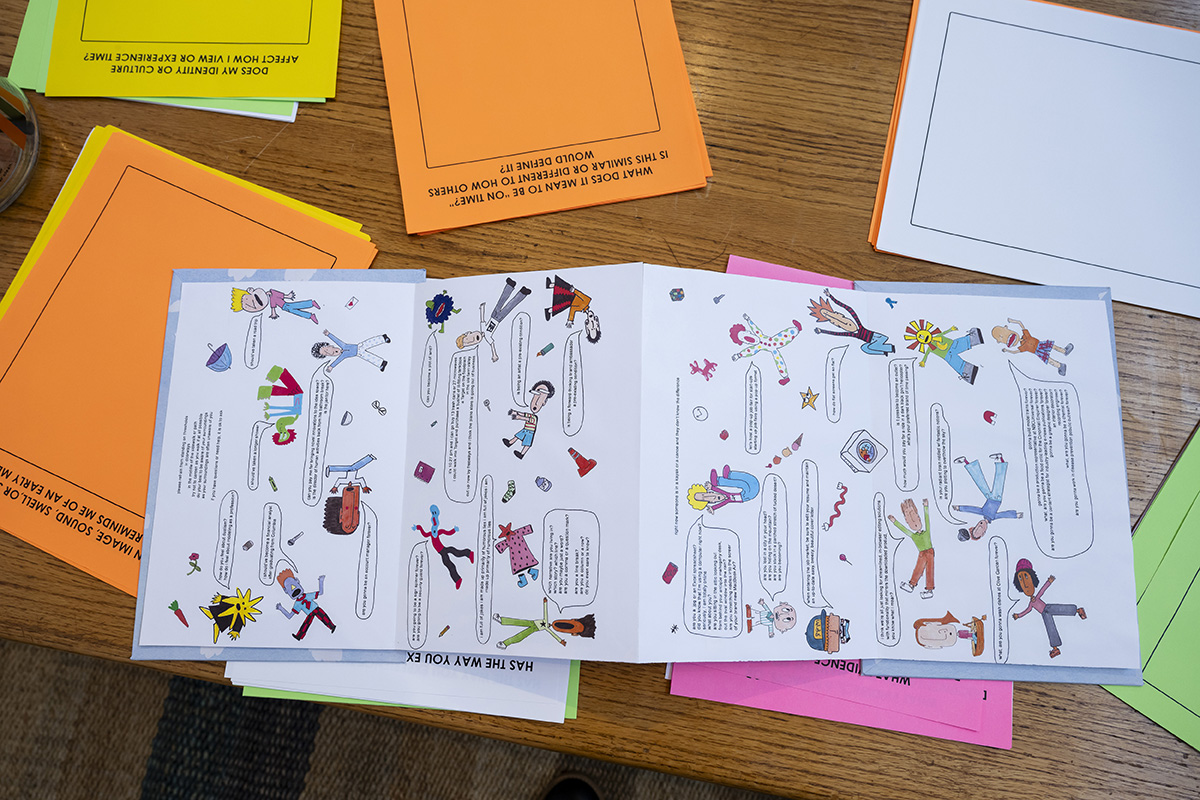
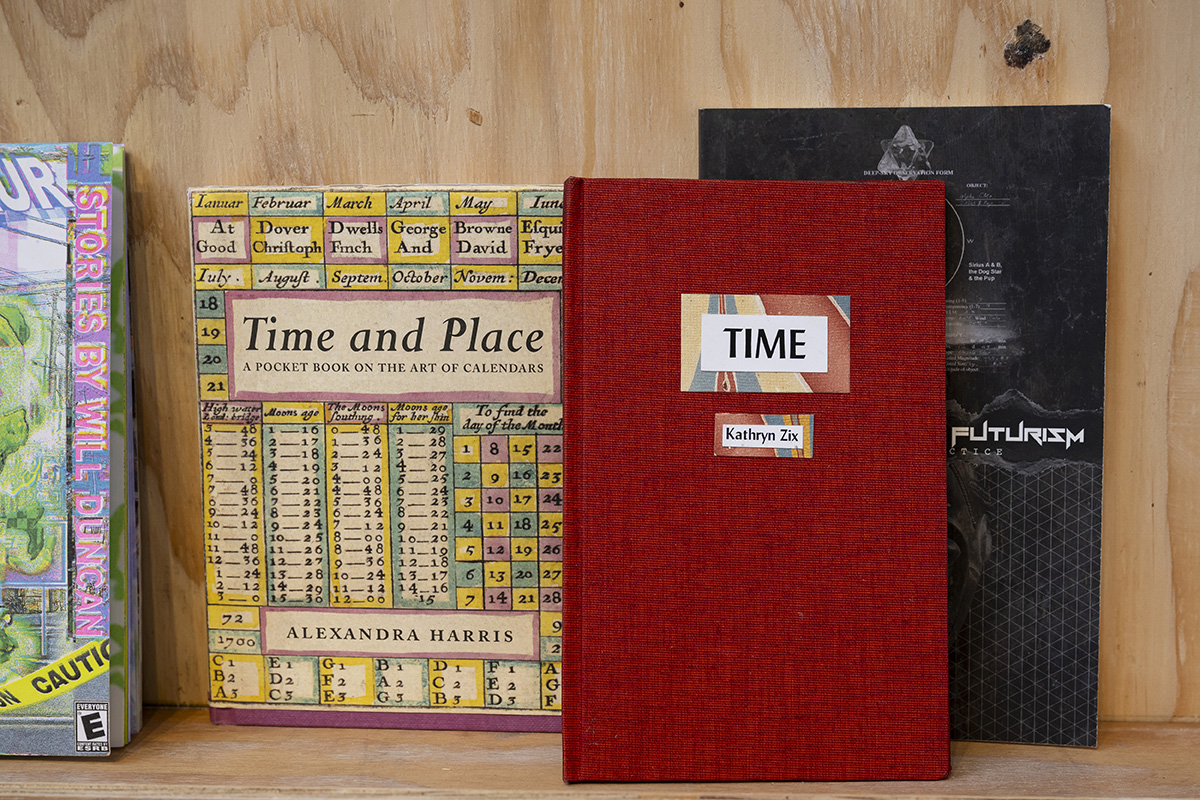
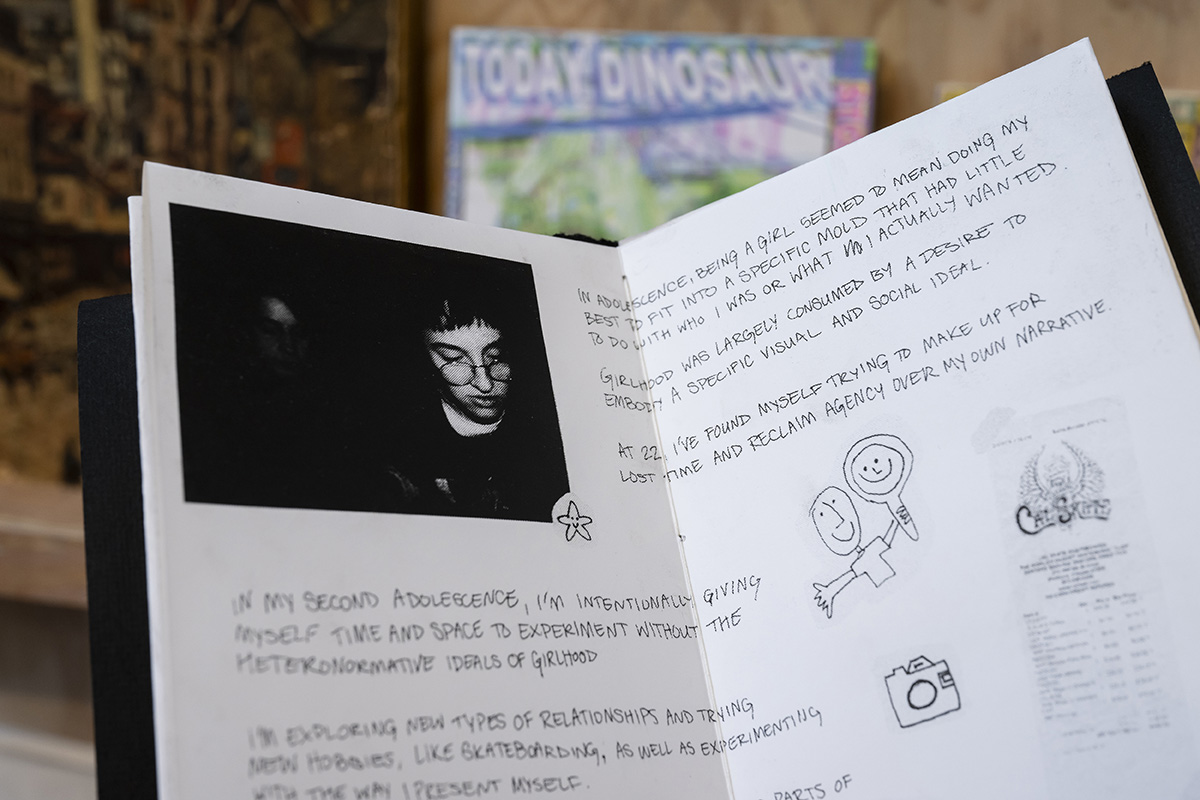
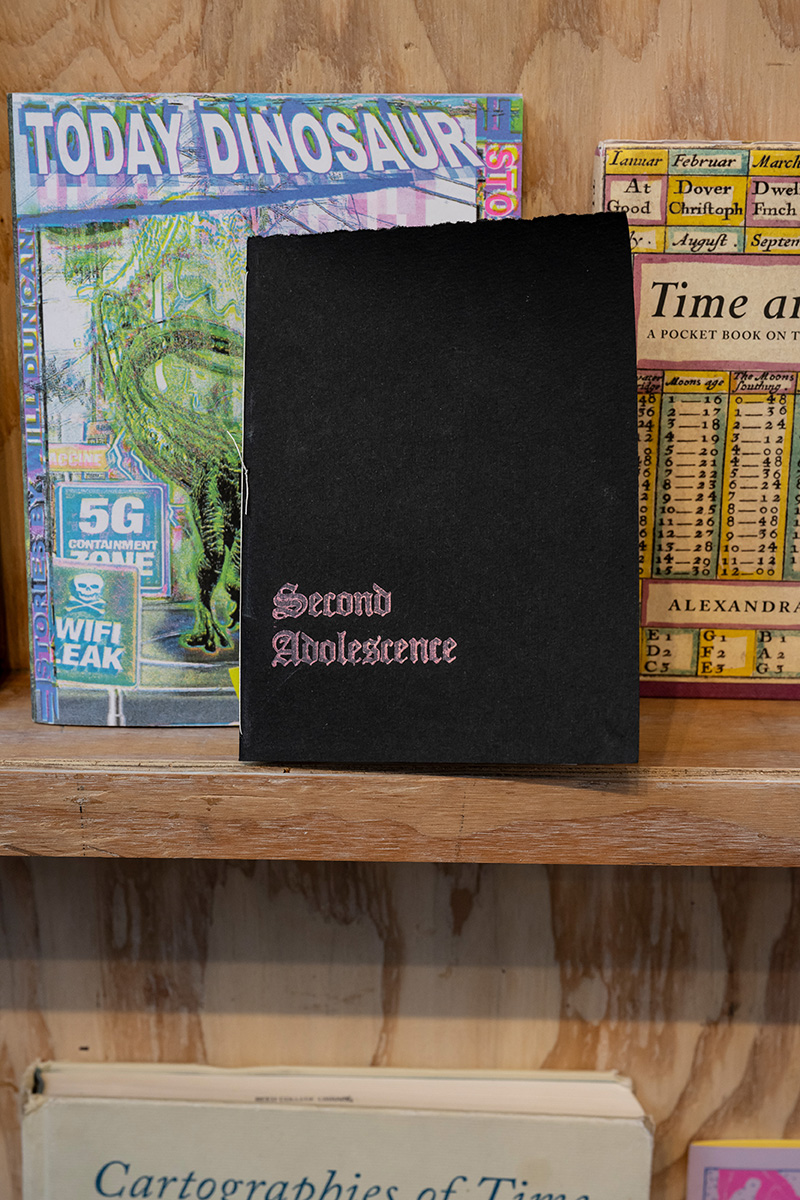
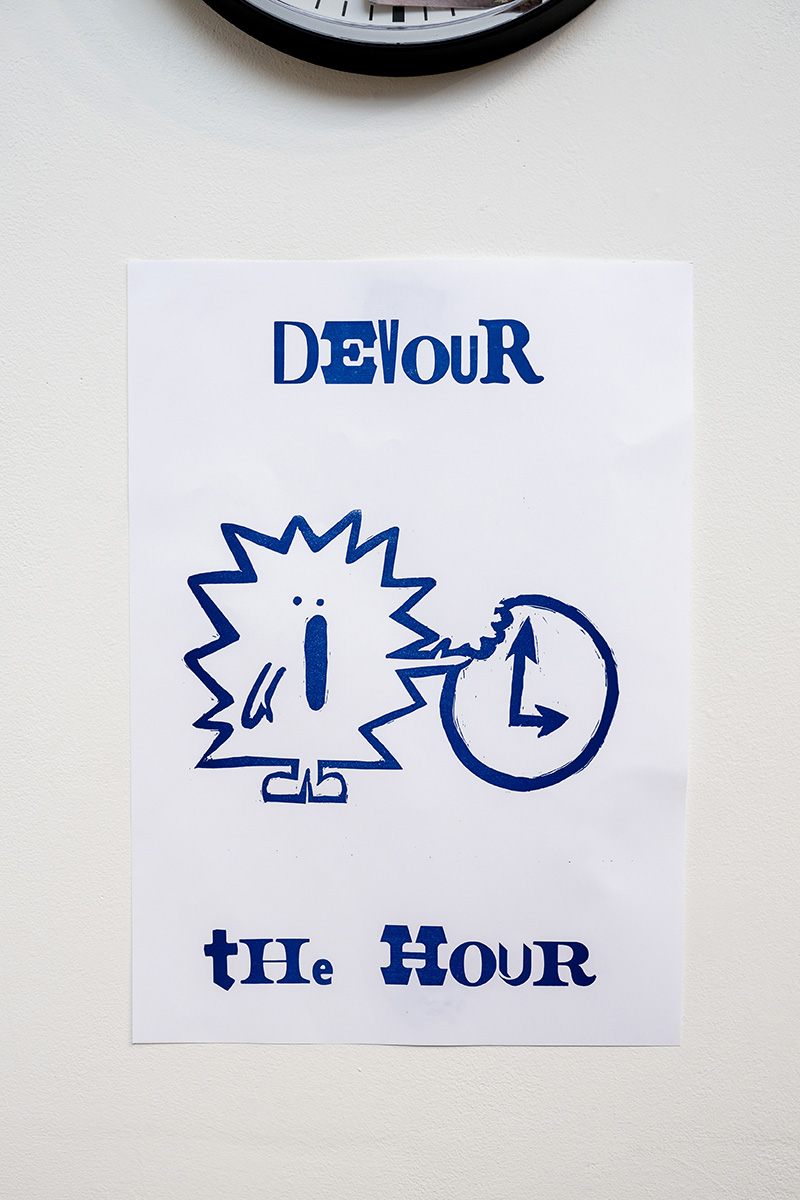
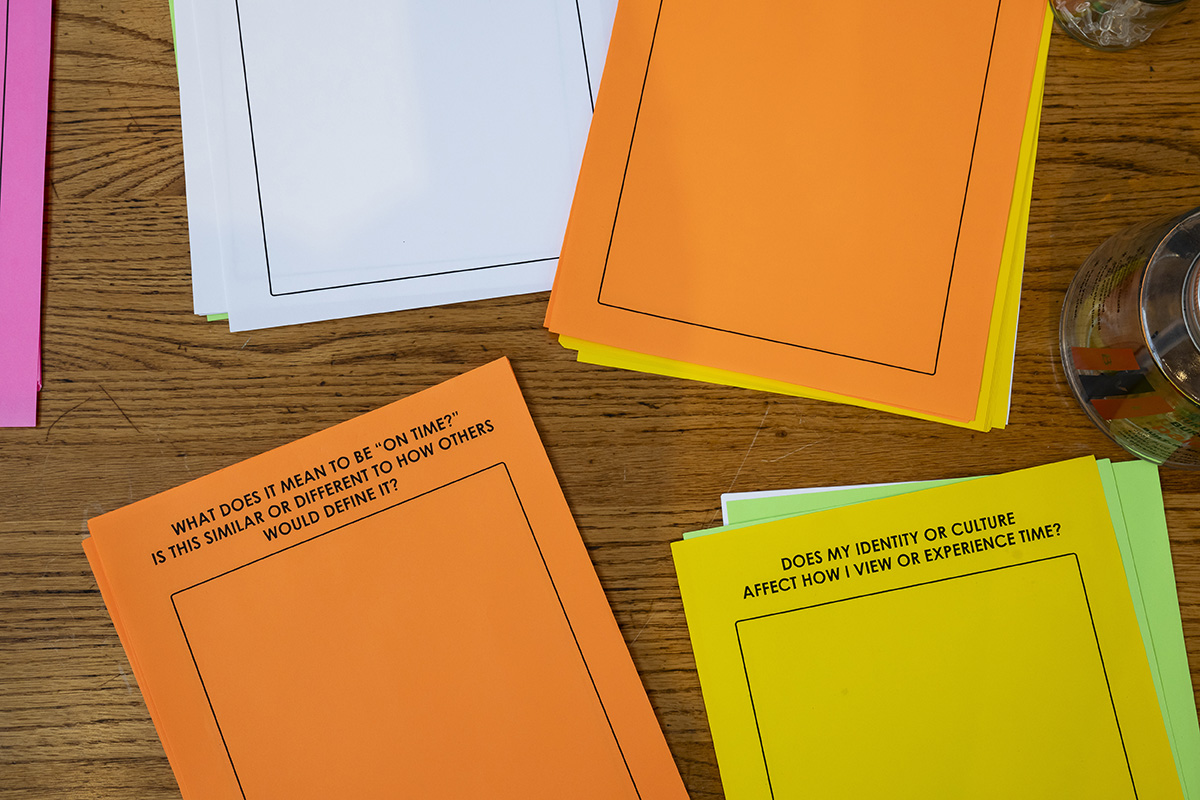
This thesis is an installation that explores the interconnected themes of time, temporality, and technological advancement. The installation functions as a library where visitors engage with works on time and reflect on their own bodily and personal experiences of time. Central to the installation are notions of non-linear and non-standardized time, challenging conventional understandings of temporality that have been mediated by digital technologies. The collection of books includes personal narratives, creative works, and theoretical texts on time, some of which I have written myself and others which I have collected from others. Included works explore new ways of understanding our relationship to time, utilizing social, geographical, and cultural frameworks that depart from colonial linearity or exist alongside it. Through engagement with the installation, visitors are invited to reconsider their relationship to memory, technology, and the passage of time in the digital age.
Milo Martinez
Sharing Soup and Stories
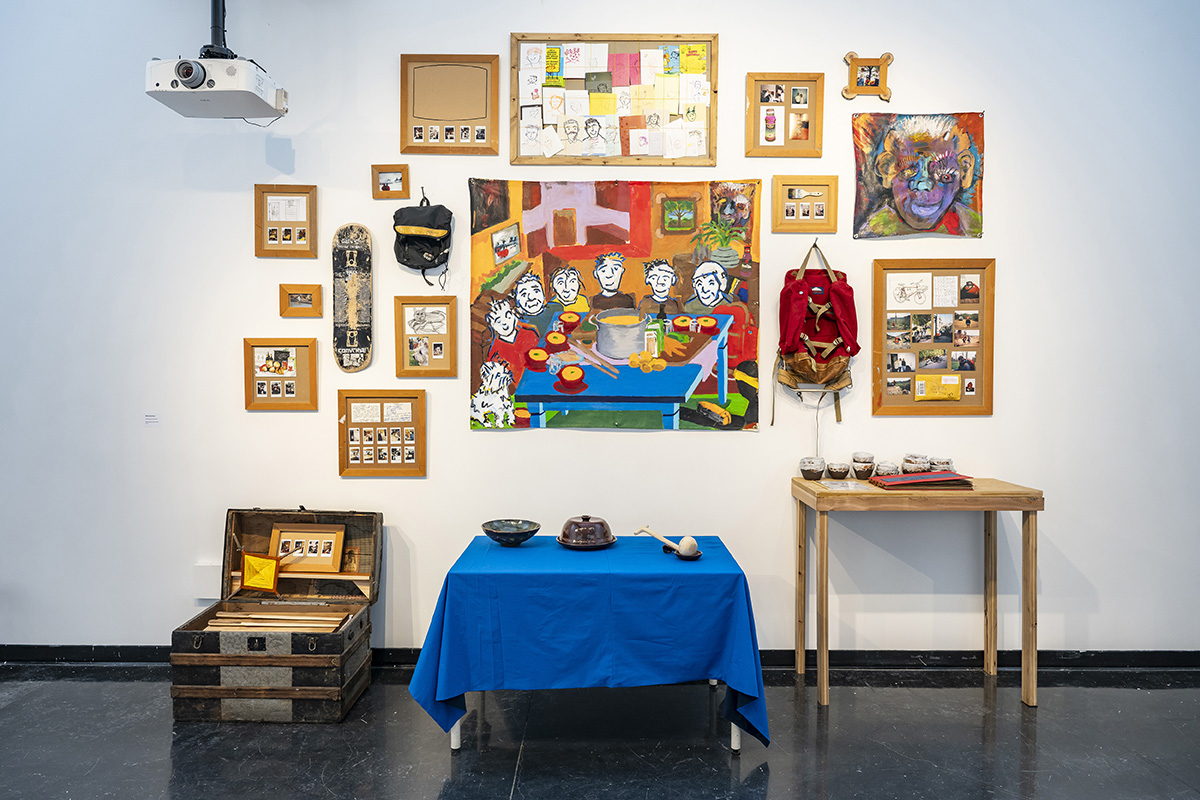
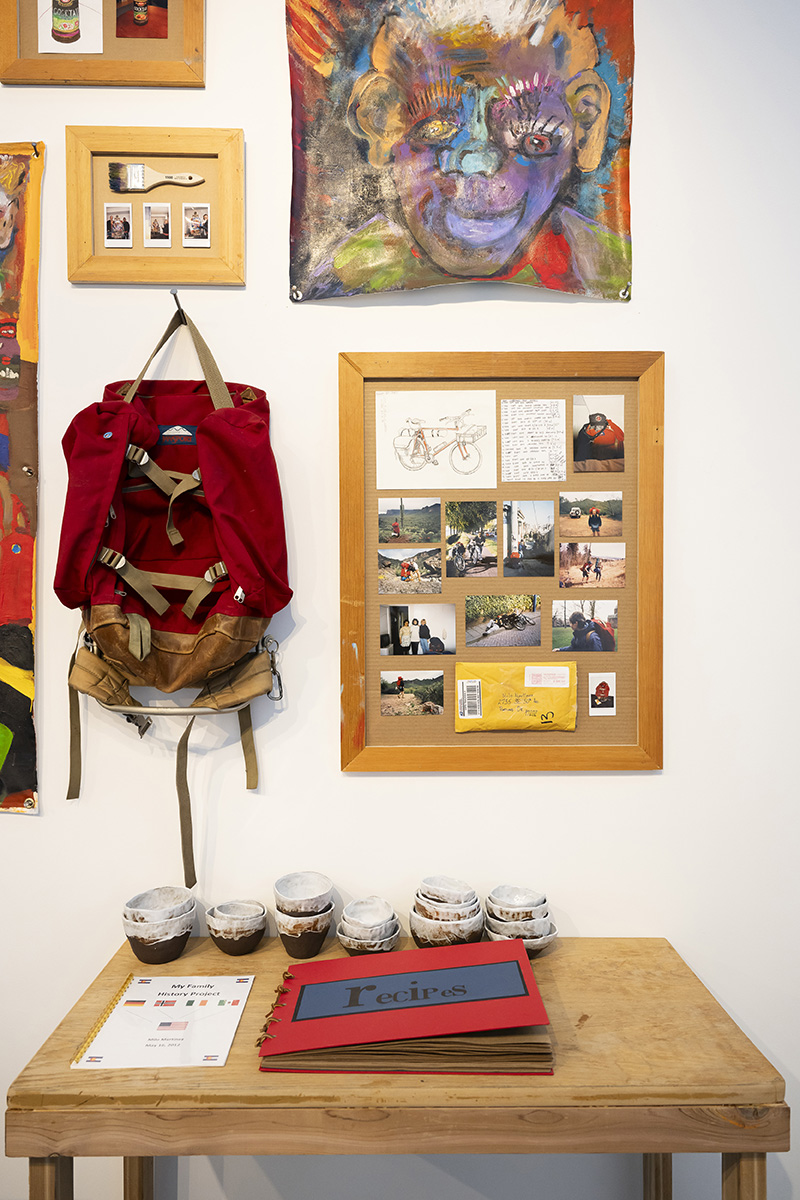
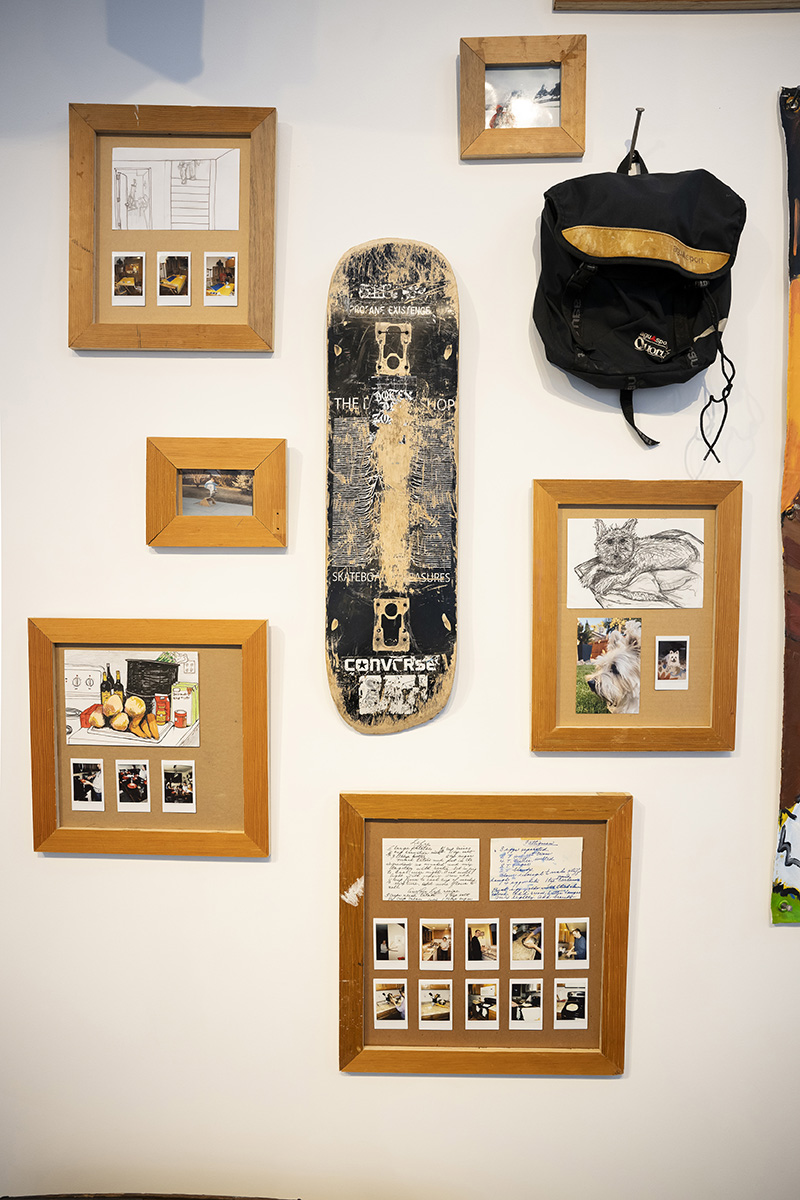


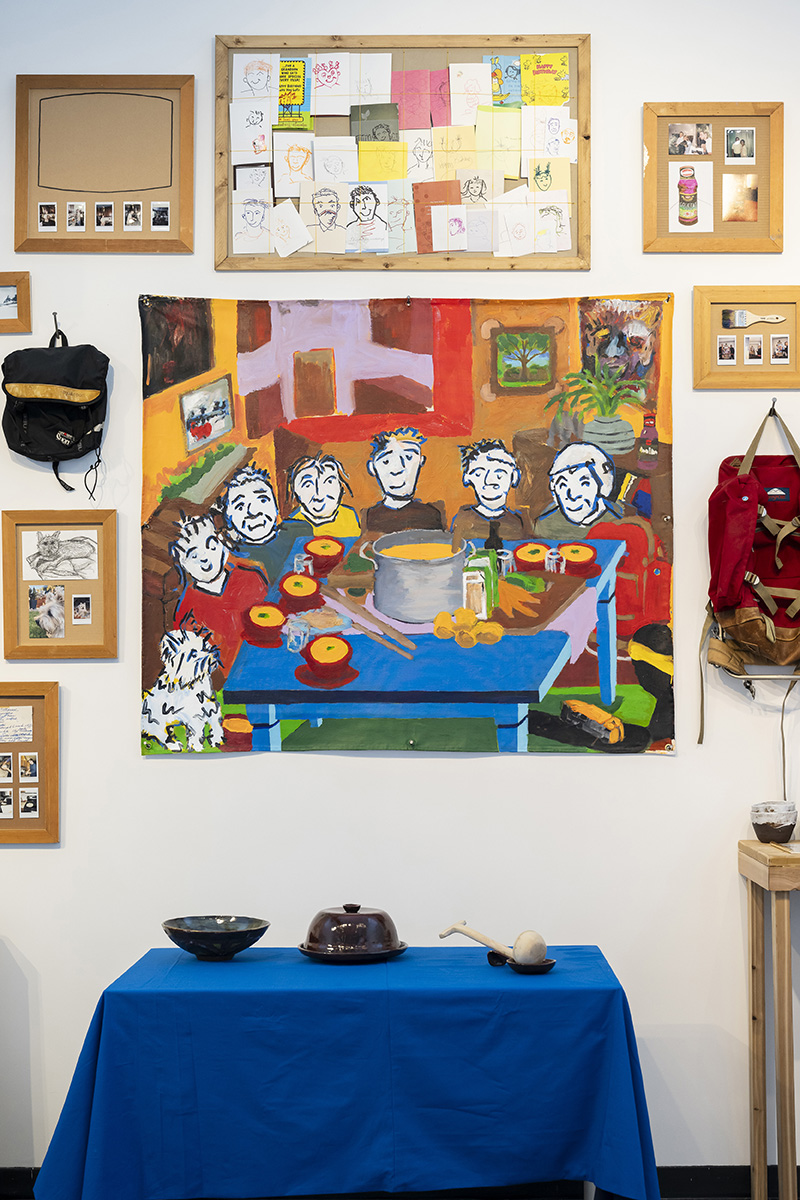
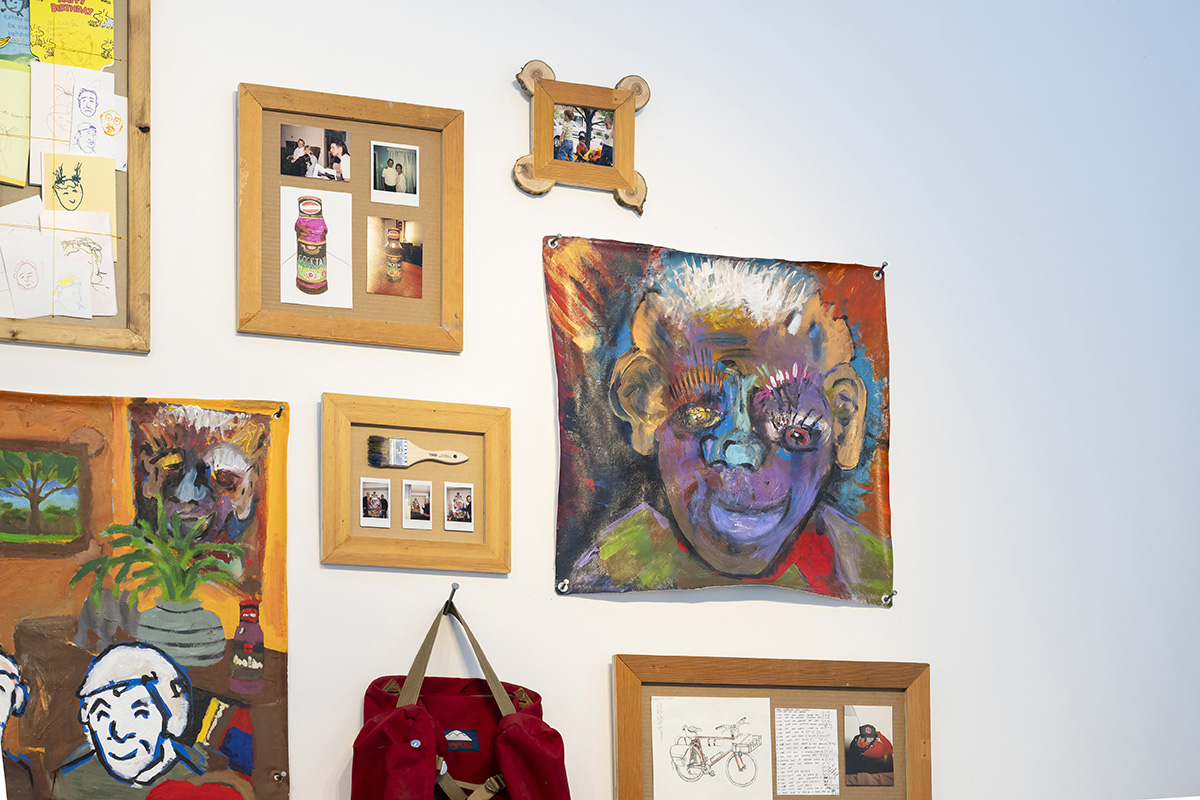
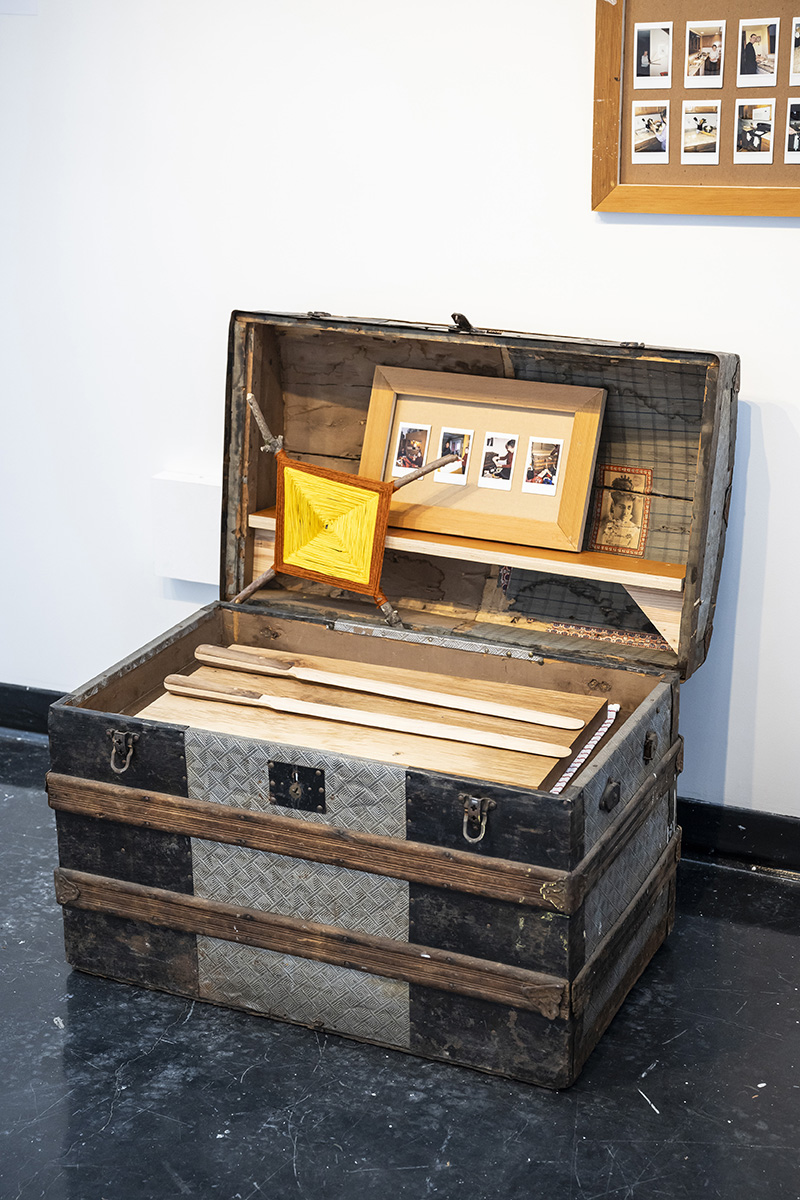
There is a whole story in me not knowing about my family history or cultural identity. Upon revisiting a family history project I had done in 4th grade, I recognized and identified many questions I still had for my family that remained unaddressed. I used a variety of different mediums I have learned in my life and practiced these both alone and collaboratively with my family. By spending time with these mediums, I reflected on the people I learned them from, and the stories and identities we shared. Working with these mediums produced tools for opening dialogues and strengthening relationships, both within my family in Denver, Colorado and within my community away from home in Portland, Oregon. As we spent time with one another, my knowledge of my family’s history expanded with every story shared. I came to new understandings about my cultural identity, and how my sense of identity was impacted by events both past and present in my family member’s lives. I began this exploration through learning to cook Beer Cheese soup, a meal that my family gathers and continues to share every year and serving this soup in Portland. These meals, informed by the importance of eating and cooking with one another, highlight the interconnectedness of building new community with my own formation of self-identity. Four years have passed since I moved away from home, and these activities connected me with communities in both places. Through conversation about and around this soup with my family, I reflected on the interrelatedness of the food we ate together and our shared identities. As support for these dialogues in the kitchen, I created a variety of wooden cooking tools for my family. I learned to make cutting boards, lefse sticks, and a soup ladle. My focus on handmade craft reflects upon my own process of understanding. I made these tools from scratch to reflect on the labor of creation, as well as the long-held tradition of handmade gift-giving within my family. These objects have immediate utility as cooking tools, and dually function as vessels for dialogue and new shared experiences. Furthermore, I considered the non-food tools and skills shared with me during my childhood and communicated about them with my respective family members. This included paralleling my Uncle Mark’s travels using his backpack and panniers, as well as painting collaboratively with my grandpa. Informed by what I knew in 4th grade; my work is a contemporary reflection of my family and myself. By opening these dialogues, my family relationships changed. The answers to questions I had about my self-identity and family history were discovered in open dialogue with my family members. Most importantly, the stories and time we shared together strengthened our relationships and brought use closer in the here and now.
Olivia Lee
Grandpa's in the Shed
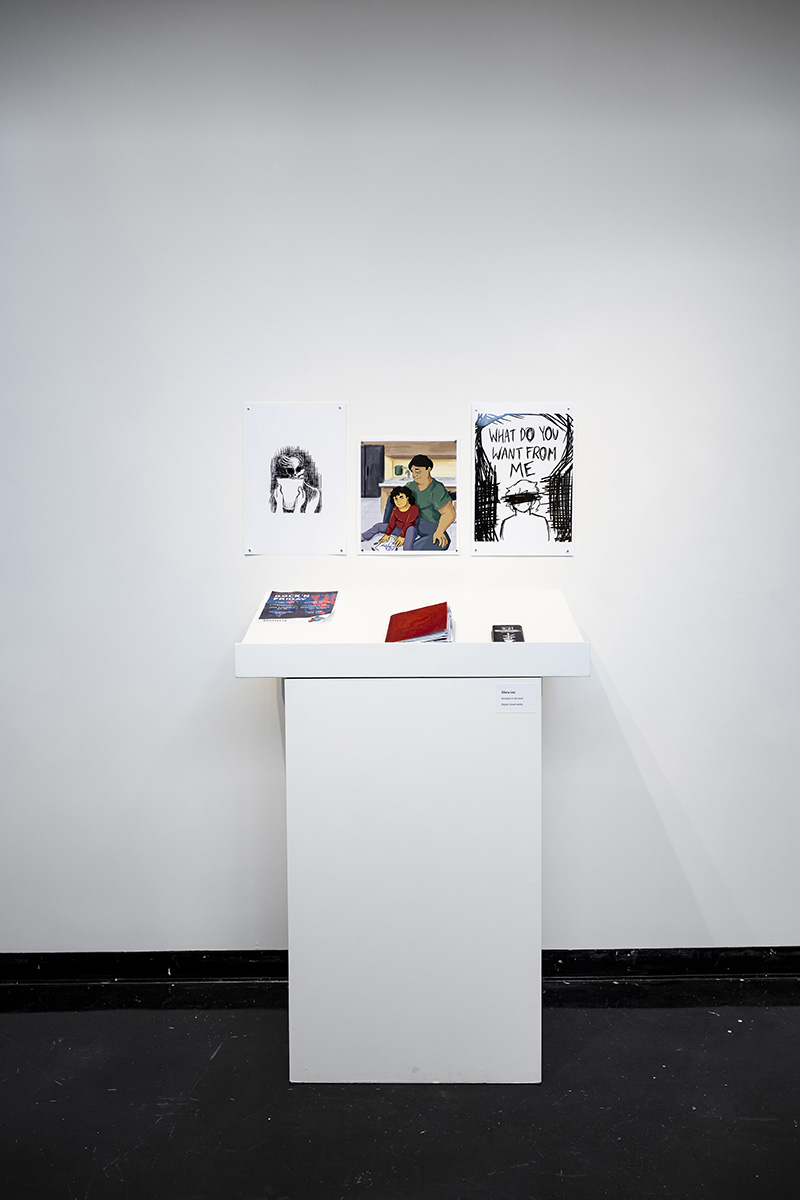
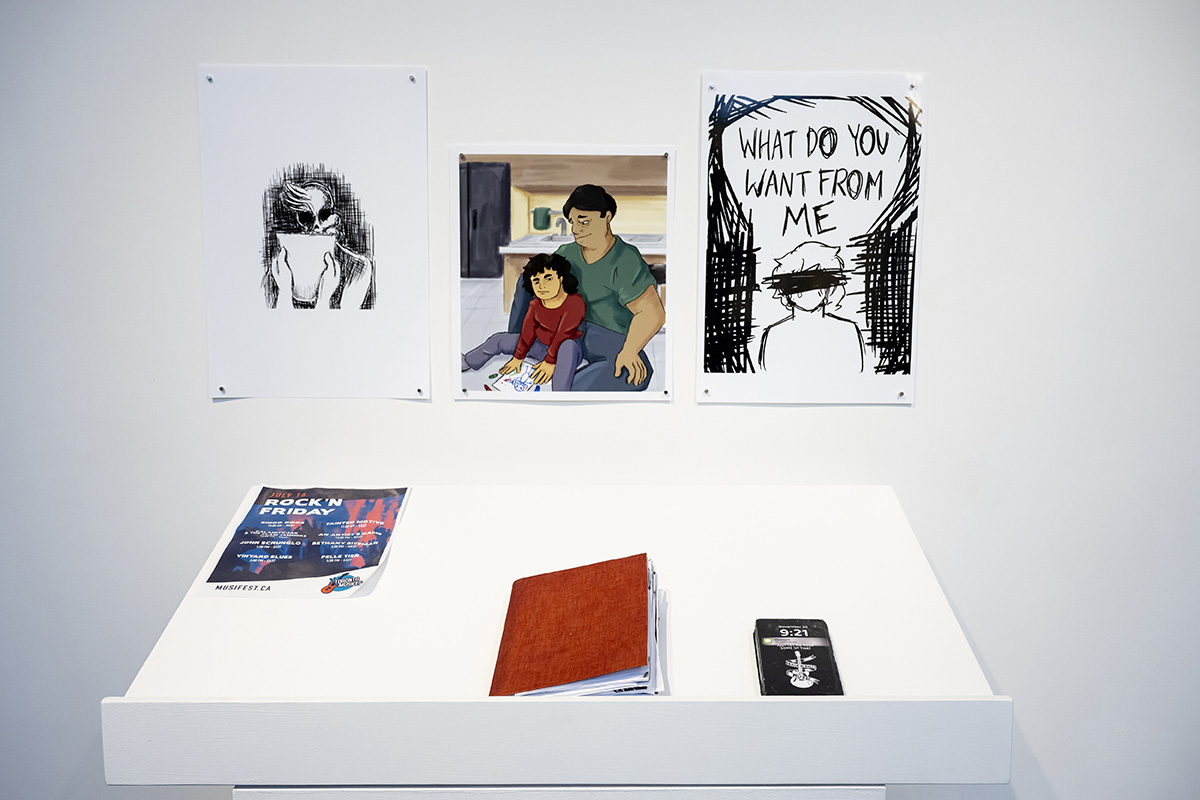
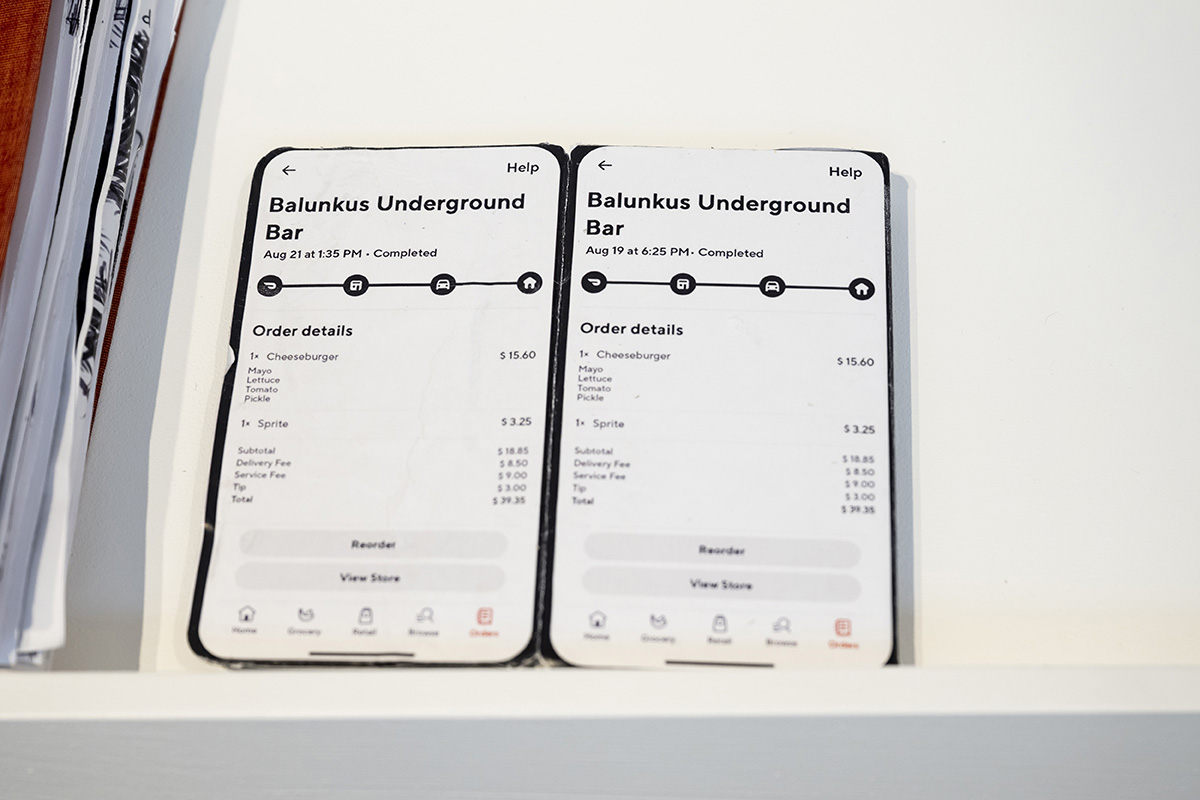
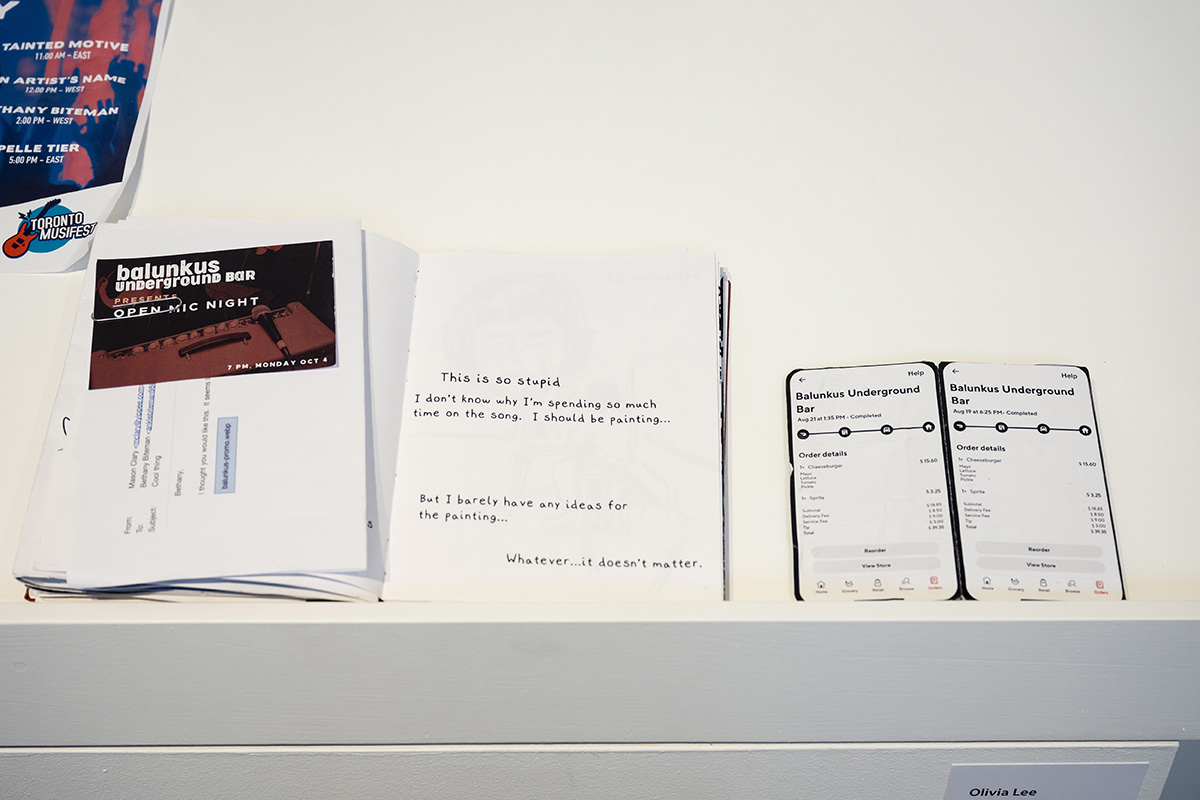
This paper will discuss the themes of Grandpa’s in the Shed, as well as the process of its creation. I aim to show the inspirations behind the story as well as my journey in bringing it to life. Ideas behind what makes imagery “scary,” discussing specific artists and the principles behind their work. I will also be discussing themes of grief and loss, its effect on human psychology, as well as steps that can be taken to overcome them.
Rivi Yermish
Piecing Daughterhood: Cloth, Gender, and Memory
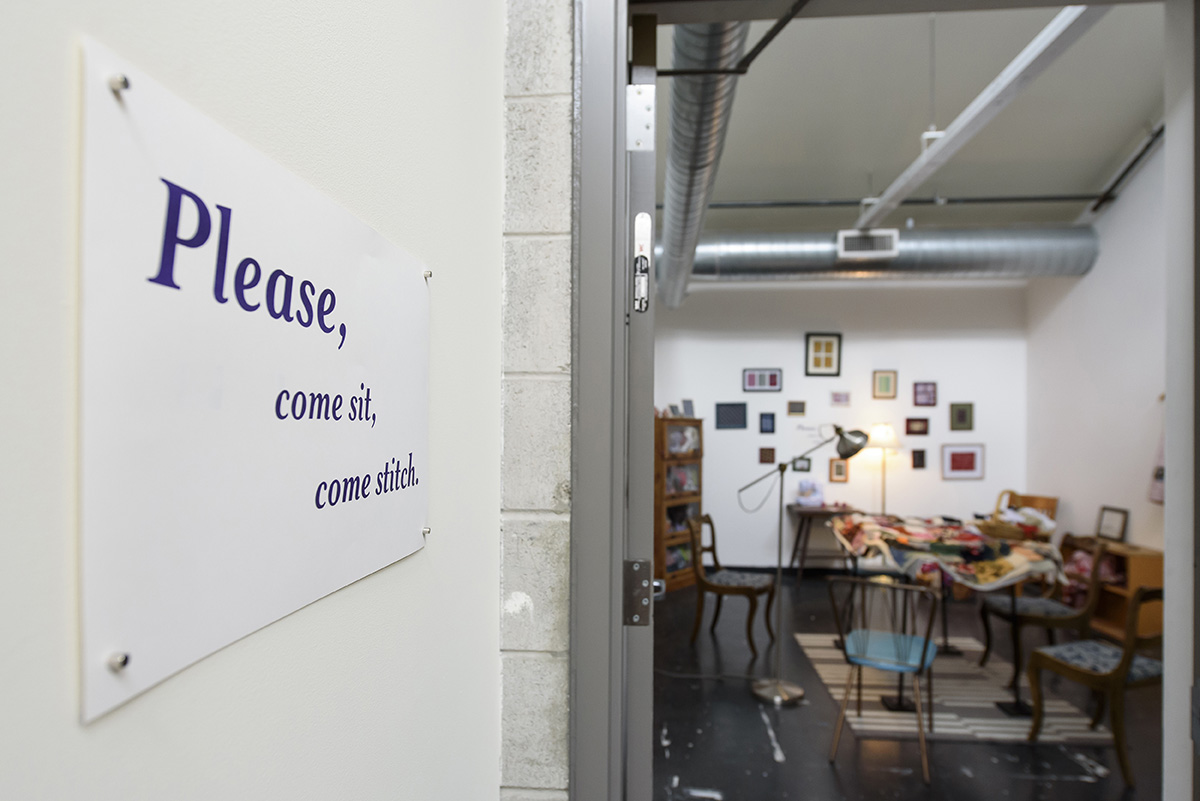
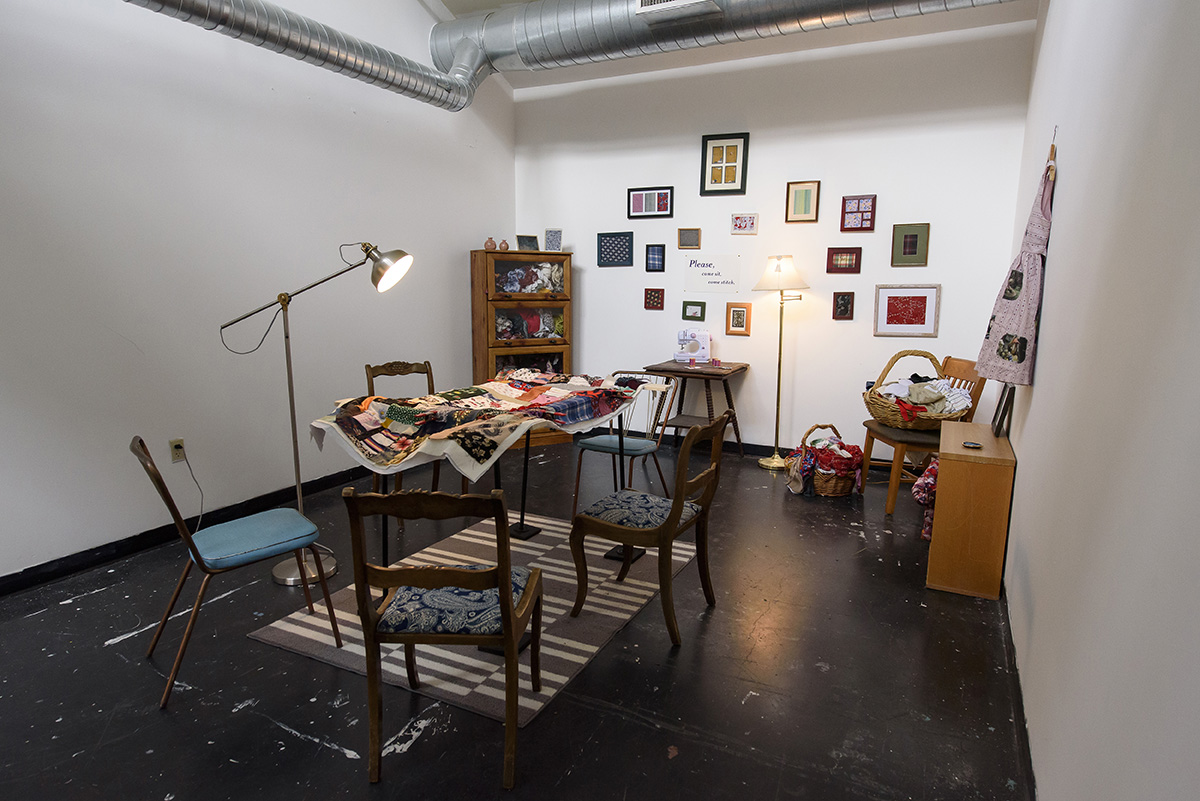
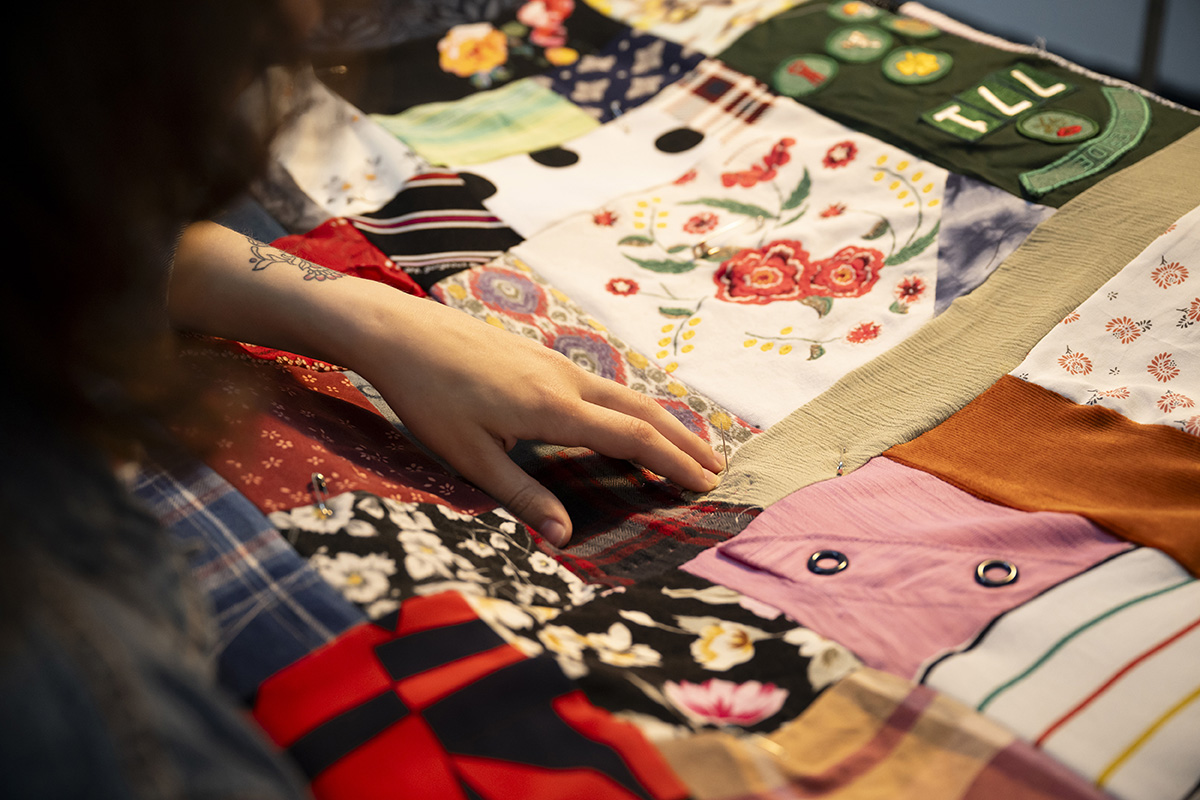
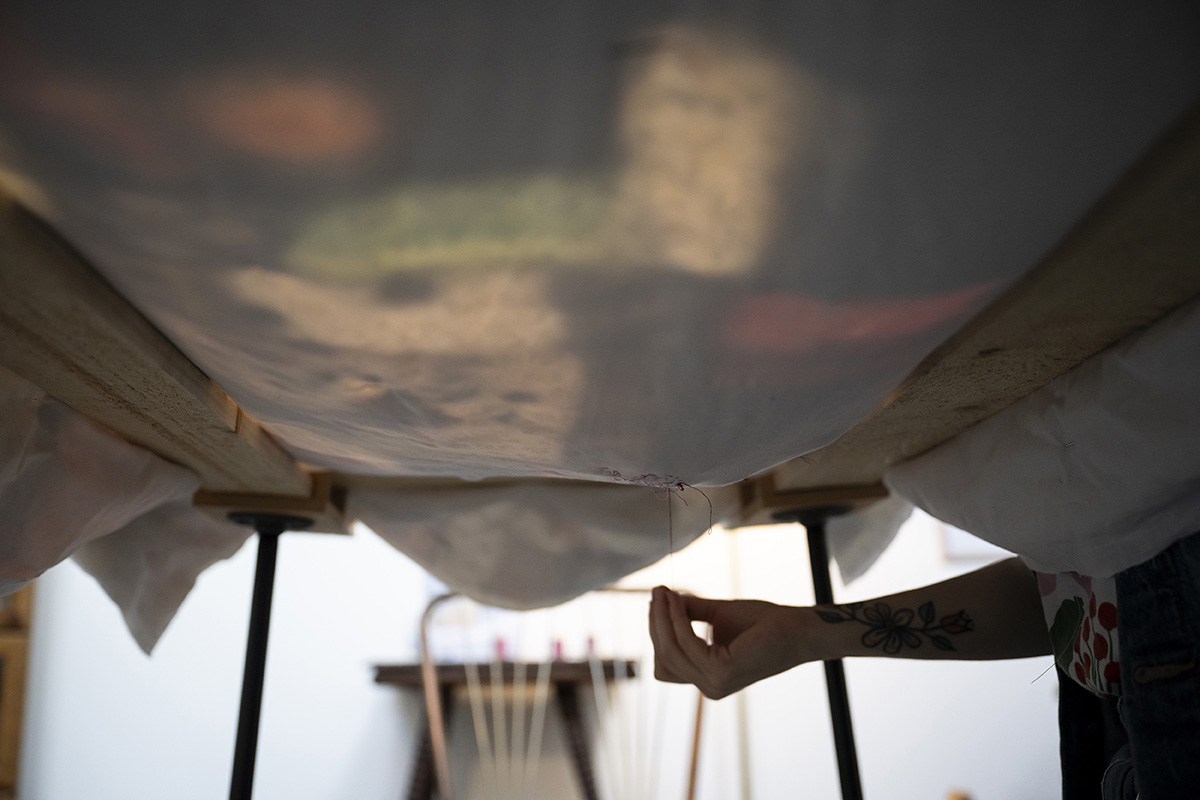
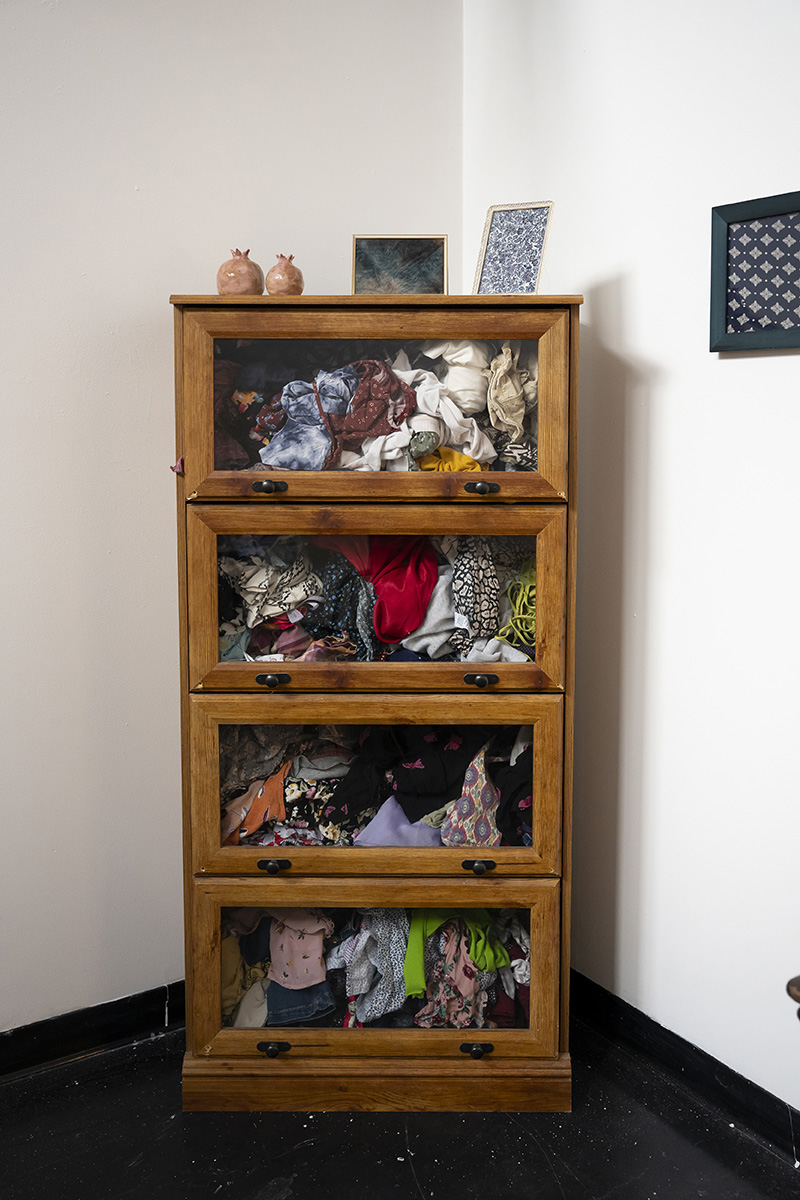
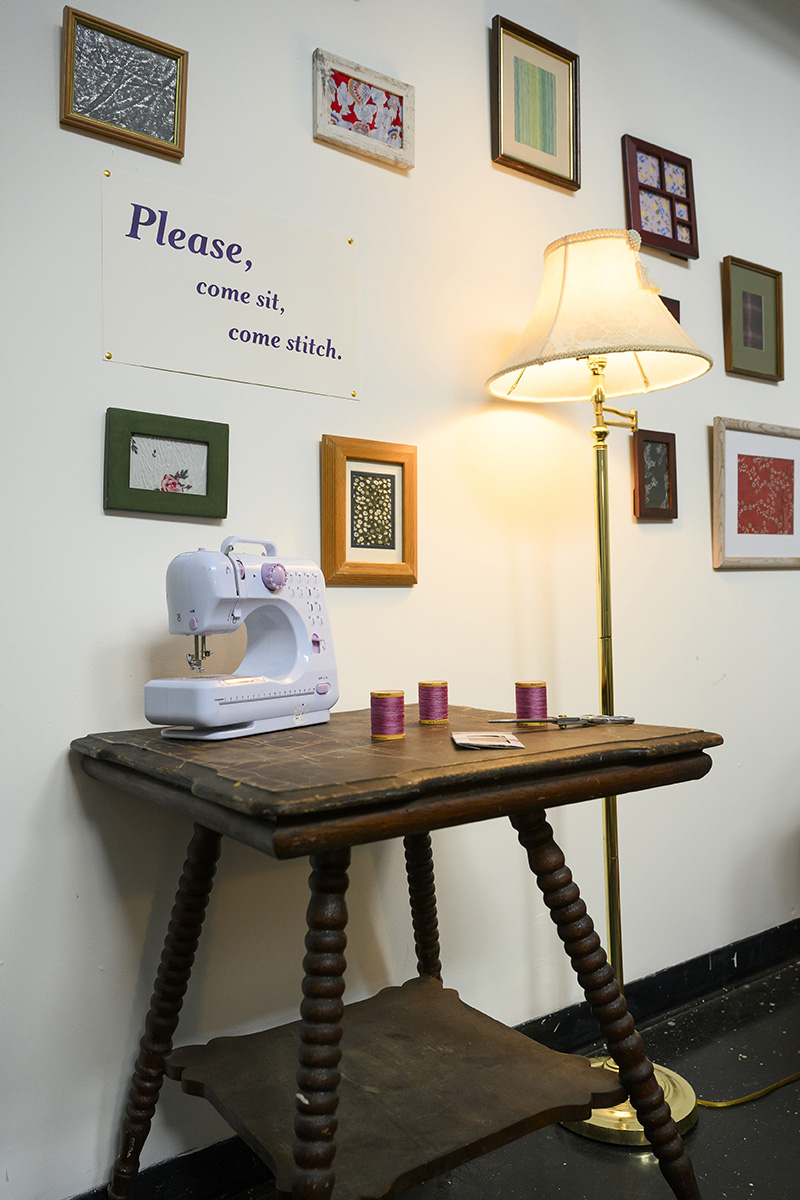
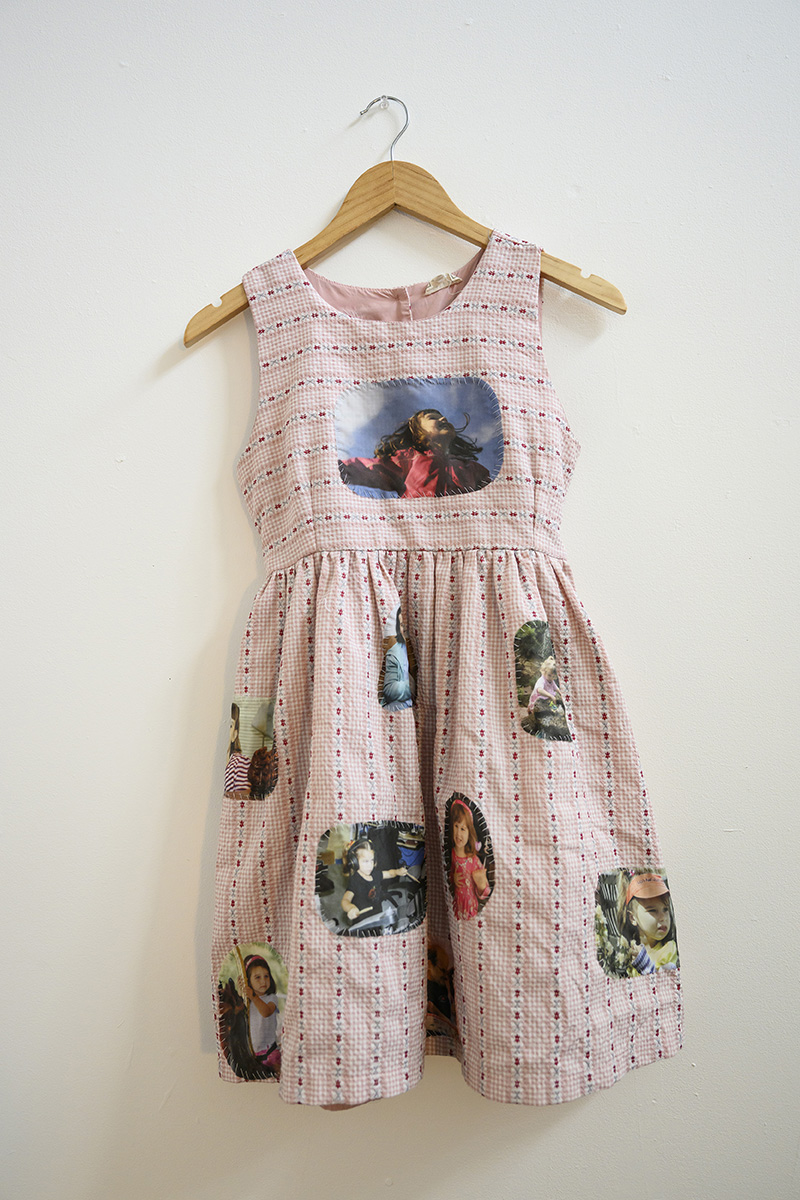
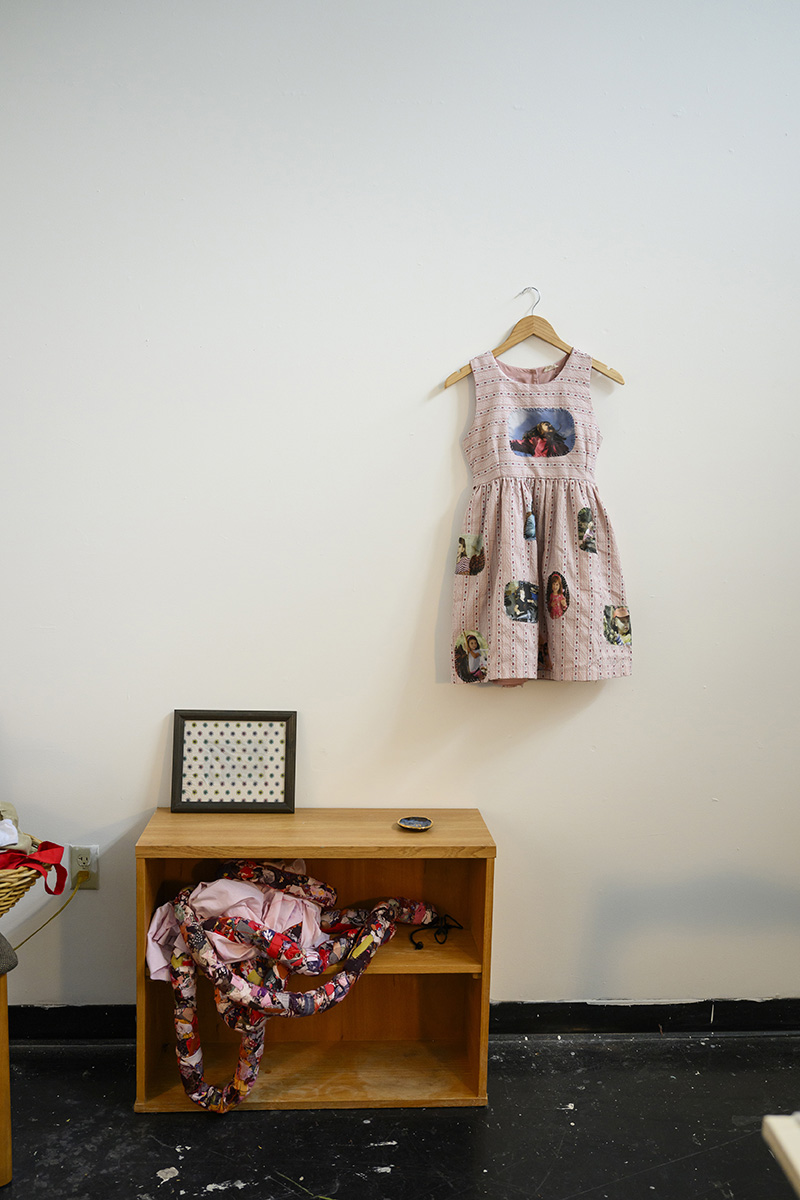
Piecing Daughterhood is an exploration of textile craft and queer identity. I examine the discourse around the American quilt as a blanket, an art object, and an expression of grief. My research then shifts to look at queer textile artists who take established conventions of sewing and garmenting and make them their own. The studio component of this thesis is a meditation on my own gender identity through wearable art that becomes performance work. The culmination of this thesis is a communal quilting bee to finish the quilt I crafted out of the discarded clothing of trans people. It is a space to mourn the people we used to be, and to transform old scraps of identity into something new.
Silas Rock
"The Fool’s Errand: the Perennial Symbology of the Archetype of the Fool, and The Medium of Graphic Novels "
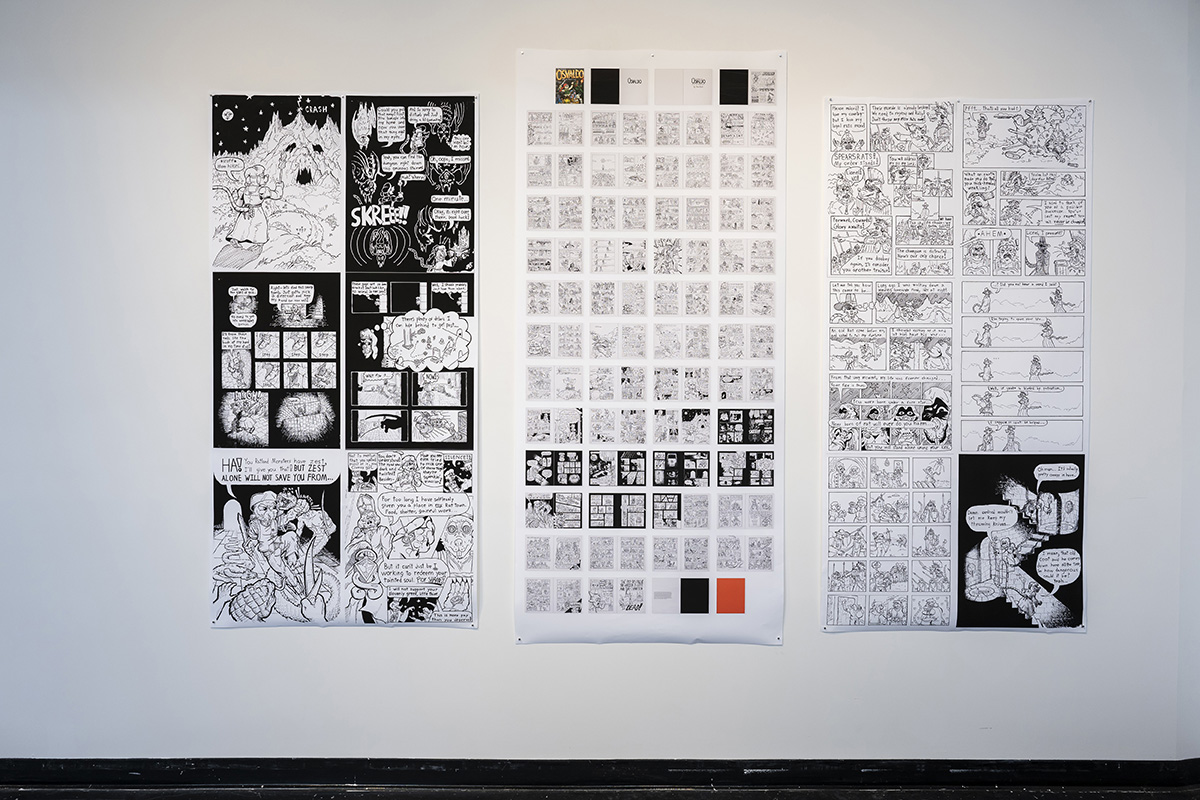
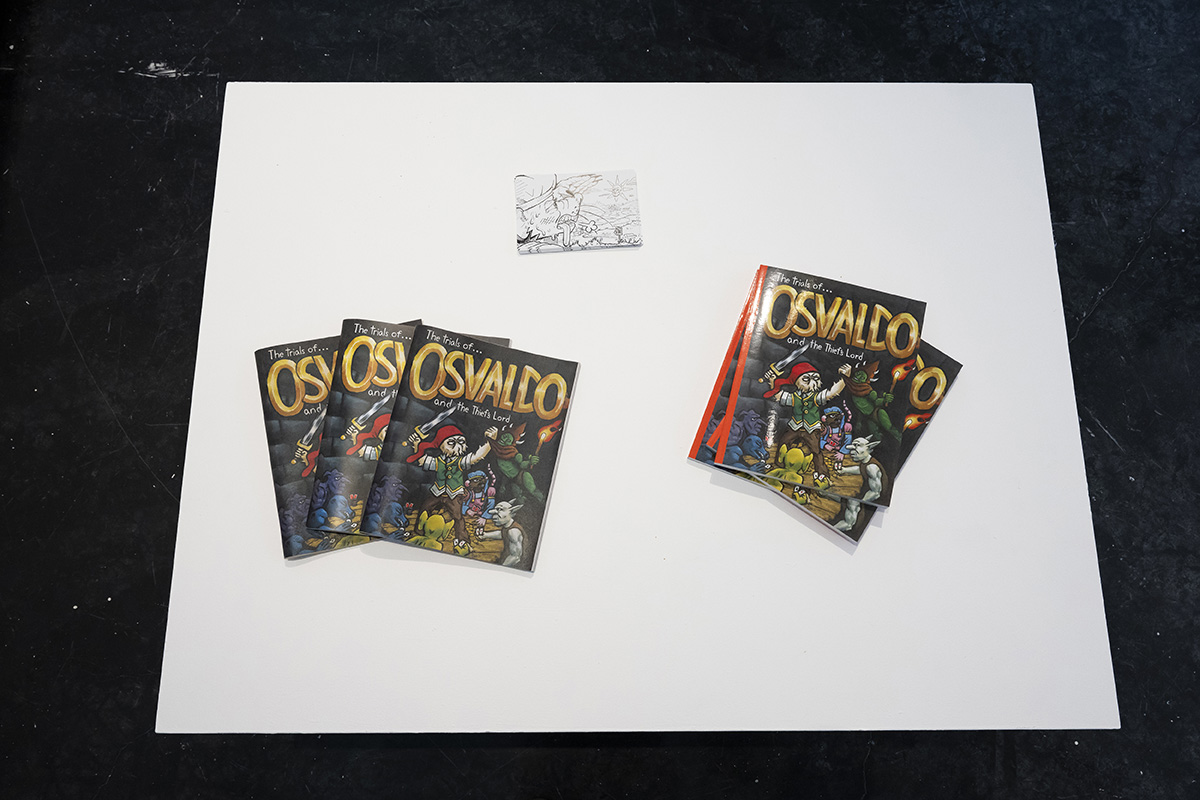
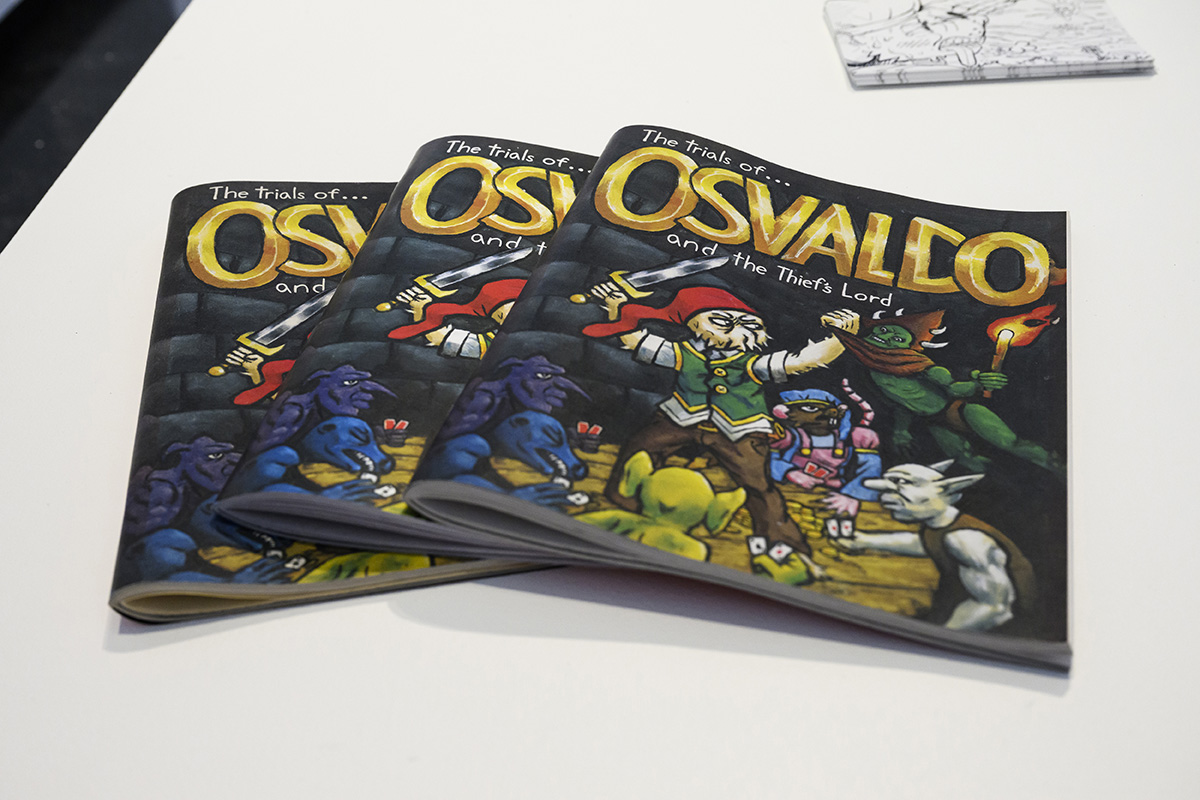
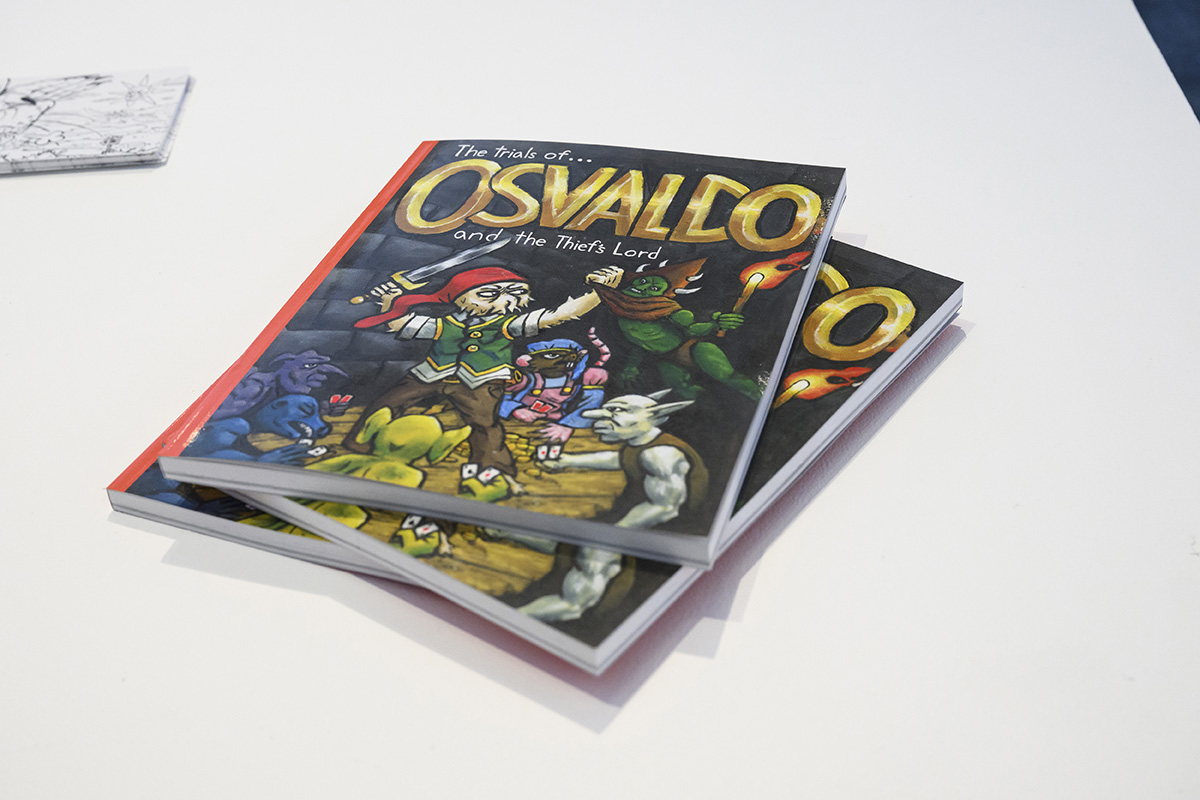
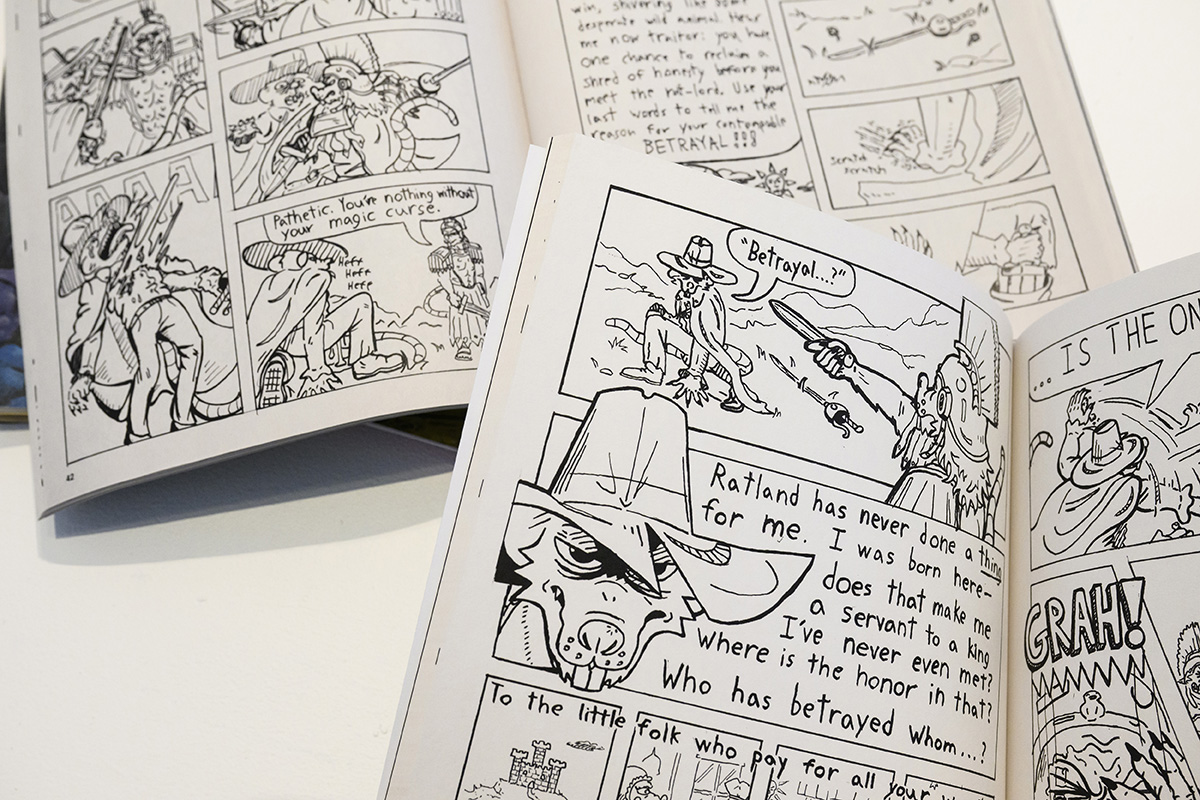
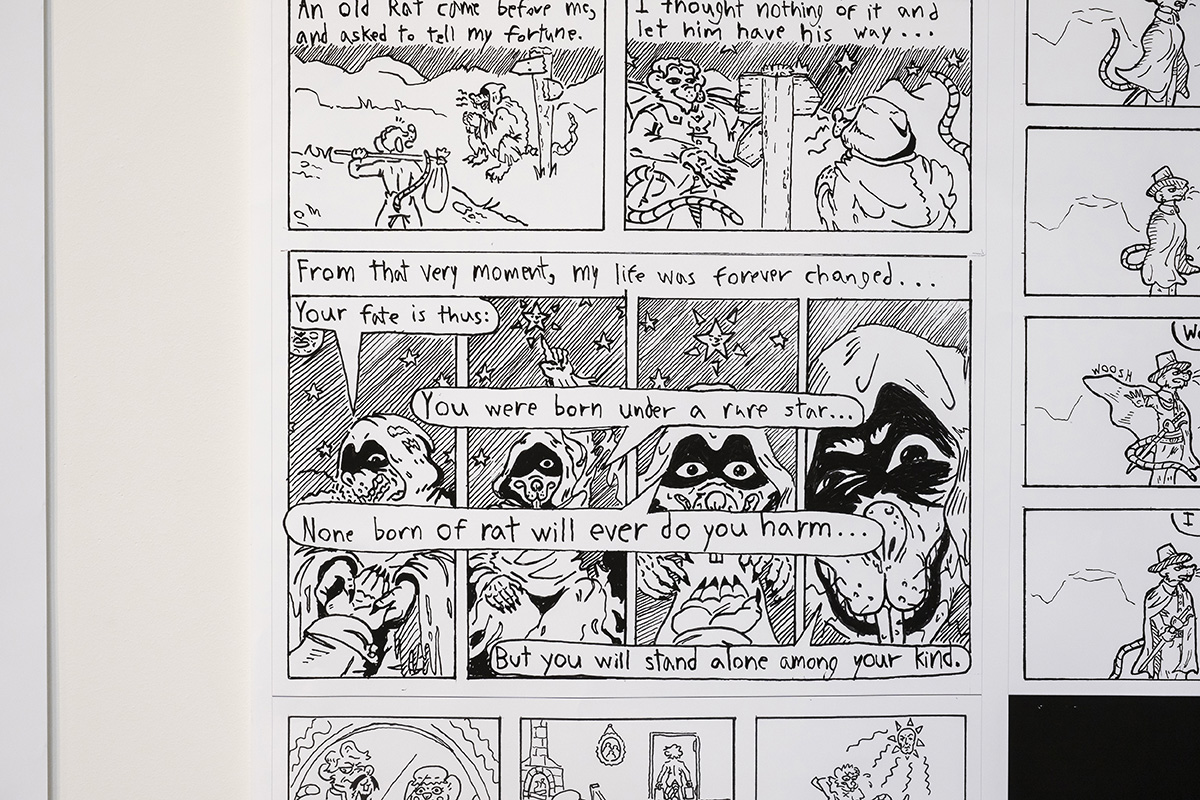
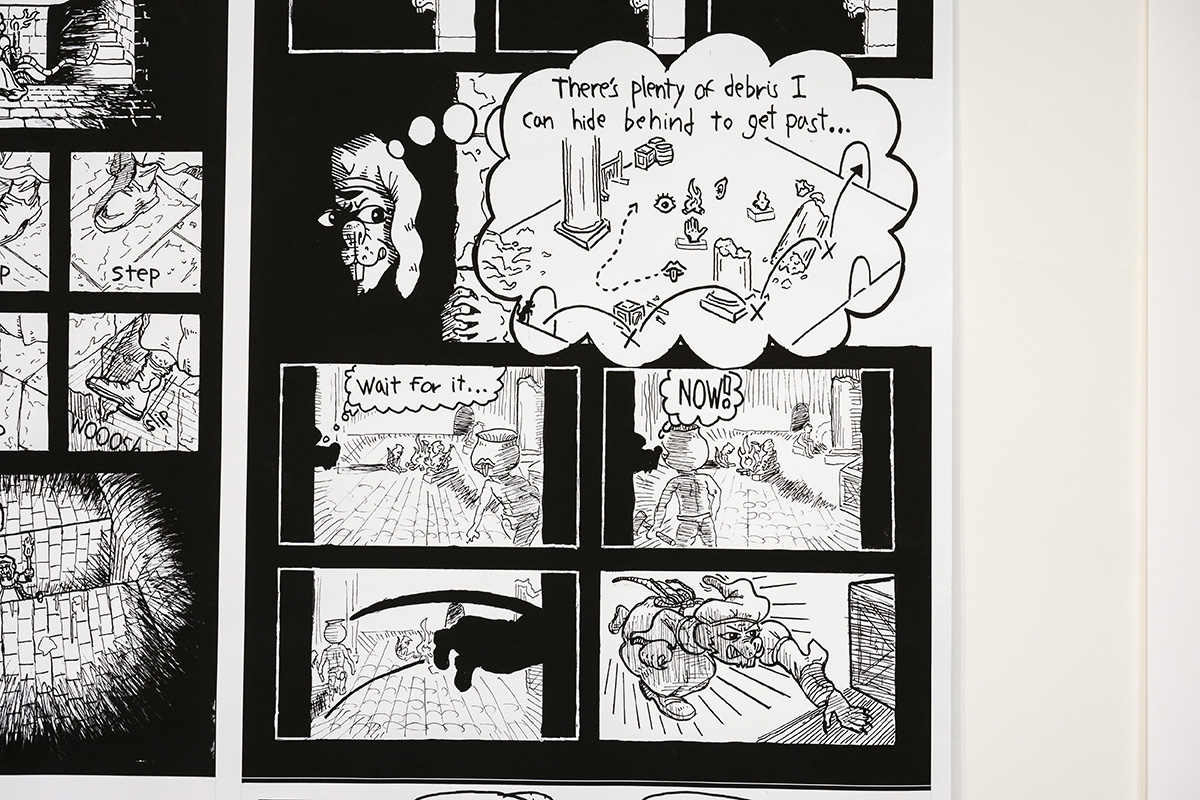
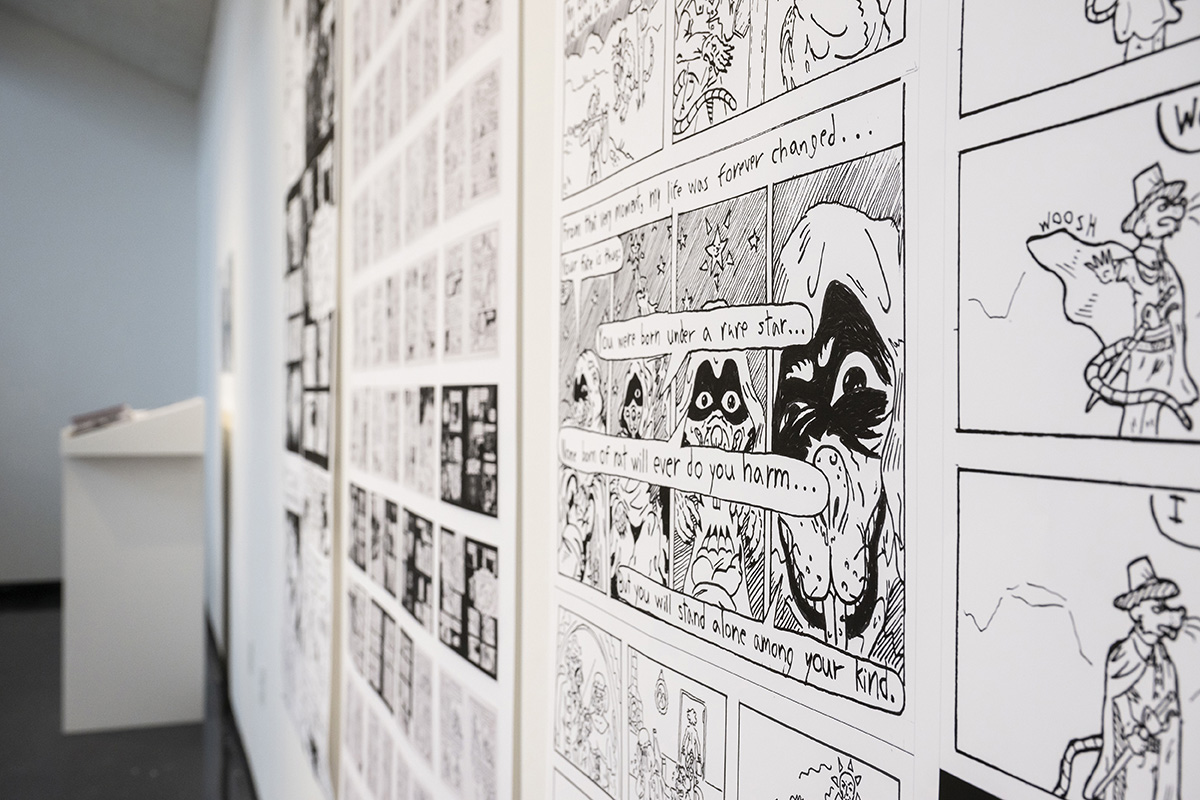
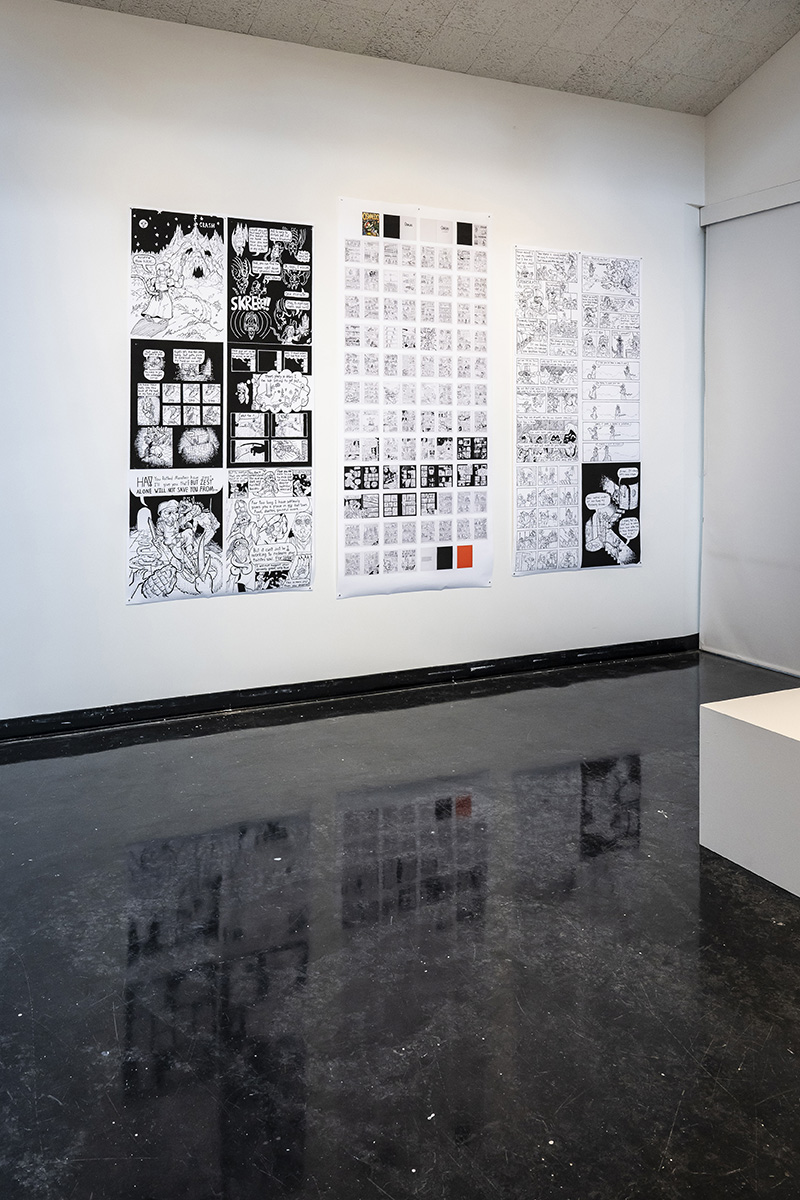
This thesis explores the enduring resonance of the "fool" archetype across literary, historical, sociological, political, and psychological dimensions. Central to numerous narratives and philosophical explorations, the fool often begins as a figure of ignorance and potential, integral to the transformative journey of the hero as posited in Joseph Campbell's Hero’s Journey. Drawing upon the analysis of figures such as Shakespeare’s characters and the symbolic tarot described by Jodorowsky, this paper elucidates how the fool’s journey mirrors the hero’s path from naïveté to self-actualization. The fool is not merely a source of comic relief but a complex symbol of change, embodying the dual capacities for both creation and disruption. Through figures like King Lear’s fool, Don Quixote, and the mythical trickster, we see variations of the fool as the natural fool, the professional fool, and the trickster, each providing insight into the dynamics of foolishness within their respective texts and contexts. Additionally, the work examines the societal and spiritual functions of fools, as seen in the professional jesters of medieval courts and the holy fools of Russian Orthodoxy, reflecting on the deeper psychological and existential implications of their roles. By embracing the archetype of the fool, societies and individuals engage with fundamental human experiences and values, navigating the balance between knowledge and folly as essential to the human condition. The exploration of the fool archetype extends into the narrative of my comic book titled "The Trials of Osvaldo," which embodies the journey of a heroic fool across various cultures. This protagonist, Osvaldo, a living vegetable, symbolizes the perennial fool. He transitions from a naive, natural fool to a fully aware individual, encapsulating the different sub-archetypes of the fool at various stages of his journey. This transformation highlights the inherent cyclical nature of foolishness and self-awareness, illustrating the inexhaustible depth of human ignorance and the continual rediscovery of innocence. The comic medium itself, often underestimated and sidelined as frivolous, parallels the fool's role in societal and artistic hierarchies. Comics, emerging as a potent narrative form, navigate through cultural landscapes much like the fool stumbles through traditional tales, bringing about unexpected insights and transformations. Despite their rapid rise in popular culture and significant impact on modern art forms, comics still face challenges in gaining scholarly and critical recognition. This parallel draws a comparison between the fool's underestimated wisdom and the transformative power of comics in narrative art. The artwork and narrative structure of "The Trials of Osvaldo" utilize the fool's journey as a metaphor for personal growth and societal commentary, reflecting on the complexities of self-awareness and the universal appeal of the fool archetype. By intertwining comic book aesthetics and Jungian archetypes, the thesis presents a comprehensive analysis of the fool's role in storytelling, from ancient myths to modern media, emphasizing the archetype's enduring relevance and its profound impact on cultural narratives and individual psyche. This study not only contributes to academic discourse on archetypes but also enriches the understanding of comics as a serious art form, capable of deep psychological and cultural commentary. The journey of Osvaldo serves as a microcosm of the fool's journey, offering insights into the human condition and the cyclical nature of wisdom and folly in the continuous quest for self-discovery and societal understanding.