"YOU" in Japanese and how to address someone (Don't say anata)
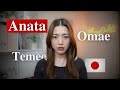 Play video
NihongoDekita with Sayaka is a YouTube series created by Sayaka, a native Japanese speaker, in which she provides tips, tricks, and resources for understanding the intricacies and cultural context of the Japanese language. In this episode, she goes over many different Japanese second-person pronouns, their connotations, and how to know which ones are appropriate for which situations. Something that caught my attention about this video is Sayaka's mention of how the use of the term "anata" from wives to their husbands is a matter of generation, with it being mostly prevelant amongst older speakers. Multiple of the top comments in the comment section of this video from English learners mention preconceived notions of "anata" being a term of endearment, as when used in the aforementioned context in film/TV, is translated to English as something along the lines of "dear" or "sweetheart". This is a tad bit ironic, however, as "anata" can be interpreted as distant or carrying notions of condescension, especially when used amongst friends or from older speakers to younger speakers. This video as a whole is pretty intriguing in my opinion, as it is very analytical look at an example of how social relations/structures/dynamics influence word choice, and how individual speakers can shift word use to accommodate their interlocutor.