Current Curriculum
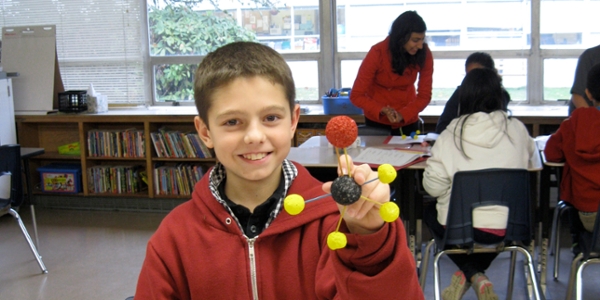
Much of our curriculum has been updated to align with the Next Generation Science Standards and Understanding by Design Unit Planning strategies. Our focus has previously been on physical science in relation to climate change, but in recent years has expanded to include teaching teams focusing on neuroscience, environmental education, and math and quantitative sciences.
We have been taking science into the classroom since 1996.
General Science Outreach
The original Science Outreach curriculum focuses on expanding critical thinking skills through teaching a broad array of hands-on science lessons. Aligns with NGSS standards.
Environmental Education
The Environmental Ed. program seeks to foster a connection to nature in students through curriculum based in science, reading, writing, and art. Aligns with NGSS standards.
Neuroscience
The Neuroscience curriculum works to make complicated scientific topics hands-on and acessible for young students through a focus on sensory input and perception, allowing children to learn about how their own brains work. Aligns with NGSS standards.
Salmon Life Cycle and Birds of the PNW
Both parts of this curriculum explore place-based learning through the use of a model species. In the fall, classrooms raise salmon eggs to fry, providing students with a classroom stewardship experience. In the spring, students venture out into nature and explore how to be active and responsible citizens with regards to their own immediate environment.
Quantitative Exploration
The Quantitative curriculum encompasses math, physics, and computer science, and seeks to expose students to types of quantitative learning not normally provided in the school system. Topics include AI ethics, social justice in math and tech, and simplified versions of math and physics concepts typically taught at the collegiate level.
Faculty Involvement
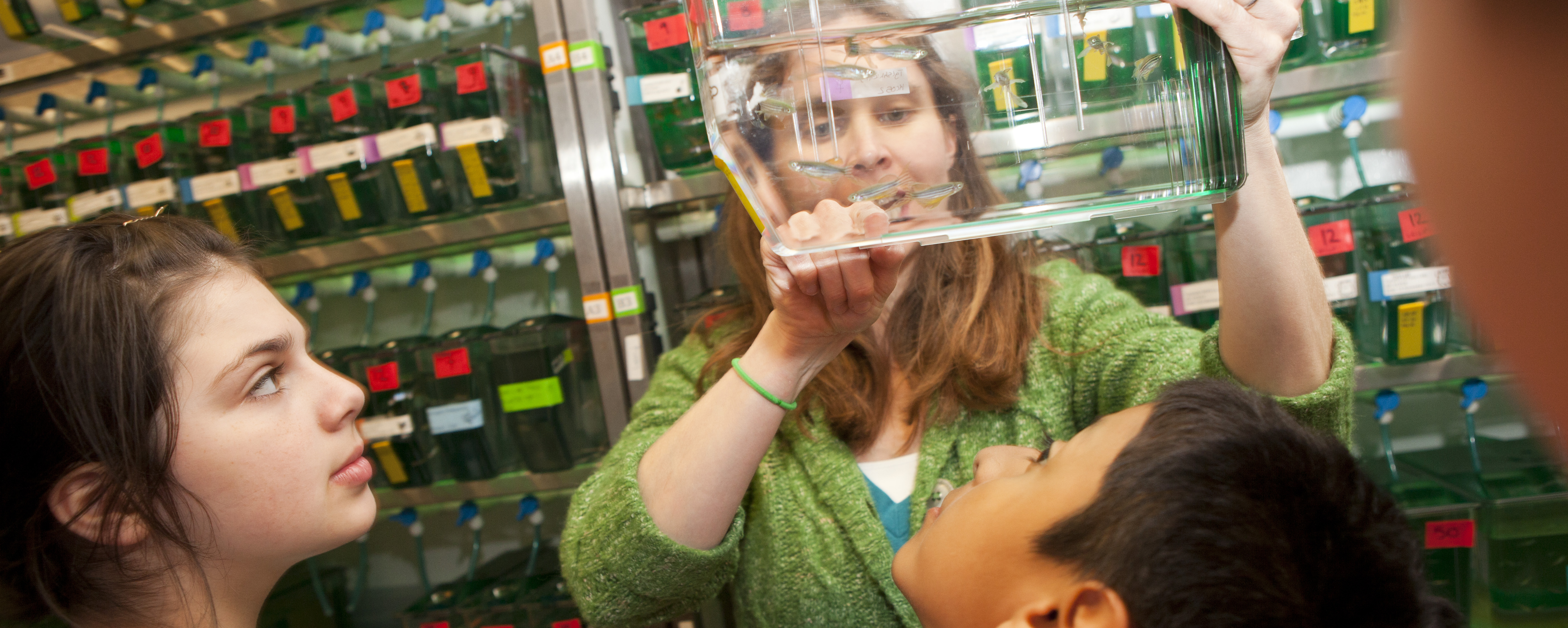
The program was founded in 1996 by Professor Emeritus Dr. Robert Kaplan. He continued to support and develop the program until his retirement in 2015. Faculty involvement and support continues to be an integral part of the success of the program.
Since the beginning of the program, Reed Biology professors have collaborated with the Outreach Coordinator to develop a single, or a series of, experiments designed to illustrate important and basic concepts of biology. These experiments are the core of each unit which ultimately demonstrate that science is not dull, but an exciting exploration of interesting questions. Regardless of the topic, each unit details the scientific method and develops the theme that science is a process.
To date we have explored a number of different topics such as Plant Biology, Cell Biology, Neurobiology, Microbiology, and Amphibian Ecology. Many times the experiments used in the Outreach program are scaled down versions of concepts covered in Reed's Introductory Biology course. The Cell Biology experiments, developed by Professor's Maryanne McClellan and Steve Black, focused on proteins in cells and paramecium digestion, respectively. Professor's David Dalton and Keith Karoly created a unit called "Extreme Plants!", which examined how plants cope with stresses in the environment from water and nutrient deficiency to pollution problems.
Currently, faculty continue to support the program in a variety of ways. In addition to expert support and advice, professors invite students into their labs during field trips to Reed and special events, where students and communiuty members learn about the kinds of research that takes place at the college.