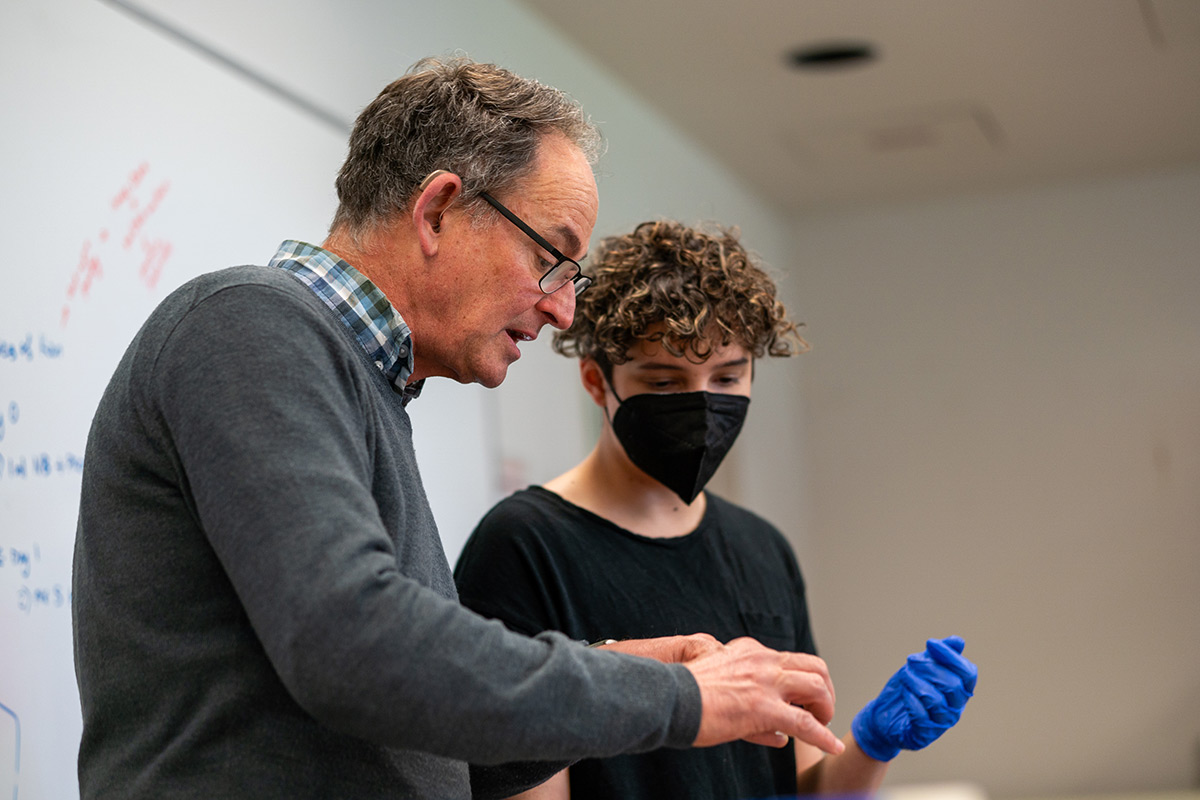
Featured in the scientific journal mSystems, the paper was co-written with Patricio Palomino ’25.
By Bennett Campbell Ferguson
October 23, 2026
Professor Jay Mellies [biology] has published a paper in the scientific journal mSystems on how microbial communities cooperate using pre-existing metabolic enzymes and pathways to degrade PET plastic.
“This is a call to action to deepen our understanding of how bacteria break down man-made plastics in both marine and terrestrial environments, and to use that knowledge to develop solutions that reduce the increasingly evident harmful impacts of plastic pollution,” Mellies says.
The paper, titled “Ancestral Hydrocarbon Metabolism Enables PET Degradation by a Natural Bacterial Consortium,” was written in collaboration with Sabrina Edwards, Danny Rice, Irene Newton, and Patricio Palomino ’25 (whose thesis also studied the process of PET plastic degradation).
“Our publication offers me a sense of hope, that the 400 million metric tons of plastic we produce globally every year will eventually be degraded by microbes,” Mellies says.
Mellies began teaching at Reed in 1999. He is the Amgen-Perlmutter Professor of Biology, covering subjects such as microbiology, immunology, and bacterial pathogenesis.