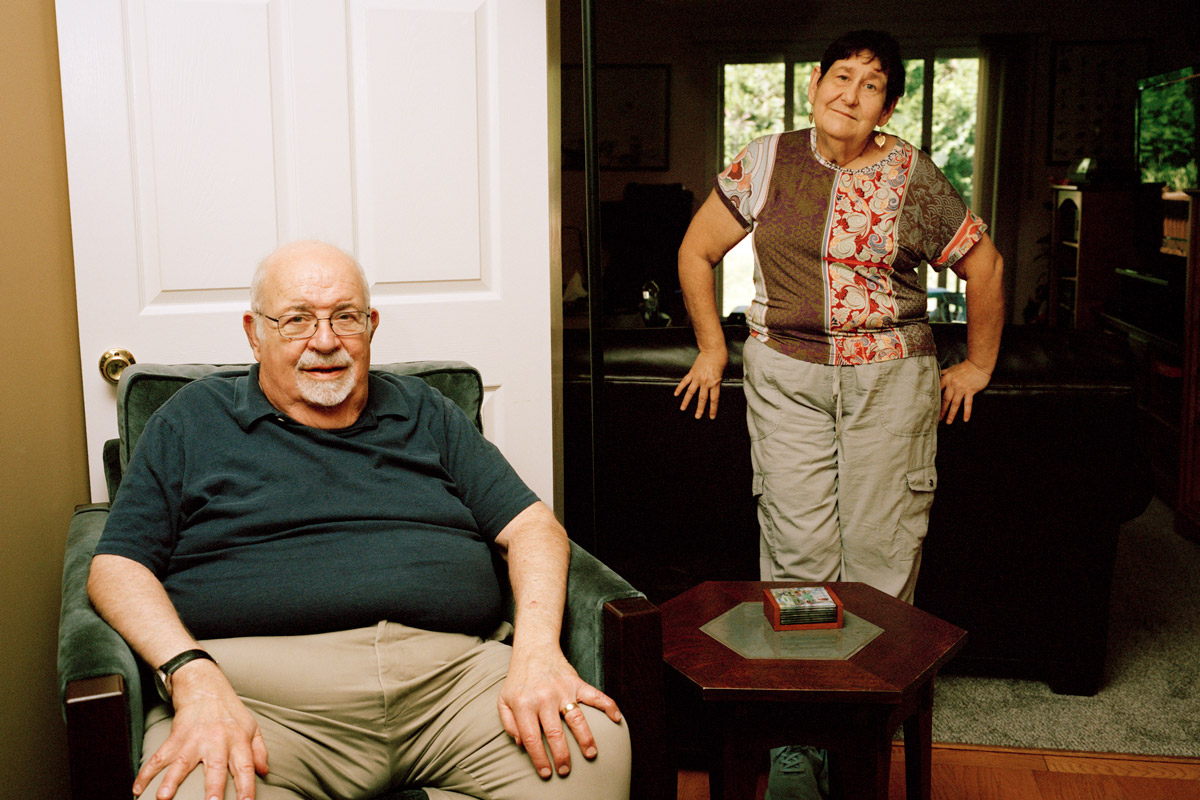
With their endowed scholarships and faculty travel fund, Laura Leviton ’73 and Sheldon Hochheiser ’73 want their gifts to help Reed meet the moment in more ways than one.
By Cara Nixon
October 2, 2026
Laura Leviton ’73 and Sheldon Hochheiser ’73 both felt like “babies” when they came to Reed. But they left feeling like capable adults, and it was the college that made a “tremendous difference” in them both. With the three endowed scholarships they’ve created, they hope Reed can make that same difference for generations of students to come.
“We hope the students will have benefited and taken those tools and insights into the future for worthwhile things—to be themselves, to be fulfilled in themselves,” Laura says.
Both Laura and Sheldon, who reconnected at their 25th Reed reunion, had parents who benefited immensely from scholarships, which helped make their college dreams come true. Endowed scholarships are close to their hearts, because they know such funding can be life changing for students. The first they created was named in memory of Sheldon’s younger sister, Ellen Hochheiser ’79, who died in 2001.
The pair also give to a humanities faculty travel fund, which allows faculty teaching Humanities 110 to further enrich their curricula by visiting geographical areas that figure prominently in the Hum 110 syllabus, like Greece, Mexico City, and New York City.
“Both of us feel grateful on so many levels—the ability and willingness of the faculty to give to the students,” Laura says. “It's a way of giving back to people who gave so much to us.”
Sheldon studied chemistry and history at Reed, an early example of the interdisciplinary education the college helps foster. With the guidance of Professor Marsh Cronyn ’40 [chemistry 1952–89], Sheldon decided to pursue a unique academic discipline post-graduation—the history of science, which ultimately led to a more than 30-year long position as the corporate historian for AT&T. His work culminated in a museum on the history of AT&T, its Bell Labs subsidiary’s history of innovations, and how those innovations improved the telephone system of the United States. The museum is located in Middletown, New Jersey, not far from where he and Laura reside now.
Laura, who studied psychology at Reed, went on to investigate the intersection of psychology and public health, and later worked as a senior advisor for evaluation at the Robert Wood Johnson Foundation—the largest philanthropic organization focused solely on health in the United States. Such a position allowed her and Sheldon to give even more to Reed, because the foundation matched five to one on philanthropic donations.
Looking towards Reed’s future, Laura and Sheldon are excited to see how the college meets the moment in terms of technology and a changing political landscape. Reed overachieves for its size, they say—locally, regionally, nationally, it has made an incredible difference, and they want to see it continue to do that in its own distinctive way.
“One gets so much out of Reed,” Sheldon says, “but one key thing is learning how to think critically, learning how to learn.”
He and Laura want to continue seeing that skill in action, and their generous gifts make that more possible.