I. Composing the Page
Week 1
Monday, January 26
Introductions; Syllabus; Examples of Student Work; Sign Up for Assignments
Wednesday, January 28
Visit to Reed Special Archives, IMC: introduction to fine art booksWeek 2
Monday, February 2
“Children live in fantasy and reality; they move back and forth very easily in a way that we no longer remember how to do. And in writing for children, you just must assume they have this incredible flexibility, this cool sense of the logic of illogic, and that they can move with you very easily from one sphere to another… Fantasy is the core of all writing for children, as I think it is for the writing of any book, any creative act, perhaps for the act of living.” Maurice Sendak, interview with Virginia Haviland, 1971
Readings:
- Maurice Sendak, Outside Over There
- Ed. P. Nel and L. Paul, Keywords for Children’s Literature (NY: NYU Press, 2011): Ch. 36, W. Moebius, “Picture Book”
- Sipe, “How Picture Books Work: A Semiotically Framed Theory of Text-Picture Relationships” in Children’s Literature in Educations, 29:2, 1998), pp 97-107
Recommended:
- Maurice Sendak, In the Night Kitchen; Maurice Sendak, Where the Wild Things Are; David Eggers, “Where the Wild Things Are” (short story); Eggers and Spike Jonze, Where the Wild Things Are (film)
Wednesday, February 4
Readings:
- Maurice Sendak, Outside Over There
- Thomas Crow, “Right as Rain,” Quests and Transformative Garments in the Major Books of Maurice Sendak”, pp 54-79 (esp. 74-79)
Week 3
Monday, February 9
“To respect the power their stories hold, Cherokee people regard words themselves as the medicine that makes the world. Breath expelled from our bodies animates the words we speak into the air. These words reflect what we carry inside of us and replicate it outside. Words shape perceptions, influencing our thoughts and the thoughts of others, the choices we make, and the actions we take to construct the reality around us. Words matter. It is our responsibility to use them wisely, knowing we inhale back into our bodies the same air into which we speak.” Stories as Knowledge, Rachel C. Jackson
Readings:
- The Raven Steals the Light, 17-59.
- Cara Krmpotich, The Force of Family: Repatriation, Kinship, and Memory in Haida Gwaii (Toronto: U of Toronto Press, 2018) Chap. 4 (Structural Qualities and Cultural Values of Haida Kinship) pp 116-137, 151-153 and Chap. 5 (“The Values of Yahgudang: The Relationship between Self and Others”), pp 154-166
Gallery:
Wednesday, February 11
“Drawing is the fundamental pictorial act. To make a mark or trace a single line upon a surface immediately transforms that surface, energizes its neutrality; the graphic imposition turns the actual flatness of the ground into virtual space, translates its material reality into the fiction of imagination. Disrupting the emptiness, the mark activates the surface, disclosing dimensions latent in its suggestive blankness. Together, mark and surface participate in a dialectic exchange of positive and negative values, shifting object-ground relations. Dividing the space of its field, a line releases the allusive or generative charge of the surface…” David Rosand, Drawing Acts, Studies in Graphic Expression and Representation
Readings:
- The Raven Steals the Light, pp. 62-109 (Focus on: “The Raven Steals the Light” and“The Raven with a Broken Beak”)
- Bill Holmes, Northwest Coast Indian Art: An Analysis of Form, (Seattle: U Washington Press, 2015) pp 39-40 (Design Principles), pp 56-60 (Formline, Ovoids, Uform), pp 68-79 (total use of space), pp 80-82 (synthesis). These page #s refer to e-book pages.
II. The Book: A Technology
Week 4
Monday, February 16
“’Le texte bouge.’ Paul Zumthor made this assertion about medieval texts in an article on ‘Intertextualite et Mouvance’ that appeared in the early 1980s. The concept of mouvance presumes that all texts—even so-called “corrupt” texts or late exemplars or incomplete texts—should be approached as transcripts of an oral performance; consequently, each medieval manuscript has the authority of its own particular historical moment. Mouvance thus attends to the aural/oral component of textuality, thereby recognizing the inherent performativity of texts as well as seeing textuality as one set of gestures in the larger performances of a culture. In making mouvance central to the study of textuality and performance, Zumthor articulated not only a theory of medieval poetics but a critical approach to the performative qualities of reading, whether medieval or modern. Marilynn Desmond, “The Visuality of Reading in Pre-Modern Textual Cultures”
Readings:
- Christine de Pizan, Othea’s Letter to Hector, pp 31-49 (Prologue-Apollo)
- De Pizan’s work has 2 important precursors that you can explore here: Bible Historiale
- Ovide Moralizé
- Desmond and Sheingorn, Myth, Montage and Visuality in Late Medieval MS Culture, pp. 1-21
Gallery:
- Epistre d'Othéain Reed Digital Collections: Selected
- Epistre d'Othéain Reed Digital Collections: All
- http://www.pizan.lib.ed.ac.uk/otea.html: Website with images and text in original French presented in scroll form. Image and text are numbered (1-100) just under each image.
Wednesday, February 18
Readings:
- Christine de Pizan, Othea’s Letter to Hector, pp. 54-55, 79-80, 99-101, 117-120, 128-130
- Stuart Clarke, “Species: Vision and Value” in Vanities of the Eye, 1-22
Gallery:
- Epistre d'Othéa in Reed Digital Collections: Selected
- Epistre d'Othéa in Reed Digital Collections: All
- http://www.pizan.lib.ed.ac.uk/otea.html: Website with images and text in original French presented in scroll form. Image and text are numbered (1-100) just under each image.
Week 5
Monday, February 23
“As compared to the writer whose efforts shape thoughts and images into words to be set by journeyman printers, Blake felt the advantage and the responsibility of a process that allowed words to grow into vines and fruit and human forms, or into caves and forests and beasts of prey or comfort; into emblematic dramas or visions in human form, into sons and daughters shaking their bright fiery wings.” D.V. Erdman, The Illuminated Blake
Readings:
- William Blake, Songs of Innocence and Experience focusing on “Innocence”
- J.T. Mitchell, “Blake’s Composite Art”
Gallery:
Wednesday, February 25
Readings:
- William Blake, Songs of Innocence and Experience focusing on “Experience”
- Jane Ballou, “The Fly” in Some of Penumbra of Readership, (Reed thesis)
- Susan Callahan pdf
Gallery:
Week 6
Monday, March 2
“Milton’s poetry is not on the whole pictorial, although it does contain pictorial elements: ‘Milton’s visual touches… remain [touches and strokes], serving other larger aims. The iconic and pictorialist conventions do appear, but they are soon absorbed in intellectual conceits, musical resonances, or sublime epic movements… One of the most characteristic motions of his imagination is to approach the pictorialist conventions and then to withdraw into other forms of expression.’” Pamela Dunbar, William Blake’s Illustrations to the Poetry of Milton, p. 6
Readings:
- Milton, Paradise Lost, Books 1, esp. lines 34-75, 156-191, 214-263, 752-798
- Behrendt, “Paradise Lost Illustrations” in The Moment of Explosion, Blake and the Illustrations of Mliton, pp 128-137
Gallery:
- Blake’s illustrations (focus on first 2 watercolors in the Butts set)
- Gustave Dore, Dore’s Illustrations for Paradise Lost, pp 1-9. (focus on p. 2,3,8)
Wednesday, March 4
Readings:
- Milton, Paradise Lost, Book 2, esp. lines 630-673, 727-809, 871-950, 1004-1055
- Dunbar, “Paradise Lost” in William Blake’s Illustrations of the Poetry of Milton, focus on pp 36-41
Gallery:
- Blake’s illustrations (focus on 3rd watercolor in the Butts set)
- Gustave Dore, Dore’s Illustrations for Paradise Lost, pp 10-13, (focus on pp. 12,13)
Week 7
Monday, March 9
Readings:
- Milton, Paradise Lost, Book 3, esp. lines 417-430, 488-600, 661-734.
- James Treadwell, esp. pp. 369-378
Wednesday, March 11
Readings:
- Milton, Paradise Lost, Book 4, pp. 124-143; book 5, pp. 144-148
- Virginia Tufte, “Evil as Parody in the Paradise That Was Lost: Three Illustrators Interpret Milton’s Book 4”, esp 37-47 (page #s refer to those on the page)
- Laura Quinney, “The Impossible Self” in William Blake on Self and Soul, pp 10-26 (p #s refer to those on the page)
Gallery:
- Blake’s illustrations (focus on 4th and 5th watercolors in the Butts set)
- Gustave Dore, Dore’s Illustrations for Paradise Lost, pp. 14-19. (focus on pp. 15,16)
III. Free and Unfree Associations
Week 8
Monday, March 16
V which signifies the View around us, the eye turned towards the external world . . . VV the View inside us, the eye turned toward the interior world and the depths of the unconscious . . . VVV the resolution of their contradiction tending only to the continual, systematic enlargement of the field of consciousness . . . –David Hare, Andre ́ Breton, and Max Ernst VVV 2–3, June 1942
Readings:
- Max Ernst, The Hundred Headless Woman, (focus on Chapters 1-2)
- Enns and Metz, The Materiality of Culture in the Modern Age (Anthem Press, 2002), Chap. 7: Philipp Venghaus, “The Printing of Phantasms: the Illustrations of the Serialized Novel & their Appropriations in Max Ernst’s Collage Novel,” pp. 175-198.
Wednesday, March 18
Readings:
- Max Ernst, The Hundred Headless Woman, (focus on Chapter 8 and Last chapter)
- Eliza Adamowicz, Surrealist Collage in Text and Image (Cambridge UP, 1998): “Methodology” pp 9-22, “Cutting:Collectors’ Pieces” pp 39-42 and “Transgrassive Spaces,” pp 192-194
SPRING BREAK
Week 9
Monday, March 30
Readings:
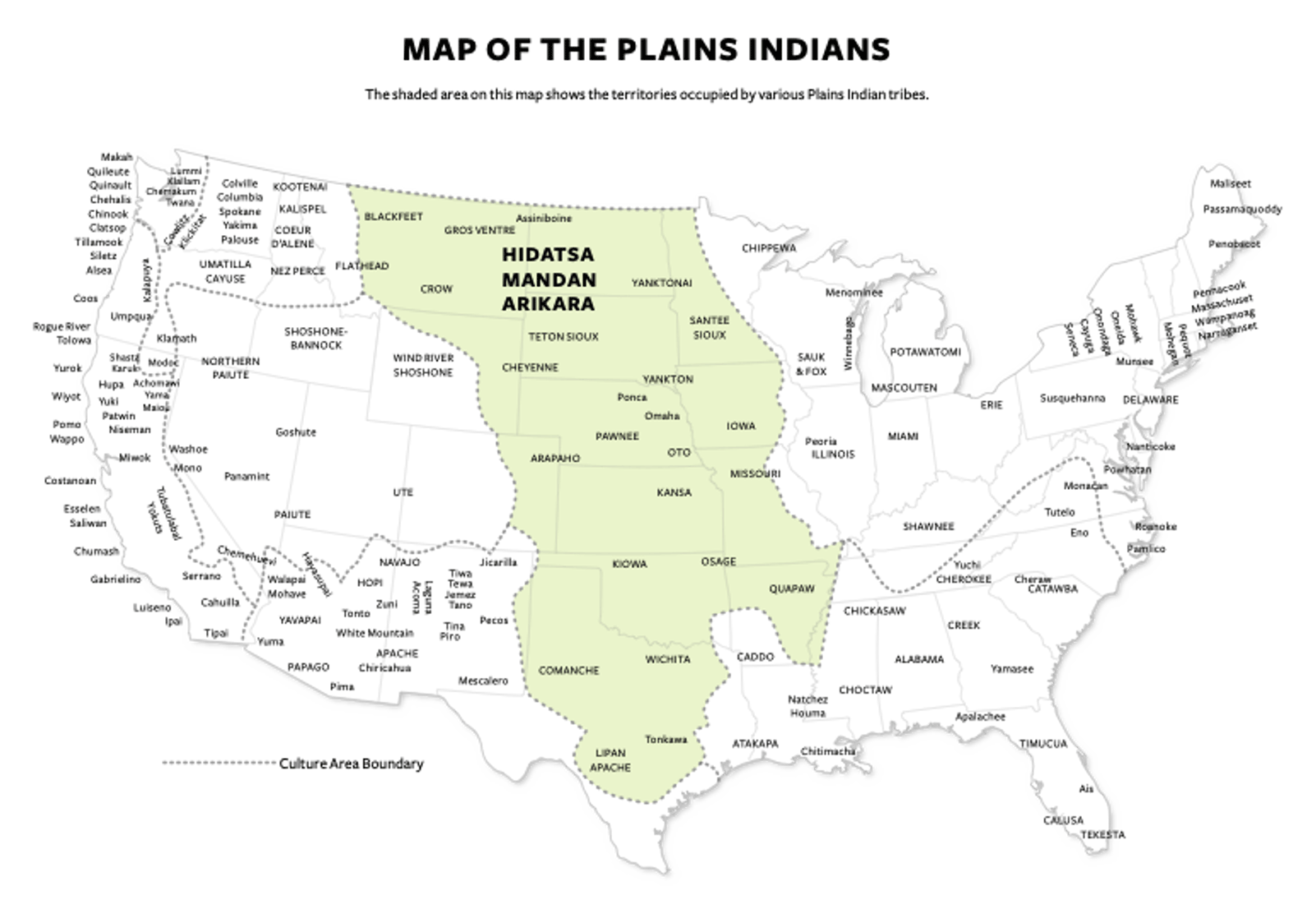
- www.newberry.org, Ledger Art and Indigenous Cultural Continuity
- Denise Low, "Composite Indigenous Genres: Cheyenne Ledger Art as Literature"
- PILA website, Black Horse Ledger, Cheyenne, 1865 (esp. plates 53 & 54, 56 alternate, 63 & 64, 78)
Recommended: James Welch, Fools Crow (Penguin Books, 1987), Chaps 3 & 4
Wednesday, April 1
Readings:
- PILA website, Black Hawk Ledger
- Janet Catherine Berlo, Spirit Beings and Sun Dancers, Black Hawk’s Vision of the Lakota World (George Braziller, Inc., 2000), Chap 2: “Black Hawk’s Drawings,” pp 25-57 (xerox pdf)
Recommended: ed. Raymond J. DeMaille, The Sixth Grandfather, Black Elk’s Teachings Given to John G. Neihardt (Lincoln: U of Nebraska Press, 1984), pp.213-245.
Week 10
Monday, April 6
Readings:
- Anna Blume, "In a Place of Writing" in Plains Indian Drawings 1865-1935: Pages from a Visual History, pp 40-44
- Melanie Benson Taylor, “Unsettling Accounts: The Violent Economies of the Ledger” in Ledger Narratives, pp 189-199
- PILA website, Etahaleuh Doamoe Sketchbook
IV. Plumbing the Archives: Self, Past, and Trauma
Week 10, continued
Wednesday, April 8
Readings:
- G. Sebald, Austerlitz, pp 3-74
- “Introduction [Austerlitz (2001)]” Lise Patt, ed. Searching for Sebald: Photography after Sebald, pp.70-82
Week 11
Monday, April 13
Readings:
- G. Sebald, Austerlitz, pp 74-172
- Christian Scholz, “’But the Written Word is Not a True Document’: A Conversation with W.G. Sebald on Literature and Photography,” in Lise Patt, ed. Searching for Sebald: Photography after Sebald, pp.104-109
Wednesday, April 15
Readings:
- G. Sebald, Austerlitz, pp 172-298
- John Sears, “Photographs, Images, and the Space of Literature in Sebald’s Prose” in Lise Patt, ed. Searching for Sebald: Photography after Sebald, pp. 204-215
Week 12
Monday, April 20
Reading:
- Scott McCloud, Understanding Comics (Chapters 1-3 and 8), pp 1-90, 185-193
Wednesday, April 22
Readings:
- Alison Bechdel, Fun Home (Chapters 1-2), pp 1-54.
- J. Mitchell, “Drawing Desire” in What do Pictures Want
Week 13
Monday, April 27
Reading:
- Alison Bechdel, Fun Home (Chapters 3-5), pp 55-150
- Hillary Chute, “Animating an Archive: Repetition and Regenerating in Alison Bechdel’s Fun Home,” in Graphic Women pp. 175- 217
Wednesday April 29
Readings:
- Allison Bechdel, Fun Home (Chap 6-7), pp 151-232
- Hillary Chute, “Animating an Archive: Repetition and Regenerating in Alison Bechdel’s Fun Home,” in Graphic Women pp. 175- 217
Fine Art and Artist Books
https://rdc.reed.edu/c/artbooks/
In addition to the books available online, you might look at:
- (Ophelia) Patrizia Meinert
- Encyclopedia von Thlon, Malutzki & Von Ketelhodt (Borges)
- Linen released through bars of soap, Flying fish press, Julie Chen
- Light sensitive pages, Veronika Schaepers
- I Hold Myself in my Arms, Greta Fieweger
- Passports, Jule Claudia Mahn