Sheets of Evidence
Library Information & Colophon
|
Title |
Sheets of Evidence View record in Reed Digital Collections |
|---|---|
| Library Call # |
576092909 View Reed library catalog record |
| colophon |
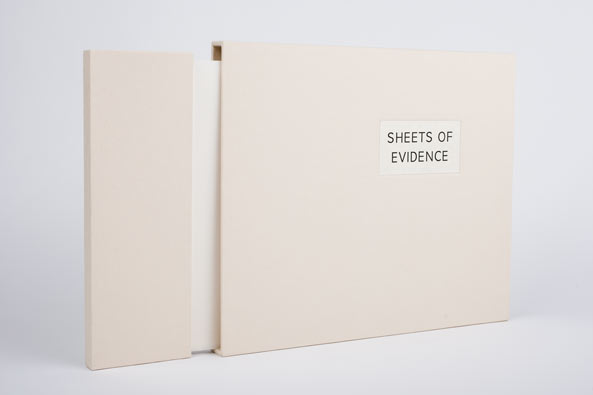
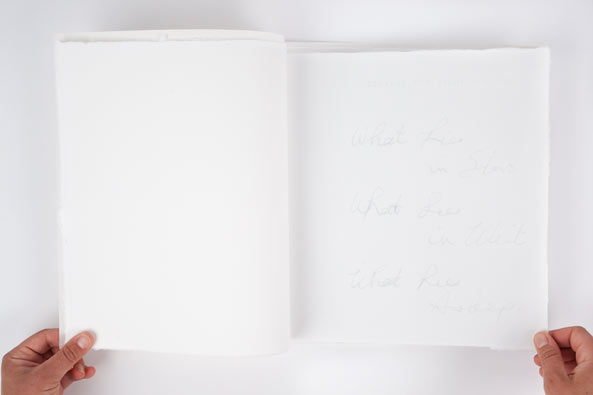
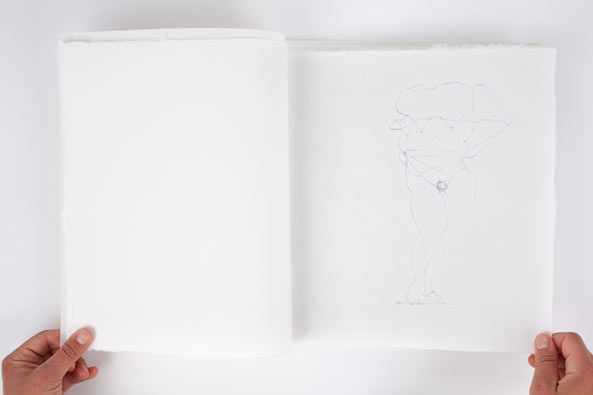
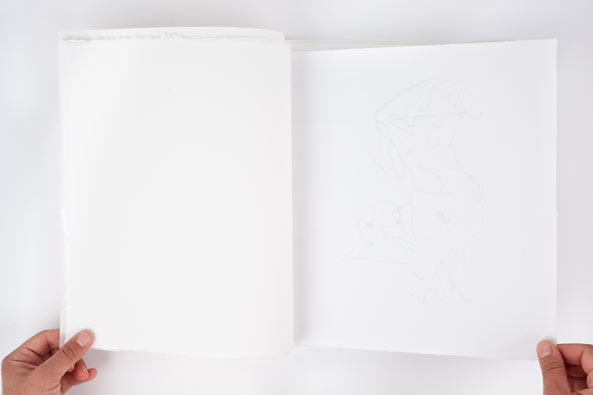
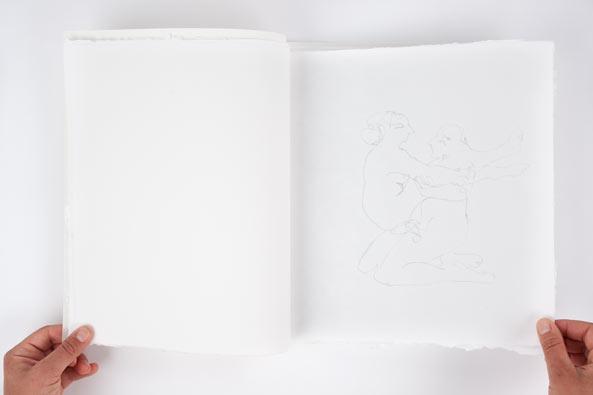
Sheets of Evidence is a book consisting of 18 watermarks created by William Kentridge. The 100% cotton watermarks were developed and produced by Susan Gosin and Paul Wong at Dieu Donné Papermill. Barbara Mauriello designed and bound the 20 edition copies and the 10 artists proofs. Dieu Donné Papermill co-published the edition in 2009. [signed, W. Kentridge] |
Biography
William Kentridge
(1955-)
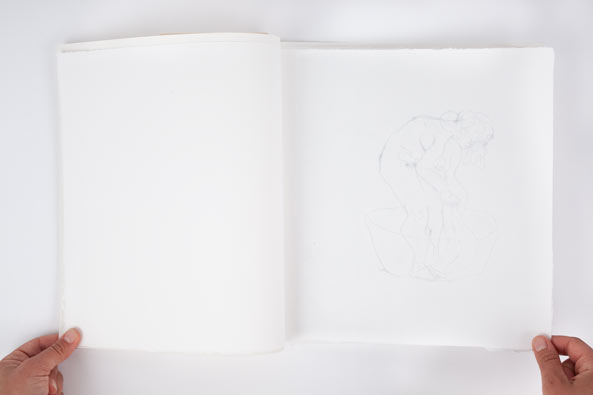
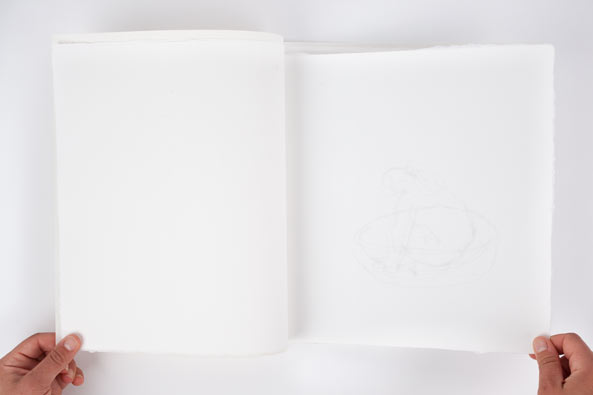
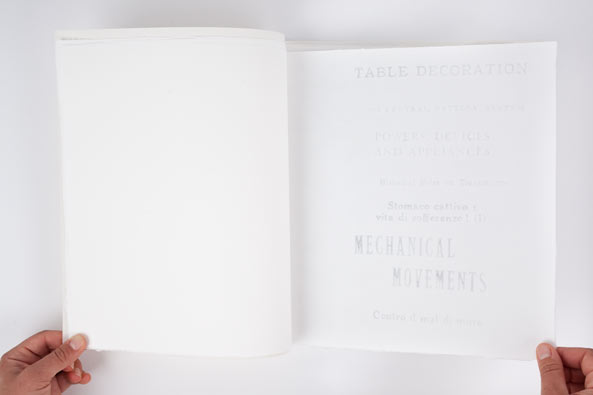
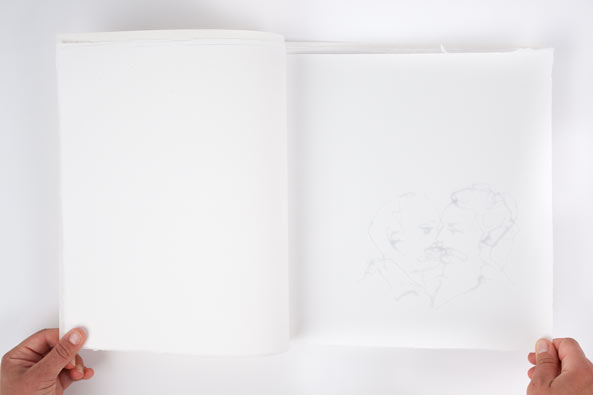
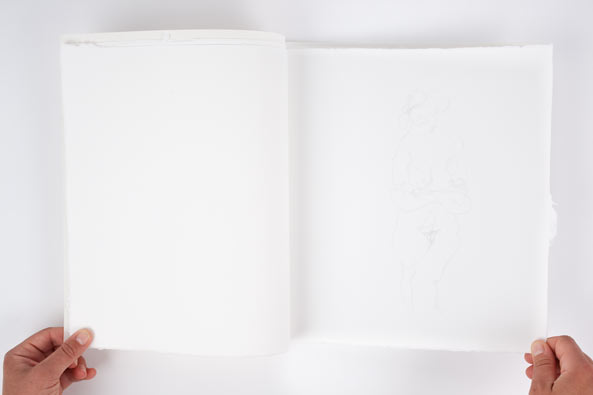
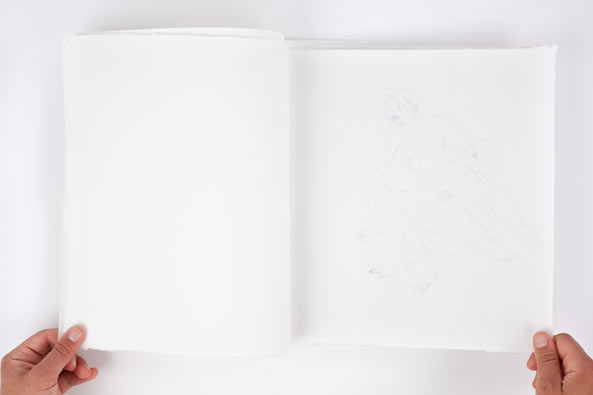
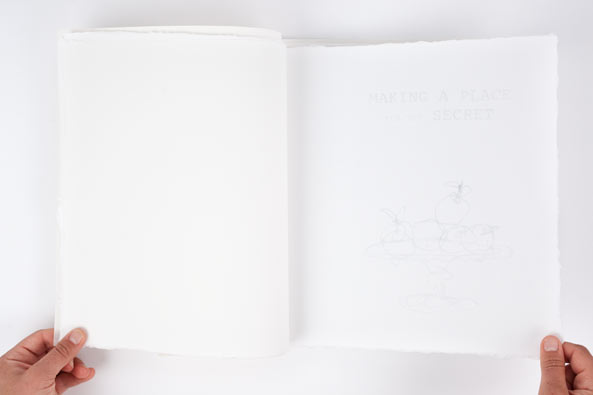
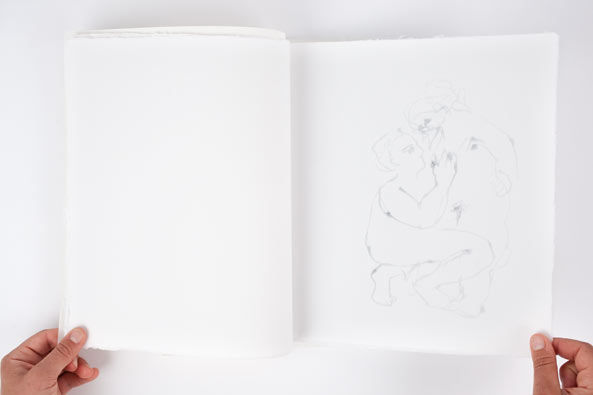
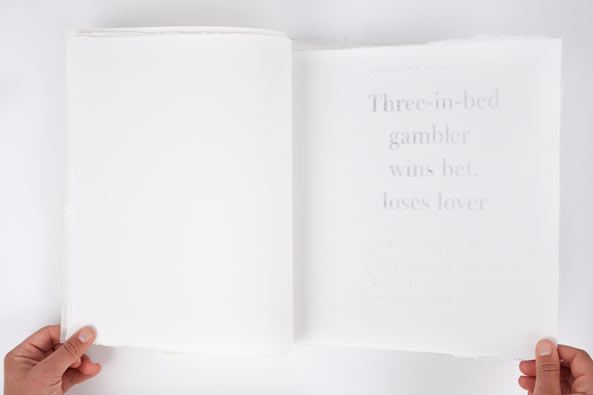
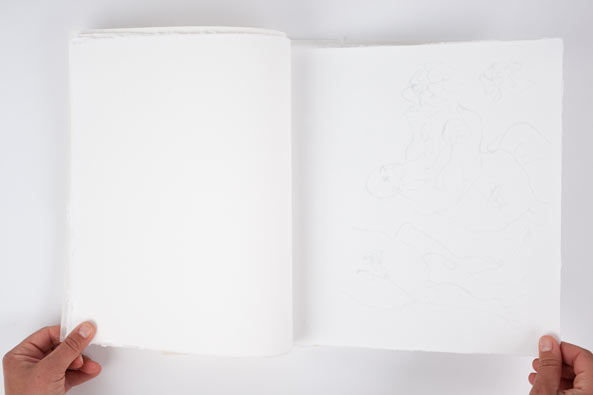
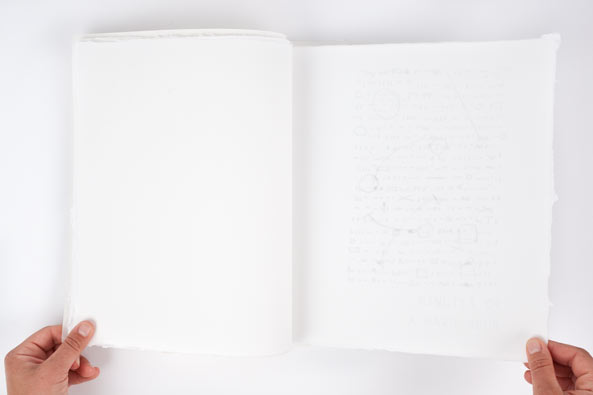
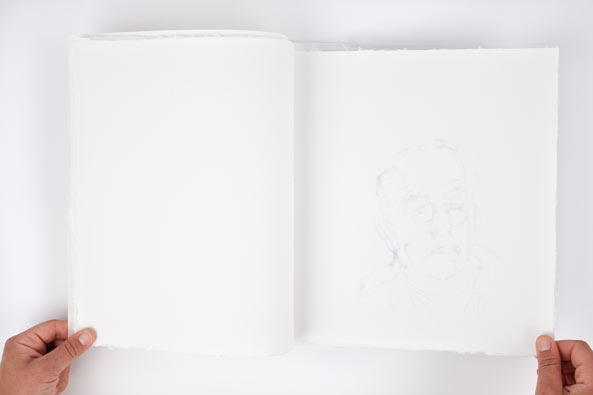
The work Sheets of Evidence by William Kentridge and printed by Dieu Donné is a work made entirely from sheets of handmade paper watermarked with Kentridge’s drawings.1
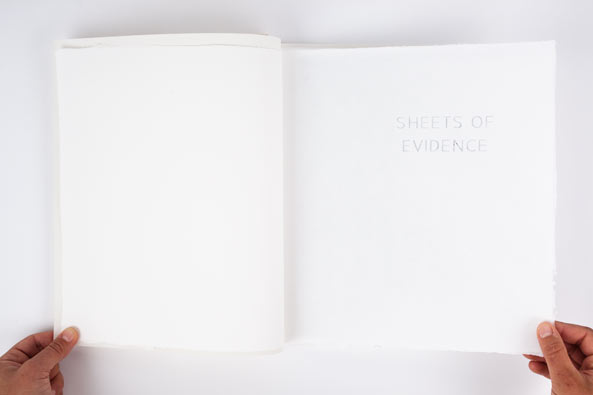
Although best known for his drawings William Kentridge has worked extensively in film, stage, and sculpture, working on many collaborations such as Sheets of Evidence. Similarly to Kentridge’s animated film work, the images embedded in Sheets of Evidence appear after turning the pages and seeing the light move through the surface of the page. Like much of his early work dealing with the ghost and erasure of Apartheid in South Africa, Kentridge is preoccupied with the process of revealing an image or a truth.
Born in Johannesburg in 1955, he attended the University of the Witwatersrand from 1973 to 1976 where he studied politics and African studies, then the Johannesburg Art Foundation from 1976 to 1978, and studied mime and theater at L’École Internationale de Théâter Jacques Lecoq in Paris from 1981 to 1982. Kentridge continues to be very active in theater and opera; he opened his first full opera in the U.S. in 2009. Kentridge is influenced by satirists such as Daumier, Goya and Hogarth and explores European classical themes as framework for contemporary African subjects, combining Expressionism with art and theater.2He lives and works in Johannesburg.
Upon first glace Sheets of Evidence appears to be a book of empty white pages, but when the reader interacts with it, she discovers the subtle but striking images and text about love, sexuality, intimacy, human relations, and death. Kentridge has been moving further and further into the world of film, making animations of his drawings, and with this book in hand, the animated nature of these watermarks becomes clear. Turning the pages makes the images appear and disappear into the sheet giving them a life beyond the page.
Footnotes
1 “About Us-History.” Dieu Donné. Web. 23 May 2010 View website
2 Falconer, Morgan. William Kentridge- About the artist. 2009 MoMA PS1. 21 May 2010 View website
Links & References
"About Us-History" Dieu Donné. Web. 23 May 2010. View website
Battle, Erica F. and ed. Carlos Basuldo. William Kentridge: Tapestries. New Haven, CT: Philadelphia Museum of Art in association with Yale University Press, 2008.
Cameron, Dan and Carolyn Christov-Bakargiev and J.M. Coetzee. William Kentridge. London: Phaidon Press Limited, 1999.
Christov-Bakargiev, Carolyn and William Kentridge. William Kentridge. Bruxelles: Société des Expositions du Palais des Beaux-Arts, 1998.
Crawford, Ashley. “Kentridge's mixed media probes a divided nation.” Art The Age (Melbourne, Australia) 15 May 2004: 7.
Falconer, Morgan. William Kentridge- About the Artist. 2009 MoMA PS1. Web. 21 May 2010. View website
Micucci, Dana. “Finely drawn lines tell powerful stories; Kentridge taps personal and political inspirations in 'Five Themes' exhibit.” The International Herald Tribune 12 September 2009: 7.